April Beekeeping in Ontario:
Your Complete Spring Action Plan
📋 In This Article
March was about survival. April is about momentum. The dandelions are coming, your queen is ramping up fast, and your colony is about to explode in population. Here’s exactly what Ontario beekeepers need to do this month — and what happens if you wait too long.
What April Looks Like in Ontario
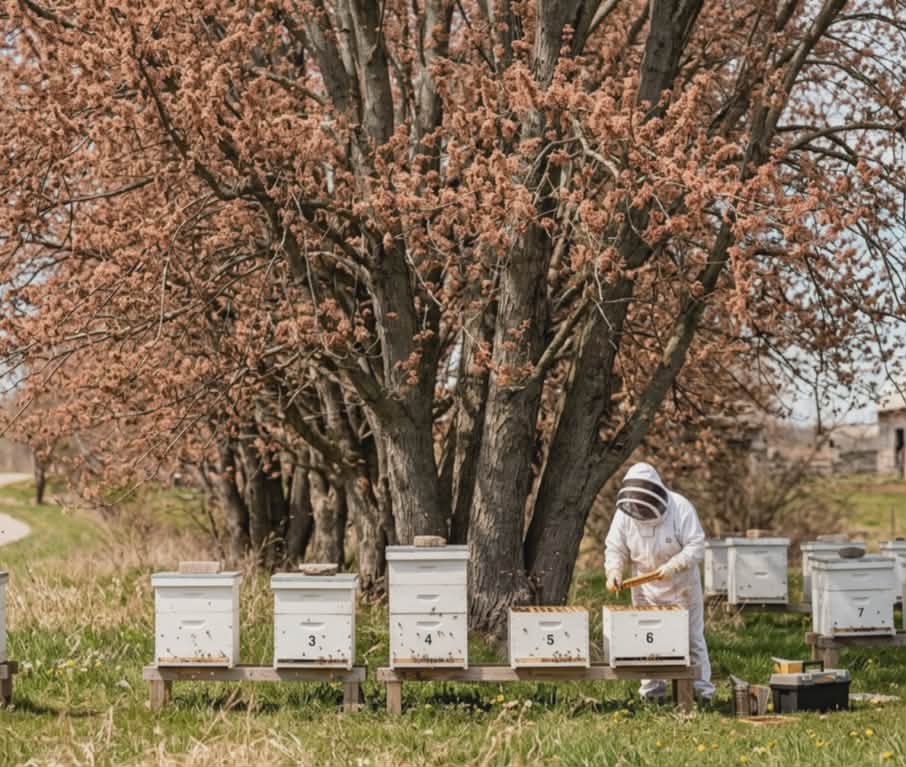
April in Ontario is a month of dramatic change. Early April can still bring frost and cold snaps, while late April often sees warm sunny days above 15°C where bees are flying actively and bringing in pollen from maples, willows, and early dandelions.
This is the month when colonies transition from survival mode to explosive growth. The queen reaches her peak laying rate, drones begin to appear, and the first serious swarm pressure builds up. April is genuinely exciting — but it demands your attention.
Good News for April
If your colony made it through the Ontario winter, April is your reward. The hard part is over. Now your job is to help the colony build up as fast as possible before the main nectar flow in June and July.
Your First Full Inspection of the Year
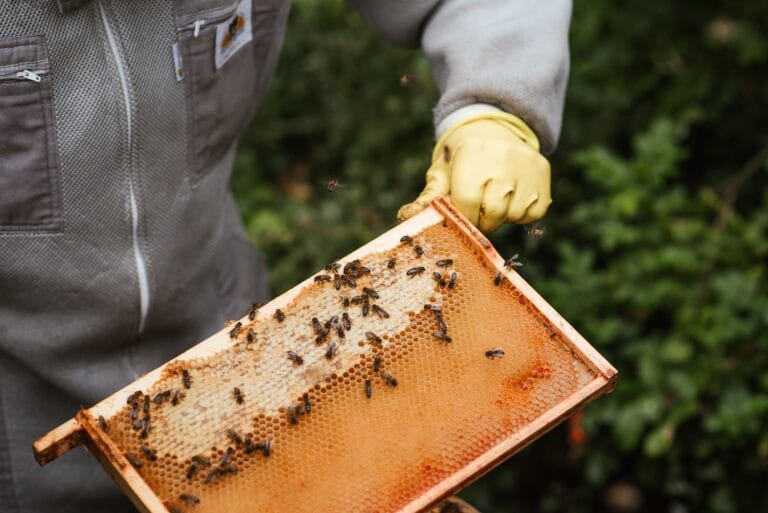
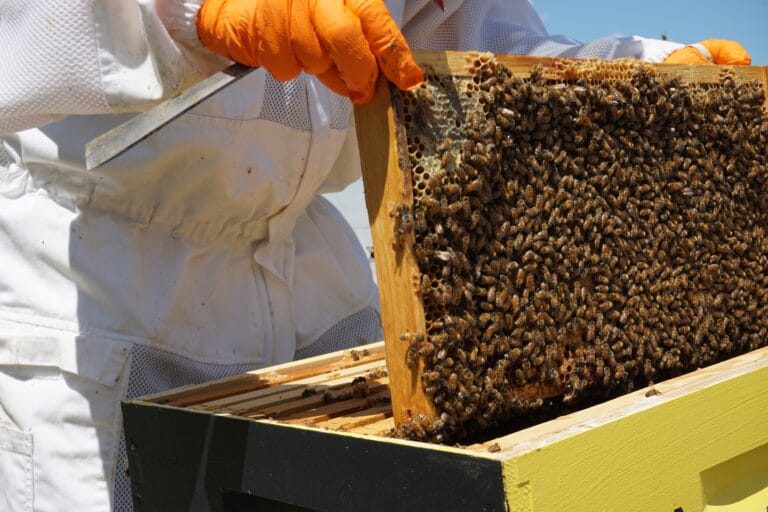
April is when you finally open the hive properly for the first time since autumn. Choose a calm, sunny day where temperatures reach at least 13°C (55°F) by mid-afternoon. This is your most important inspection of the entire year — take your time and be thorough.
What to look for:
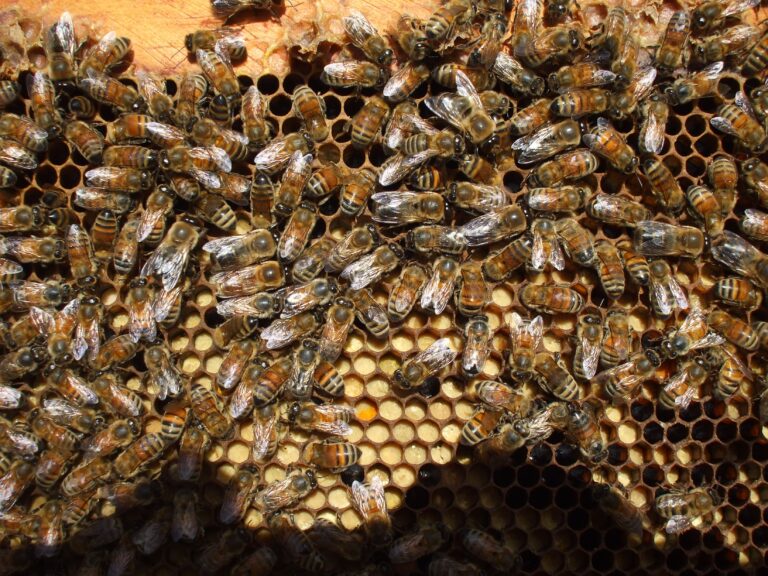
Queen presence — Look for eggs standing upright in cells. Eggs tell you the queen was laying within the last 3 days. If you see eggs but no queen, don’t panic — she may be hiding. If you see no eggs and no queen, you have a problem that needs addressing immediately.
Brood pattern — Healthy spring brood should be compact and consistent. A spotty, scattered pattern with many empty cells could indicate a failing queen, disease, or Varroa damage.
Population size — How many frames are covered with bees? A strong April colony should cover at least 6–8 frames. A colony on 3–4 frames is weak and may need combining with another colony.
Food stores — Are there still capped honey frames? Even with spring flowers starting, don’t assume the bees are finding enough food yet. Early April foraging is unreliable in Ontario.
Varroa signs — Look for bees with deformed, crumpled wings — a clear sign of Deformed Wing Virus caused by Varroa mites. If you see this, treatment is urgent.
WiseBee Tip: Remove Winter Wrapping in April
If you wrapped your hives for winter, remove the wrapping once daytime temperatures are consistently above 10°C. Leaving wrapping on too long traps moisture and creates condensation problems inside the hive.
✅ First April Inspection Checklist
- Remove mouse guard and entrance reducer — replace with open entrance
- Remove winter wrapping if still in place
- Scrape bottom board clean — remove debris and dead bees
- Check for queen presence — look for eggs
- Assess brood pattern — compact and consistent?
- Count frames of bees — colony population check
- Check food stores — feed if light
- Look for Varroa signs — deformed wings on bees
- Check for disease — foulbrood smell or sunken cappings
- Add a super if colony is on 8+ frames of bees
Spring Varroa Treatment — Do It Now
Spring Varroa Treatment Is Time-Sensitive
Early April — while there is still little or no capped brood — is the optimal window for oxalic acid treatment. Once brood rearing is fully underway, oxalic acid effectiveness drops significantly because it cannot penetrate capped cells where mites reproduce.
If you didn’t do a late winter oxalic acid treatment in February or March, do it now in early April before brood levels rise. The goal is to knock down mite populations before the colony explodes in size — a high mite load in April will devastate your summer colony.
Spring Treatment Options:
Oxalic Acid Vaporization — Most effective in early April when brood is minimal. A single treatment when the colony is broodless can reduce mite loads by over 90%.
Apivar Strips — If brood is already heavy, Apivar strips are your best option. They work over 6–8 weeks and are effective even with capped brood present. Apply in early April and remove by mid-May, at least 2 weeks before adding honey supers.
Switching to Liquid Feeding in April
Once daytime temperatures are consistently above 10°C, you can switch from solid sugar (candy boards or fondant) to liquid 1:1 sugar syrup. Liquid syrup stimulates brood rearing more aggressively than solid sugar and is easier for bees to process and store.
Use a 1:1 ratio (equal parts sugar and water by weight) for spring feeding — this thinner syrup mimics nectar and encourages the queen to lay. Switch to 2:1 only in autumn when you want bees to store rather than consume quickly.
WiseBee Tip: Add Pollen Substitute in April
Even if bees are bringing in natural pollen, supplement with pollen substitute patties in early April. This gives nurse bees the protein they need to raise the massive number of larvae the queen is producing. More nurse bees in April means a stronger colony by June.
Swarm Prevention — The April Priority
Swarming Season Begins in Late April
A swarm means you lose roughly half your colony — and half your potential honey harvest. Once bees decide to swarm, you have about 9 days from when queen cells are capped before they leave. Weekly inspections in late April are not optional.
Swarming is the colony’s natural way of reproducing — it’s not a failure on your part, but it is something you can manage. Bees swarm when they feel crowded and sense the colony is strong enough to split. Your job in April is to give them more space before they make that decision themselves.
How to prevent swarming:
Add a super early — Don’t wait until the hive is packed. Add your first honey super when bees cover 7–8 of the 10 frames in the brood box. More space = less swarm pressure.
Inspect weekly — Look for queen cells along the bottom edges of frames. Finding them early gives you options: remove them, make a split, or add space.
Make a split — If your colony is very strong and you find queen cells, consider making a nucleus colony (nuc). You keep the bees, prevent swarming, and end up with two colonies instead of one.
Installing Package Bees & Nucs
If you’re starting new colonies this spring, April 15th is generally the earliest recommended date for installing package bees in Ontario. Installing too early risks exposing a small package to cold nights before the colony has built up enough warmth.
Nucleus colonies (nucs) are more forgiving than packages because they already have frames of brood, honey, and an established queen. Nucs can be installed slightly earlier and get off to a faster start.
Package installation tips:
When installing a package, remove the queen cage and check that the candy plug is intact — the bees will eat through it over 3–5 days, releasing the queen gradually and allowing the colony to accept her. Check after 5 days to confirm the queen has been released and is laying.
WiseBee Tip: Order Early — Packages Sell Out Fast
Ontario bee suppliers often sell out of packages and nucs by February or March. If you haven’t ordered yet, contact local suppliers immediately. The Ontario Beekeepers’ Association website lists registered Ontario bee breeders who sell nucs and queens.
Best Products for April Beekeeping in Ontario
Final Thoughts
April is the most exciting month in the Ontario beekeeping calendar. The worst is behind you — your colonies survived a Canadian winter — and everything now is about building momentum toward the summer honey flow.
Do your first thorough inspection, treat for Varroa if needed, switch to liquid feeding, and start watching for swarm cells. Stay on top of weekly checks and April will set you up for a spectacular June and July. 🐝
Not sure what to do with your hive? 🐝
Ask our AI beekeeping assistant — get personalized advice and product recommendations for your exact situation in seconds.
🐝 Ask Bee Now — It’s Free🐝 WiseBee Disclosure
Affiliate Disclosure: This article contains Amazon affiliate links. If you purchase through our links, we earn a small commission at no extra cost to you. Learn more →
Disclaimer: This article is for educational purposes only and does not constitute professional apicultural or veterinary advice. Always consult a qualified beekeeper for guidance specific to your situation. Full disclaimer →