March Beekeeping in Ontario:
What To Do Right Now
(And What Can Kill Your Hive)
📋 In This Article
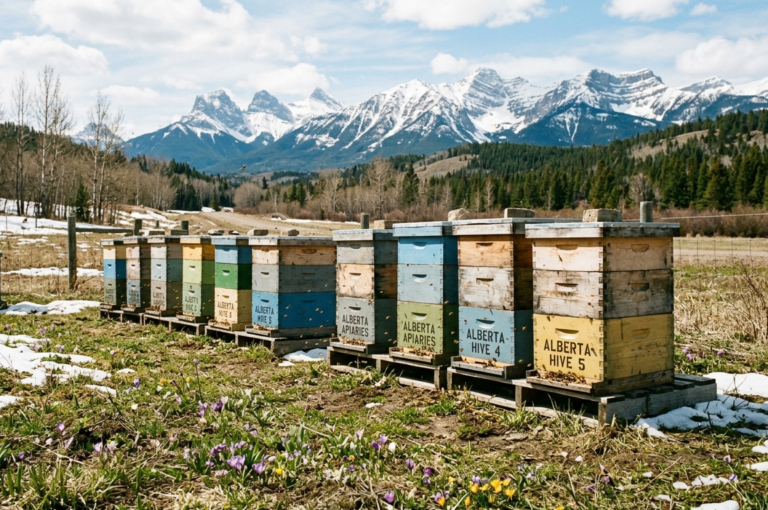
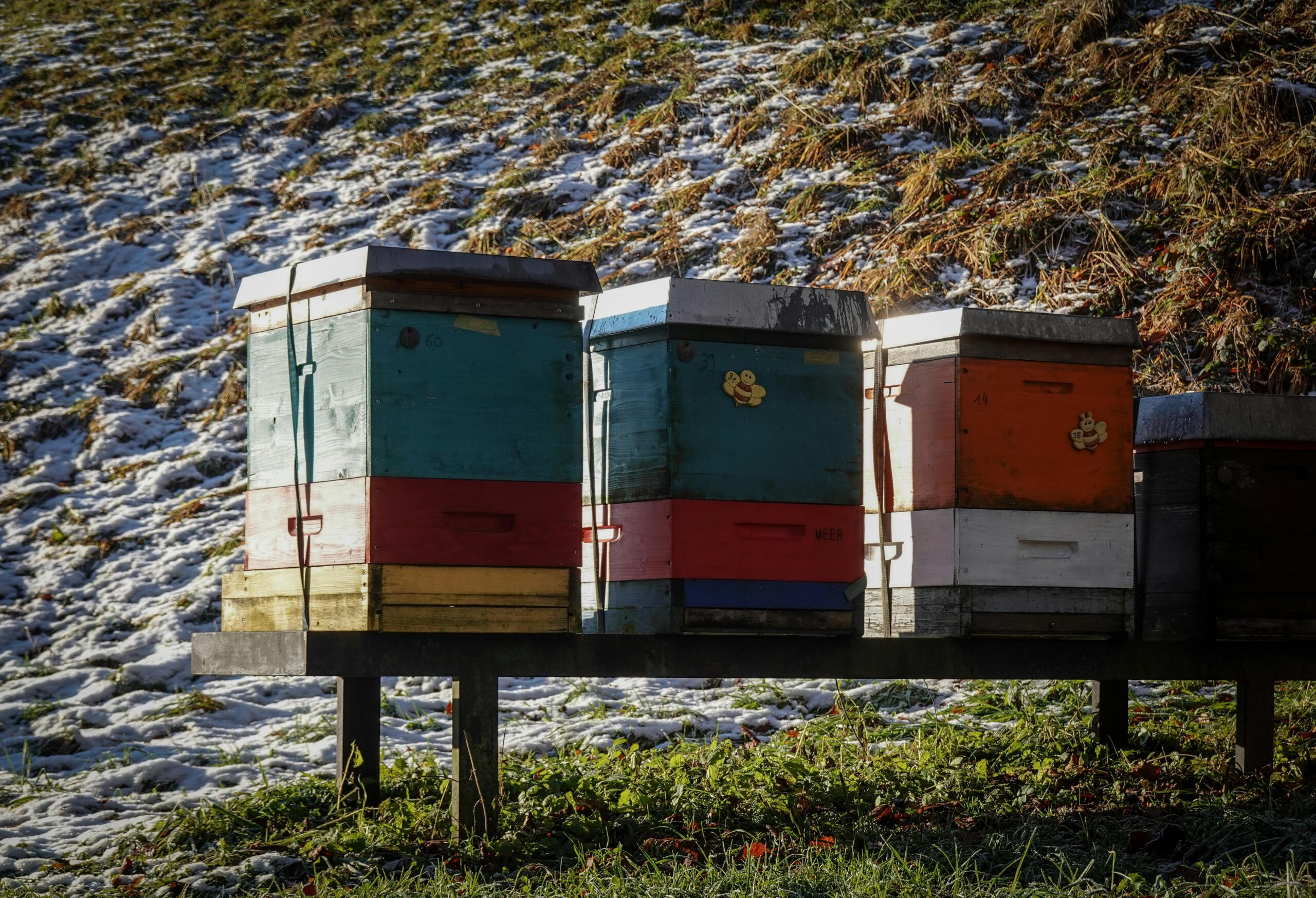
In Germany, March already smells like spring. In Ontario? You’re still dealing with freezing temps, surprise snowstorms, and bees that are hungrier than ever. Here’s exactly what to do with your hives right now — and what rookie mistakes can cost you an entire colony.
What March Actually Looks Like in Ontario
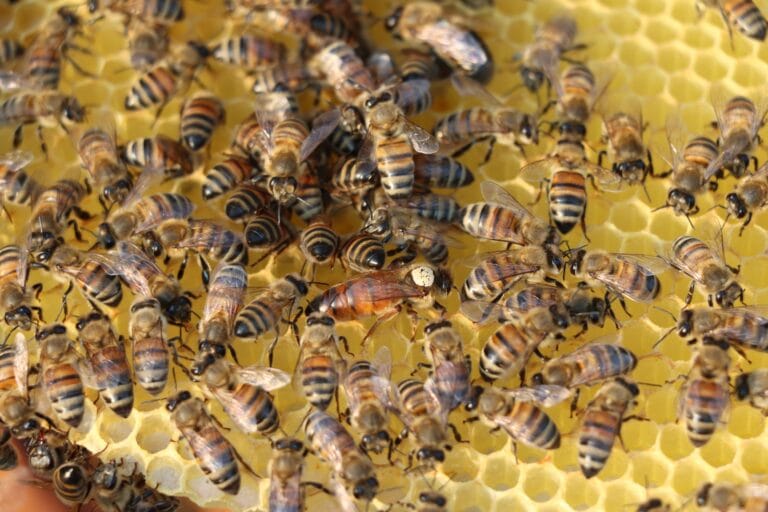
Don’t let the calendar fool you. March in Ontario is not spring — it’s a month of dangerous transitions. The days are getting longer, your queen has ramped up egg-laying significantly, and the colony’s food consumption has spiked. But foraging is still essentially impossible.
The colony is essentially eating through its last winter stores while producing new brood — a brutal combination. Beekeepers who “leave them alone because it’s almost spring” often come back to a dead hive in April.
The #1 Danger: Spring Starvation
Spring Starvation Is Real — and It Happens Fast
March and early April are statistically when the most Ontario colonies die — not from cold, but from running out of food right as brood rearing peaks. A colony can starve in as little as 3–4 days if stores run out.
Here’s what happens: the queen starts laying heavily in February, triggered by lengthening days. By March, there’s a lot of hungry brood to feed, but the bees can’t forage yet. They burn through honey stores at 2–3x the winter rate. If you didn’t leave enough stores going into winter, or if the winter was long, your bees are likely on the edge right now.
The fix is simple — but only if you act before it’s too late. Check your hive weight. A double-brood box hive should weigh at least 70 lbs. If it feels light when you heft it from the back, feed immediately.
Your March Beekeeping Checklist
✅ March Tasks — Ontario Beekeeper
- Heft hives from the back to estimate food stores — feed if light
- Clear any snow or ice blocking hive entrances
- Check that mouse guards are still in place
- Listen at the hive entrance on cold days for the cluster hum
- Wait for a sunny day above 55°F (13°C) for a quick visual inspection
- Add emergency candy board or fondant if stores are low
- Start pollen substitute patties to support brood rearing
- Order new equipment, packages, or nucs NOW — don’t wait
- Plan your spring varroa treatment schedule
- Clean and prep equipment from last season
WiseBee Tip: Don’t Open the Hive in Cold Weather
Resist the urge to do a full inspection when temperatures are below 55°F (13°C). Opening the hive in cold weather breaks the cluster and can chill developing brood, causing significant colony stress. Wait for a calm, sunny day above 13°C.
What and How to Feed in March
Option 1: Candy Board (Best for cold snaps)
A candy board sits directly on top of the frames above the cluster. It’s the safest emergency food source because it doesn’t require warm temperatures to be accessible to the bees. If temperatures are still regularly dipping below freezing at night, a candy board is your best bet.
Option 2: Fondant / Sugar Bricks
Same principle as a candy board — solid sugar placed directly above the cluster. Easy to find on Amazon and easy to use. Just place it on top of the inner cover with a small spacer to give the bees access.
Option 3: Sugar Syrup (only when consistently warm)
Wait until daytime temperatures are consistently above 10°C before switching to liquid 1:1 sugar syrup. Syrup stimulates brood rearing more aggressively than solid sugar, so timing matters — too early and you’ll have more brood than the colony can keep warm during a cold snap.
Pollen Substitute Patties
Protein is just as important as carbohydrates in spring. Pollen substitute patties placed directly on top of the frames give nurse bees the protein they need to produce royal jelly for the expanding brood. Start these in March regardless of how strong your colony looks.
How to Do a Safe Early Spring Inspection
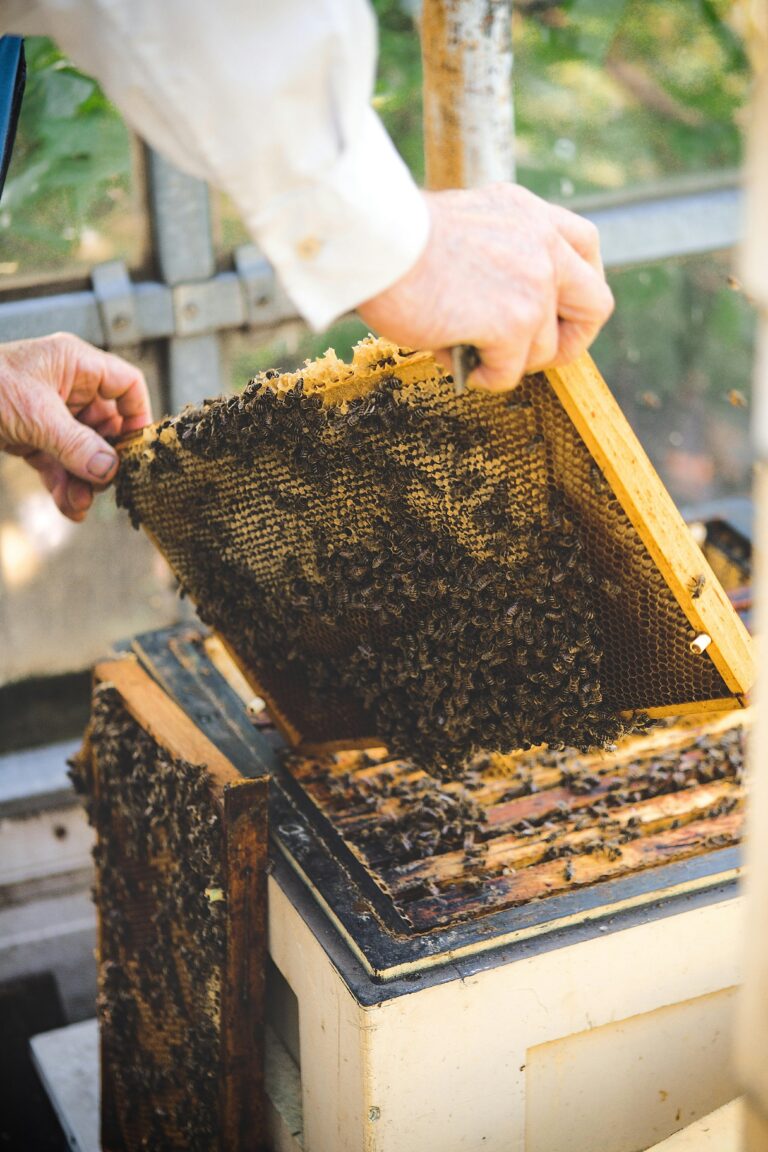
Choose a calm, sunny day where temperatures reach at least 55°F (13°C) for several hours. Mid-afternoon is ideal. Here’s what to look for in your quick inspection:
What to check:
Eggs and young larvae — The presence of eggs tells you the queen is alive and laying. Eggs are tiny white grains standing upright in cells, visible with a flashlight on a sunny day.
Brood pattern — Healthy brood should be compact and consistent. A spotty, scattered pattern could indicate disease or a failing queen.
Food stores — Look for capped honey in the corners and top of frames. If you see mostly empty cells surrounding the brood, feed immediately.
Signs of Varroa — Look for deformed wing virus (bees with crumpled wings) as an indicator of high mite loads. Plan your spring treatment accordingly.
WiseBee Tip: Keep It Quick in March
Early spring inspections should be fast — 5 minutes maximum per hive. You’re doing a health check, not a full examination. The longer the hive is open, the more heat the brood loses. Check for queen presence, stores, and obvious problems, then close it up.
Best Products for March Beekeeping in Ontario
Final Thoughts
March is the month that separates attentive beekeepers from careless ones. Your bees survived a Canadian winter — don’t lose them now to starvation or neglect in the final stretch before spring bloom. Heft your hives, feed if needed, and wait for that first warm day to do a quick health check.
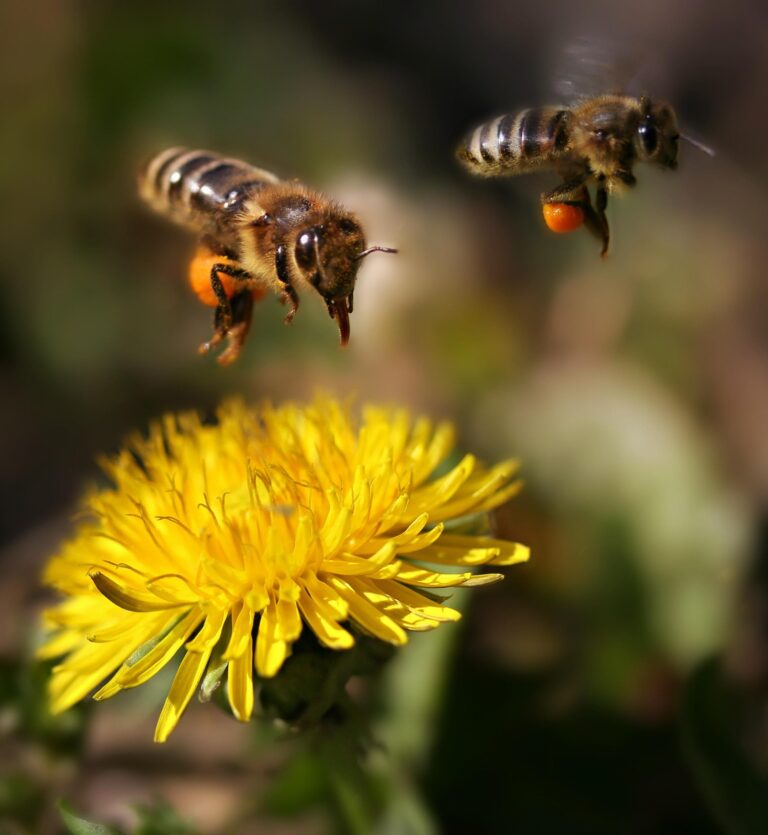
The dandelions are coming. Your job right now is to make sure your colonies are strong enough to take advantage of them. 🐝
Not sure what product to buy? 🐝
Ask our AI beekeeping assistant — get personalized product recommendations for your exact situation in seconds.
🐝 Ask Bee Now🐝 WiseBee Disclosure
Affiliate Disclosure: This article contains Amazon affiliate links. If you purchase through our links, we earn a small commission at no extra cost to you. Learn more →
Disclaimer: This article is for educational purposes only and does not constitute professional apicultural or veterinary advice. Always consult a qualified beekeeper for guidance specific to your situation. Full disclaimer →