Best Beekeeping Protective Gear
for Canadian Beginners
📋 In This Article
The right beekeeping protective gear for Canadian beginners is the difference between a confident beekeeper and a nervous one. You’ll be working hives in spring cold, summer heat, and everything in between. Here’s exactly what to buy and what to skip.
Why Protective Gear Matters More in Canada
Canadian beekeeping has unique challenges that affect gear choice. Spring inspections often happen when temperatures are barely above 13°C — cool enough that bees are more defensive than on a warm summer day. Summer humidity in Ontario and Alberta can make heavy suits uncomfortable. And long beekeeping seasons mean your gear takes a real beating.
Beyond comfort, there’s a safety reason every beginner needs to take seriously: bee venom allergy. A small percentage of people have a severe allergic reaction to bee stings. As a beginner, you don’t yet know how your body will respond. Quality gear protects you while you build experience and confidence.
WiseBee Tip: Always Choose Light Colors
Bees associate dark colors with predators like bears and skunks. Always choose white, tan, or light grey gear. Even experienced beekeepers in dark clothing get stung more than those in white suits — this is not just a beginner precaution.
Best Beekeeping Protection Suits for Canada: Full Suit vs Jacket
Choosing the right beekeeping protection suit in Canada depends on your experience level, your province, and the season. Ontario and Alberta beekeepers face unique conditions — defensive spring bees after long winters, humid Ontario summers, and Alberta’s short but intense beekeeping season. Here’s what actually works.
Full Beekeeping Suit — Best for Canadian Beginners
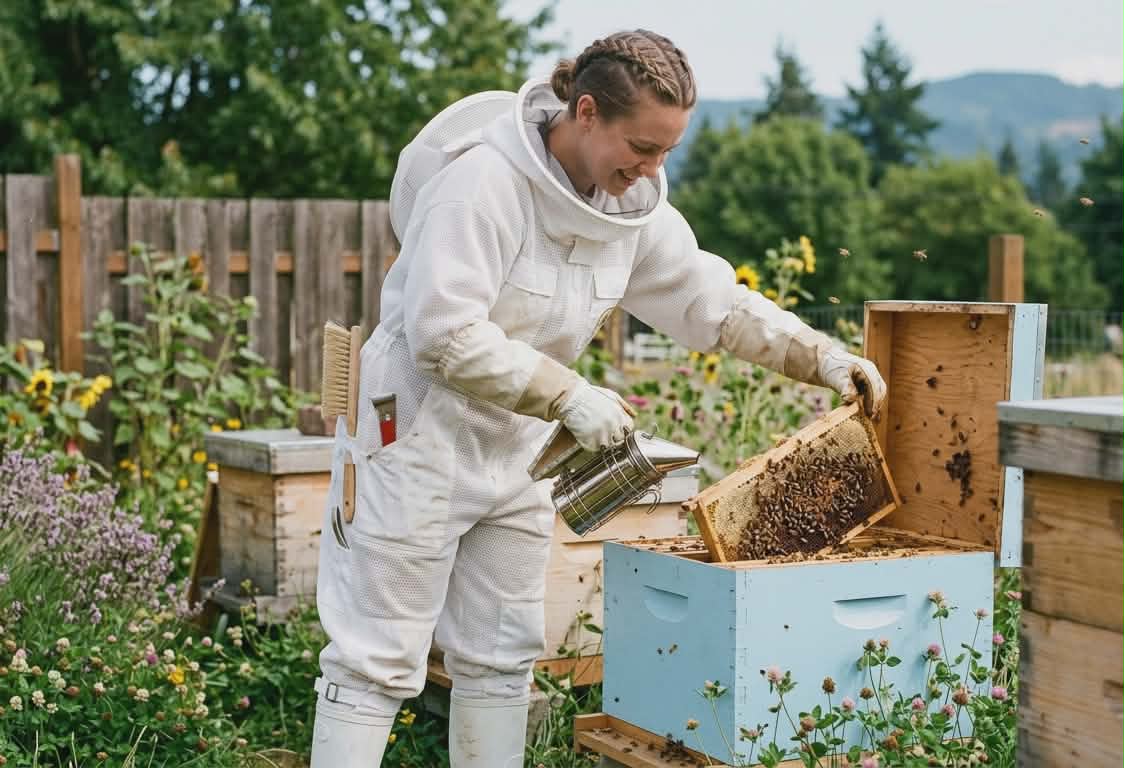
A full beekeeping suit covers you from head to ankle in one piece — no gaps, no exposed skin, no surprises. For Canadian beginners this is the only acceptable starting point. The confidence a full suit provides lets you focus on your bees rather than worrying about stings, which makes you calmer and therefore safer around the hive.
For Canadian conditions, look specifically for a ventilated mesh suit — a solid cotton suit becomes unbearable during Ontario’s humid July inspections. A quality ventilated suit keeps you cool in summer while providing full protection year-round.
Beekeeping Jacket with Veil — Best for Experienced Canadian Beekeepers
A beekeeping jacket covers your upper body and head only — lighter, cooler, and faster to put on and take off. Experienced beekeepers often prefer jackets for routine summer inspections. The important caveat for Canadian beekeepers: you need proper protective trousers underneath, because bees will find the gap between a jacket and regular jeans every single time.
Best for: Second or third season beekeepers during calm summer inspections in July and August.
Not recommended for: Spring inspections in Ontario or Alberta, beginners, or any inspection during cool or overcast weather when bees are more defensive.
Full Suit vs Jacket — Quick Comparison for Canadian Beekeepers
Regardless of suit type, always choose white or light tan — bees associate dark colors with predators like bears and skunks. This is especially important in Ontario and Alberta where wildlife pressure makes colonies naturally more defensive. Even experienced beekeepers in dark clothing get stung significantly more than those in white suits.
FAQ — Beekeeping Protection Suits in Canada
Types of Veils Explained
The veil protects your face and neck — the areas where a sting causes the most pain and swelling. There are three main types to know:
Round Veil
A circular frame holds the mesh away from your face. Good visibility, easy to put on, widely available. The most common type for beginners and included with most starter suits on Amazon Canada.
Fencing Veil
A flat front panel gives slightly better forward visibility — popular with more experienced beekeepers who do detailed inspections.
Alexander Hood Veil
A fabric hood with a mesh front panel that zips onto the suit. The most secure option with the fewest entry points — ideal for beginners who want maximum protection. Most modern full suits use this style.
Best Beekeeping Gloves for Canadian Beekeepers: Leather vs Nitrile
Choosing the right beekeeping gloves in Canada is more nuanced than simply picking the thickest option available. Ontario and Alberta beekeepers face a unique combination of challenges — defensive spring bees after a long winter confinement, humid summer inspections, and the need for enough dexterity to spot tiny eggs on frames. Here’s exactly what works.
Leather Beekeeping Gloves — Best for Canadian Beginners
Goatskin leather gloves remain the gold standard for beginner beekeepers across Canada. The leather provides excellent sting resistance while still allowing enough feel to handle frames confidently. The long gauntlet cuff — extending well up the forearm — is non-negotiable for Canadian beekeepers, where the gap between glove and suit sleeve is a common entry point for defensive spring bees.
Best for: First and second season beekeepers, spring inspections in Ontario and Alberta when bees are most defensive, any inspection where colony temperament is unknown.
Nitrile Beekeeping Gloves — Best for Experienced Canadian Beekeepers
Nitrile or rubber gloves offer significantly better dexterity than leather — you can feel individual cells, spot eggs more easily, and handle frames with greater precision. The trade-off is reduced sting protection. Most Canadian beekeepers graduate to nitrile gloves in their second or third season, once they’ve developed a feel for reading colony temperament and working calmly.
Best for: Experienced beekeepers during calm summer inspections, detailed brood checks where dexterity matters, warm July and August inspections when bees are calmer.
Not recommended for: Spring inspections in Ontario or Alberta, aggressive colonies, any inspection during bad weather or nectar dearth.
Quick Comparison — Leather vs Nitrile for Canadian Beekeepers
Many experienced Canadian beekeepers keep both types on hand. Leather gloves for spring and aggressive colony inspections, nitrile for calm summer checks where precision matters. Both together cost under $50 CAD on Amazon Canada — worth having the option.
FAQ — Beekeeping Gloves in Canada
Footwear for Beekeeping
Wellington boots (rubber boots) pulled up over your trouser legs are the standard Canadian beekeeper choice — practical given the wet spring conditions in Ontario and Alberta. Tuck your suit trousers into your boots or use the elastic ankle closures that most good suits include. Avoid open shoes or sandals near hives even in summer.
Quick Comparison Table
| Gear Type | Protection | Comfort | Best For | Verdict |
|---|---|---|---|---|
| Full Ventilated Suit | ⭐⭐⭐⭐⭐ | ⭐⭐⭐⭐ | Beginners | Best Pick |
| Jacket + Veil | ⭐⭐⭐⭐ | ⭐⭐⭐⭐⭐ | Experienced | Good |
| Leather Gloves | ⭐⭐⭐⭐⭐ | ⭐⭐⭐ | Beginners | Best Pick |
| Nitrile Gloves | ⭐⭐⭐ | ⭐⭐⭐⭐⭐ | Experienced | Good |
| Round Veil Only | ⭐⭐⭐ | ⭐⭐⭐⭐ | Budget option | OK |
Top Picks on Amazon Canada
Final Thoughts
For Canadian beginners, the formula is simple: a ventilated full suit, a pair of goatskin leather gloves, and rubber boots. That combination will protect you through your first full season while you learn what level of protection feels right for you.
As your confidence grows, you can always downgrade to a jacket — but start fully protected and work your way back. Your bees will still be there when you’re ready. 🐝
Not sure which size or style to buy? 🐝
Ask our AI beekeeping assistant for personalized recommendations based on your situation — it’s free and instant.
🐝 Ask Bee Now — It’s Free🐝 WiseBee Disclosure
Affiliate Disclosure: This article contains Amazon affiliate links. If you purchase through our links, we earn a small commission at no extra cost to you. Learn more →
Disclaimer: This article is for educational purposes only and does not constitute professional apicultural or veterinary advice. Always consult a qualified beekeeper for guidance specific to your situation. Full disclaimer →