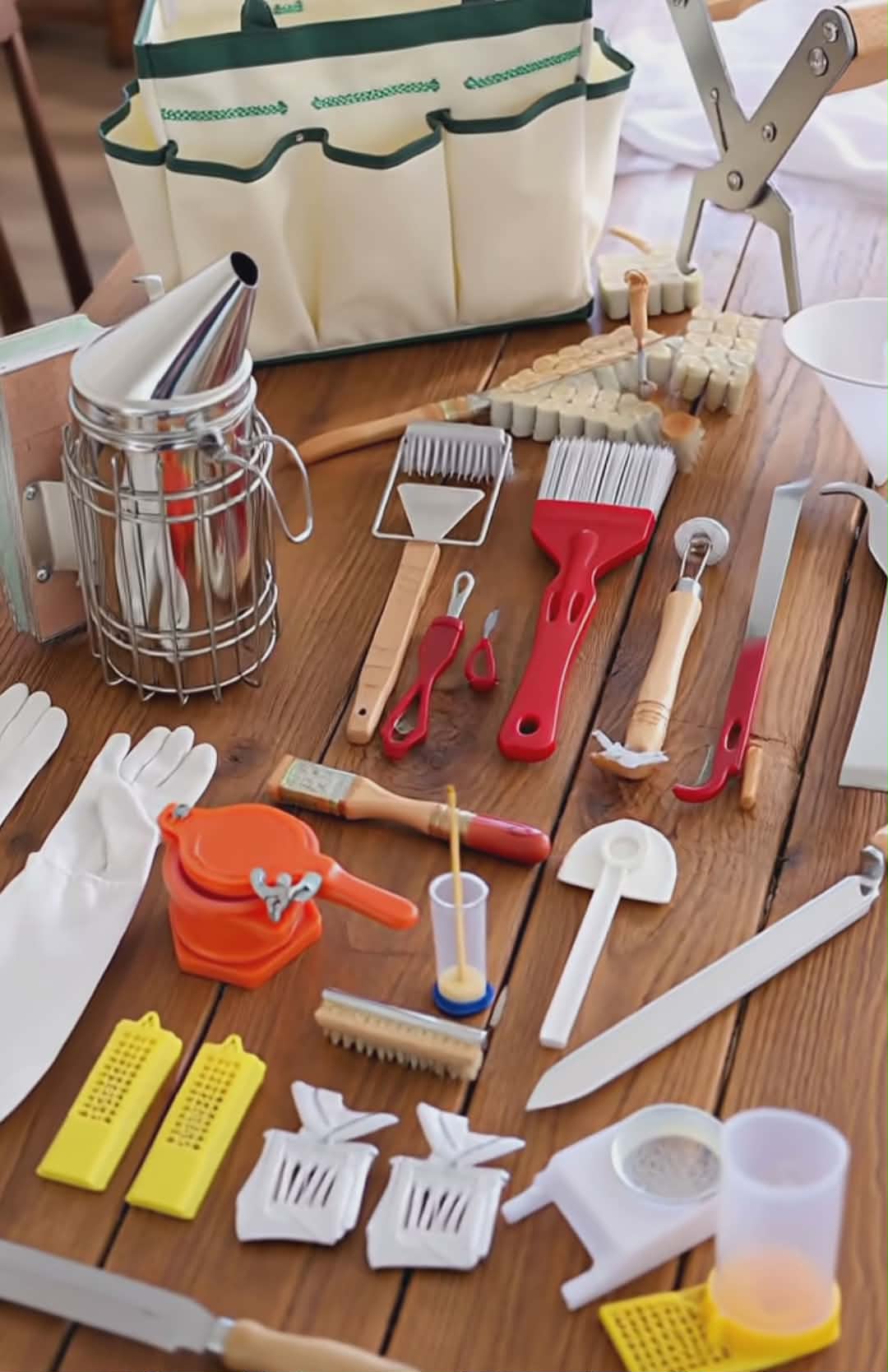
Top 10 Essential Tools for
New Beekeepers in Ontario
📋 The 10 Essential Tools
Every new Ontario beekeeper needs the right beekeeping starter kit to get off to a confident start. This list covers the 10 essential beekeeping supplies in Ontario — the tools you’ll use every single time you open a hive, and the ones that can save your colony when things go wrong.
🛒 Quick Reference — All 10 Tools
- 01 Bee Smoker ~$20–$45 CAD
- 02 Full Beekeeping Suit ~$45–$90 CAD
- 03 Leather Beekeeping Gloves ~$15–$30 CAD
- 04 J-Type Hive Tool ~$8–$18 CAD
- 05 Soft Bee Brush ~$6–$14 CAD
- 06 Hive Top Feeder ~$18–$35 CAD
- 07 Global Patties / Pollen Substitute ~$15–$35 CAD
- 08 Mouse Guard ~$8–$16 CAD
- 09 Varroa Monitoring Sticky Board ~$12–$22 CAD
- 10 Hive Inspection Notebook ~$10–$20 CAD
The 10 Tools Every Ontario Beekeeper Needs
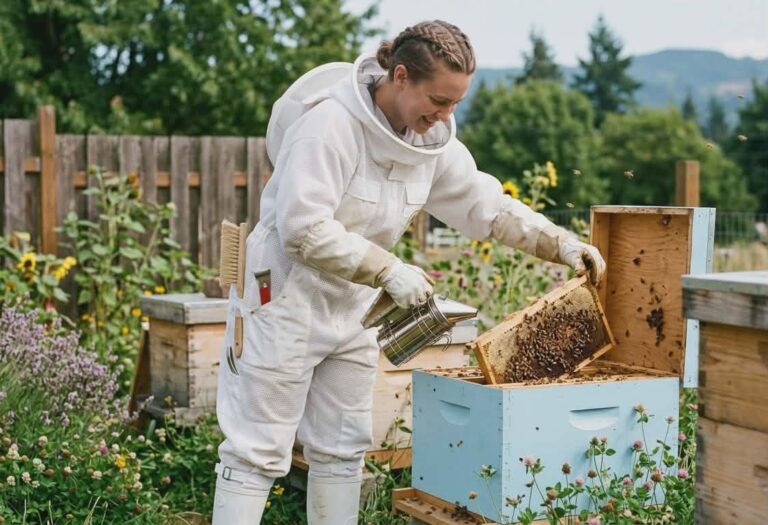
The smoker is the beekeepers most essential tool — nothing else comes close. Smoke triggers bees’ instinct to gorge on honey in preparation for a forest fire, making them calmer, less defensive, and far easier to work with. Without a smoker, every hive inspection becomes a gamble.
Choose a stainless steel smoker with a heat shield — it protects your hand and keeps the smoker lit longer. Avoid cheap thin-metal smokers that go out constantly. Smoker fuel options include burlap, wood pellets, pine needles, or commercial smoker pellets.
View on Amazon Canada →A full beekeeping suit covers you from head to ankle — and for Ontario beginners, this is the only acceptable starting point. A ventilated mesh suit gives you sting protection without overheating in summer, which is a real concern during July and August inspections in Ontario’s humid climate.
Look for a suit with an integrated veil that zips securely to the jacket — loose-fitting veils that just rest on your shoulders are a recipe for a sting to the face. Always choose white or light tan — bees associate dark colors with predators.
View on Amazon Canada →Goatskin leather gloves offer the best balance of sting protection and dexterity for beginners. The long gauntlet cuff — extending up the forearm — is essential for preventing bees from crawling inside the gap between your glove and your suit sleeve. This is a common beginner mistake that leads to a very unpleasant experience.
Bees seal every gap in their hive with propolis — a sticky, resinous substance that acts like natural cement. After a full Ontario winter, frames are practically glued in place. A J-type stainless steel hive tool is what you use to pry apart boxes and lever out frames without damaging the comb.
The J-type is the most versatile shape — the hook end levers out frames and the flat end scrapes propolis and wax buildup. Always keep it clean and occasionally dip it in a flame to sterilize between hives.
View on Amazon Canada →A soft-bristled bee brush lets you gently move bees off frames during inspections without crushing them or triggering a defensive response. It’s particularly useful when you need a clear view of a frame to find eggs or check brood patterns.
Use light, gentle strokes — don’t scrub. Bees that feel threatened will release alarm pheromone, making the whole hive more defensive. A slow, calm brush stroke is more effective than a quick sweep.
View on Amazon Canada →Ontario beekeepers feed their colonies at least twice a year — spring stimulation feeding and autumn stores building. A hive top feeder sits directly on top of the frames, holds several liters of sugar syrup, and allows bees to feed without exposing the colony to robbing by other hives.
Global Patties are a Canadian-made pollen substitute that has become a staple of Ontario and Alberta beekeeping. They provide the protein and amino acids that nurse bees need to produce royal jelly and raise healthy brood — critical in early spring when natural pollen is not yet reliably available.
Place a patty directly on top of the frames above the cluster in March or early April. Replace when consumed — a strong spring colony can go through a patty in under a week. This is one of the highest-impact investments you can make for spring colony success in Ontario.
WiseBee Tip: Start Patties Before You See Pollen
Don’t wait until natural pollen is flying before putting patties on. Start in early April — the protein boost helps nurse bees raise the workers that will be foraging when the dandelions bloom in May.
A mouse guard is a metal strip with holes large enough for bees to pass through but too small for mice. Install it in September before mice start looking for warm winter shelter. A single mouse inside a beehive over winter will destroy combs, contaminate the hive with urine and droppings, and kill the colony.
A Varroa sticky board slides under a mesh floor and catches mites that naturally fall off bees. After 24–72 hours, you count the mites on the board to estimate your colony’s mite load. This tells you whether and how urgently you need to treat — without a board, you’re guessing.
Don’t Skip Varroa Monitoring
Varroa is the single biggest threat to Ontario beehives. Colonies that look healthy in July can collapse by October if mite loads are not monitored and treated. A sticky board costs less than $20 and takes 5 minutes to check — there is no excuse for not monitoring.
Every inspection should be recorded — queen status, brood pattern, food stores, mite count, feeding dates, and treatments applied. When something goes wrong with a colony in October, your inspection notes from June will tell you exactly when the problem started. Without notes, you’re managing blind.
Dedicated beekeeping inspection logs have pre-printed fields for everything you need to record. Waterproof covers are a practical bonus given how often you’ll be using them outdoors in unpredictable Ontario weather. Alternatively, a simple waterproof notebook works just as well.
View Inspection Notebooks on Amazon Canada → View Waterproof Notebooks →Do You Need a Complete Starter Kit?
Several suppliers on Amazon Canada bundle the most essential tools together in a single beekeeping starter kit — typically including a suit, gloves, hive tool, smoker, and bee brush. These kits offer decent value for beginners who want to buy everything at once and often save $30–$60 compared to buying each item separately.
The trade-off is that bundled kits sometimes include lower-quality versions of each item. If budget allows, buying a quality ventilated suit — essential for Ontario’s humid summers — and a heavy-duty smoker separately, then adding a basic kit for the smaller tools, gives you the best of both worlds.
View Starter Kits on Amazon Canada →Final Thoughts
You don’t need to buy everything at once. If budget is tight, start with the four absolute essentials: a smoker, a full suit, leather gloves, and a hive tool. Add the feeder, patties, and mouse guard before your first winter arrives, and the monitoring board and notebook as you get comfortable with regular inspections.
Ontario beekeeping is incredibly rewarding — but it demands the right tools to do it safely and effectively. Invest in quality gear once and it will serve you for a decade. 🐝🍯
Not sure where to start? 🐝
Ask our AI beekeeping assistant — tell us your budget and situation and we’ll build your perfect Ontario beekeeping starter kit recommendation.
🐝 Ask Bee Now — It’s Free🐝 WiseBee Disclosure
Affiliate Disclosure: This article contains Amazon affiliate links. If you purchase through our links, we earn a small commission at no extra cost to you. Learn more →
Disclaimer: This article is for educational purposes only and does not constitute professional apicultural or veterinary advice. Always consult a qualified beekeeper for guidance specific to your situation. Full disclaimer →