Alberta Beekeeping in September:
Feeding, Varroa and Winter Preparation
Alberta beekeepers in September should: remove any remaining honey supers, assess colony strength and queen status, weigh or estimate winter stores for each colony, complete liquid 2:1 syrup feeding while temperatures remain above 10°C, conduct a post-treatment Varroa alcohol wash to confirm mite levels below 1%, prepare moisture control equipment (quilt box or insulated cover), purchase and fit winter wraps, install mouse guards and reduce entrances, and decide on upper entrance configuration. September is the main correction window before cold weather limits what can be done — all of these tasks should be complete or well underway before October wrapping begins.
Stop liquid syrup feeding when temperatures consistently drop below 10°C — this is the threshold recommended by the Alberta Beekeepers Commission, below which bees cannot adequately process syrup and feeding increases hive humidity to harmful levels. This temperature threshold is more useful than a fixed calendar date, as Alberta’s regions differ significantly: southern Alberta may allow feeding into late September or early October, while northern Alberta and the Peace Region may see feeding limited to early or mid-September. Watch the overnight forecast alongside daytime temperatures — a colony may take syrup actively on a warm afternoon but be unable to process it if nights are consistently cold.
Alberta weight targets vary with hive configuration, equipment type, and local winter severity — there are no single official Alberta figures. As a practical orientation: a single deep Langstroth colony going into a Prairie winter is generally targeted at approximately 85-90 lbs (38-41 kg) total hive weight; a double deep colony is typically targeted at approximately 130-140 lbs (59-64 kg). These include all equipment weight — boxes, frames, bees, and stores. Equipment weight varies significantly between wooden and poly hive bodies. The most accurate approach is to know your empty equipment weight, weigh the hive with a luggage scale, and calculate the difference as an estimate of stores. Consult your local Alberta beekeeping association for region-specific guidance.
Yes — a post-treatment Varroa alcohol wash in September is essential before committing to winter preparation. A completed treatment course does not automatically mean successful mite reduction. Reinfestation from collapsing neighbouring colonies through drifting and robbing can raise mite levels significantly even after effective treatment. The target before winter wrapping is below 1% (3 mites per 300 bees) — a conservative threshold that reflects the importance of low Varroa load for winter bee fat body preservation. CAPA has repeatedly identified Varroa and associated viruses among the significant contributors to Alberta winter colony losses. Do not wrap a colony without first confirming its mite level.
Wrapping equipment should be purchased and prepared in September, but installation typically happens in October when daytime temperatures are consistently below 10°C and the colony is no longer foraging actively. Wrapping too early — while bees are still taking cleansing flights and bringing in late nectar — can create overheating on warm days and disrupt the colony’s normal autumn transition. Wrapping too late risks disturbing the colony after the winter cluster has formed. All fall tasks — Varroa treatment removal, liquid feeding completion, mouse guard installation, and fondant placement — must be done before wrapping, not after.
📋 In This Article
- Start with a September Hive Assessment
- Finish Fall Feeding Before Bees Stop Processing Syrup
- Fall Varroa Control — Test, Treat and Retest
- Manage Moisture Without Over-Ventilating
- Prepare Winter Insulation and Wind Protection
- Install Mouse Guards and Finalize Entrances
- Confirm Winter Stores by Weight
- September Checklist for Alberta Beekeepers
Alberta September beekeeping is not about finishing up — it is about correcting what August left unfinished and making decisions that cannot be reversed once wrapping begins. Overnight frosts can arrive early in northern Alberta; the southern Peace Country and Edmonton region have somewhat more time, but not much. September is Alberta’s main correction window before cold weather sharply limits feeding, inspections, and treatment choices.
Alberta Colonies Can Tolerate Substantial Cold — With the Right Foundation
Alberta colonies can tolerate substantial cold when they are healthy, well provisioned, and properly protected. Cold combined with inadequate stores, high Varroa loads, wind exposure, or dripping condensation can become fatal. Winter preparation in September is about building that foundation — not about the wrap itself.
Start with a September Hive Assessment
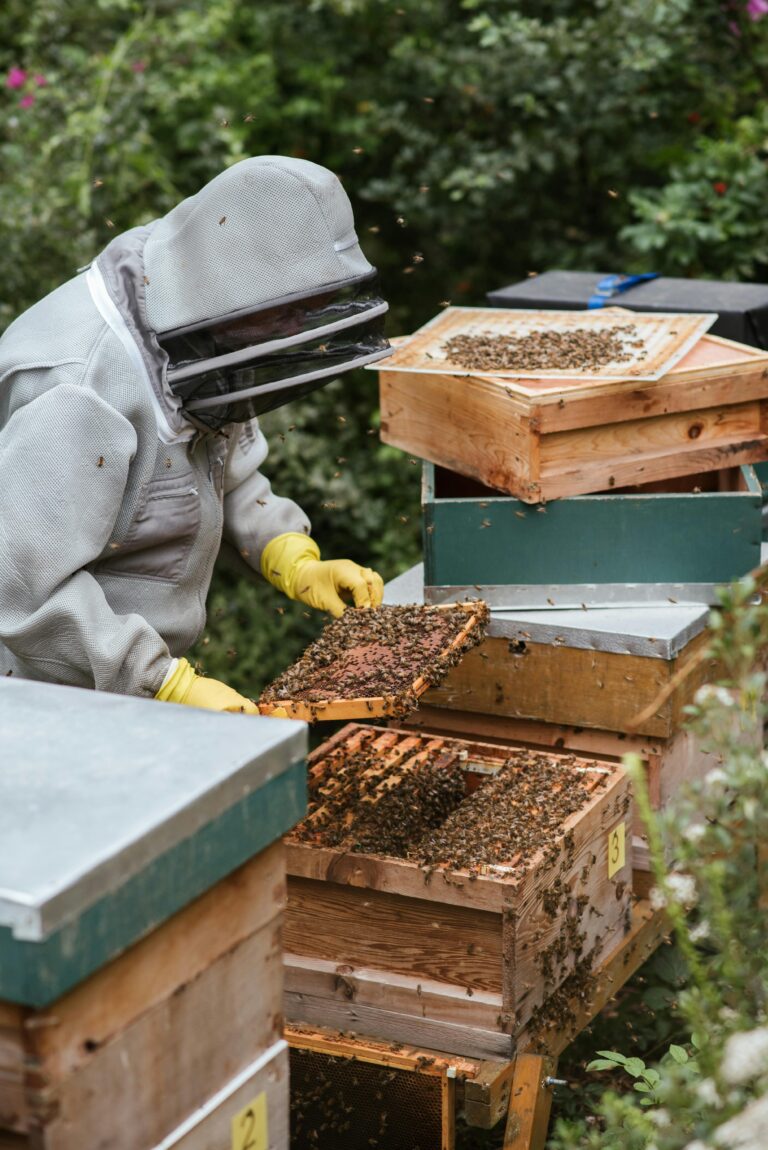
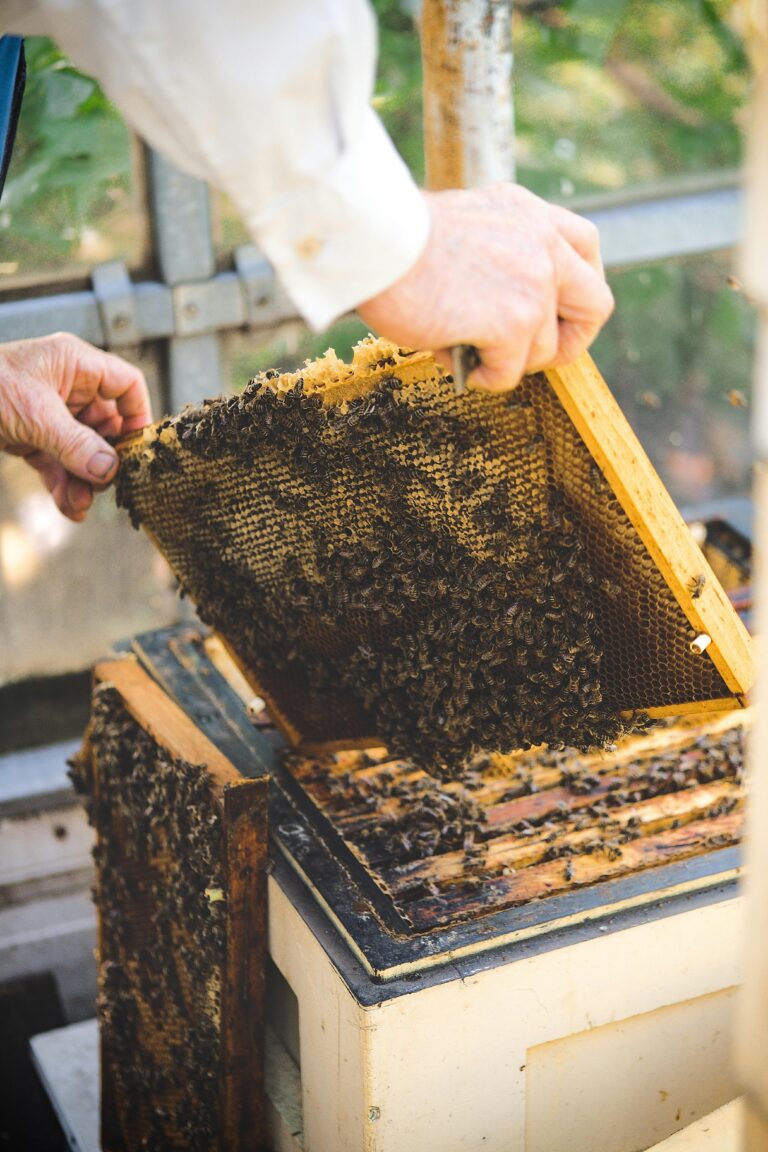
Before deciding how much to feed, whether to treat, or what equipment to install, run a full colony assessment on every hive. Two colonies that look identical from the outside in early September can have very different stores levels, Varroa loads, and queen situations. The assessment informs every subsequent decision — skip it and you are guessing.
☐ September Assessment — Each Colony Separately
- Remove any honey supers destined for extraction — do not leave supers on during fall feeding
- Assess colony population — minimum 7-8 frames of bees for outdoor Prairie wintering
- Confirm queen is present and laying — look for eggs or young larvae in the brood nest
- Inspect brood pattern — a very scattered or spotty pattern suggests a failing queen
- Estimate stores by frame inspection — how many full capped frames in the top box?
- Weigh the hive or heft from the back — compare to your target for this configuration
- Conduct alcohol wash — 300 bees from a brood frame, count mites after treatment
- Identify any colony too weak to winter individually — combining candidates
Account for Alberta’s Regional Differences
Longer warm window. Feeding may continue into late September or early October in warm years. Watch for early Chinook-related disruptions.
Moderate window. September feeding should be well underway by September 10. Nights cool rapidly by mid-month in most years.
Shortest window. Early frosts possible in late August. Feeding may be limited to early September — plan and start immediately after harvest.
Hive Weight and Temperature Matter More Than the Calendar Date
No single provincial September date applies to all Alberta apiaries. Use your actual overnight temperature readings and your colony’s actual weight as the two primary decision inputs — not “it’s September 15th so I should be done feeding.” A hive significantly below target weight on September 10th needs urgent attention. A hive at target weight on September 5th may need no further liquid feeding at all.
Finish Fall Feeding Before Bees Stop Processing Syrup
When an Alberta Colony Actually Needs Feeding
Not every Alberta colony needs supplemental fall feeding — only colonies below their winter weight target. A colony that returned a full honey crop and has both boxes well-stocked with capped stores does not need syrup. Feeding a colony already at target weight wastes time, adds unnecessary hive humidity, and can prompt bees to back-fill the brood nest rather than use space productively. Assess first, then feed according to the actual deficit.
Feed when: the hive is below its target weight for its configuration; the top box frames are not sufficiently capped; the colony is strong but local forage has ended; or the summer honey crop was removed and stores were not rebuilt during August feeding. Do not feed a colony too weak to winter — combine it first, then assess the combined colony’s stores.
Use Concentrated Fall Syrup — 2:1 by Weight
Fall syrup for Alberta is 2:1 sugar to water, measured by weight — 2 kg sugar dissolved in 1 kg of water. Heat the water to dissolve the sugar but do not boil the combined mixture — boiling increases HMF formation. Prepare quantities you can use within a few days; 2:1 syrup is more shelf-stable than 1:1 but will still ferment if stored warm for extended periods. Use clean feeders and do not add syrup on top of old residue.
Stop Liquid Feeding Below 10°C — Alberta Beekeepers Commission Threshold
The Alberta Beekeepers Commission recommends avoiding syrup feeding when temperatures drop below 10°C. Below this threshold, bees cannot adequately process and reduce syrup moisture to safe storage levels — and feeding increases hive humidity at exactly the time the colony needs to maintain thermal stability. This is a practical limit based on bee physiology, not a calendar date. When nights are consistently near or below 10°C, switch to fondant placed directly above the cluster.
Choose an Enclosed Feeder for Heavy Fall Feeding
An enclosed top feeder or internal frame feeder keeps syrup inside the hive where it stays warmer, reduces robbing risk during September dearth, and allows higher-capacity feeding with fewer visits. Entrance feeders expose syrup at the hive entrance and attract robbing from neighbouring colonies — do not use them during fall dearth. Compare options before choosing a high-capacity model for your apiary size.
Fall Varroa Control in Alberta: Test, Treat and Retest
Protect the Bees That Must Survive Winter
Confirm the Mite Level After Treatment
Conduct a post-treatment alcohol wash 7 days before removing Apivar strips, or 7 days after completing a formic acid or oxalic acid course. Sample 300 bees from a brood frame — not the queen’s frame. The conservative pre-winter target is below 1% (3 mites per 300 bees). A result above 2% despite a complete treatment course requires investigation: possible causes include reinfestation from collapsing neighbouring colonies (particularly through robbing during September dearth), incorrect strip placement, or the beginning of amitraz resistance development that warrants rotation planning for next season.
Use Only Treatments Registered in Canada
The correct September Alberta treatment choice depends on the colony’s brood status, ambient temperatures, and the remaining treatment window before wrapping. Formic acid (Formic Pro) requires temperatures within its Canadian label range and is most appropriate when capped brood is still present. Apivar is effective across Alberta’s temperature range and remains the most commonly used fall treatment. Oxalic acid–glycerin strips (registered in Canada February 2026, No. 29575) provide extended contact and are approved while honey supers are present — but require careful preparation per the Canadian label and are not equivalent to generic strips purchased online. A treatment applied is not automatically a treatment that succeeded — always retest.
Manage Moisture Without Over-Ventilating the Hive
Why Condensation Forms Above the Winter Cluster
A winter colony metabolizes stored honey to generate heat, producing water vapour as a byproduct. This warm, moist air rises toward the top of the hive. When it contacts a cold overhead surface — the underside of a frozen outer cover in a Prairie winter — it can condense. Condensation on the inner walls is not automatically a problem. The concern is accumulation of water directly above the cluster: cold water dripping onto the winter cluster chills bees and increases caloric stress in ways that can become fatal over a five-month Alberta winter, particularly in combination with low stores or high Varroa.
Quilt Box or Insulated Moisture-Controlled Cover?
A quilt box adds a layer of absorbent material (typically coarse pine or aspen shavings) above the colony, with lateral vents that allow the material to dry gradually. It provides both insulation and moisture buffering — two functions that work together in an outdoor Prairie winter. It is one coherent approach, not the only approach. Some beekeepers use an insulated inner cover instead, or a combination of both. The key principle is to choose one system and implement it correctly — adding components from multiple systems without understanding how they interact can block ventilation rather than improve it.
Prepare Winter Insulation and Wind Protection
When Should Alberta Beehives Be Wrapped?
Purchase and prepare wrap equipment in September so it is ready when wrapping conditions arrive in October. Do not wrap while bees are still foraging actively or while liquid feeding is ongoing — the wrap goes on after all fall tasks are complete. Wrapping too early while warm days continue can increase hive temperatures on Chinook days and disrupt the colony’s normal autumn cluster formation. Wrapping too late — after the winter cluster is fully established — requires disturbing a colony in vulnerable early-winter confinement. The wrap timing follows the colony’s behaviour and the temperature trend, not a fixed date.
Common Winter Wrap Options for Alberta
| Wrap Type | Insulation Value | Reusability | Best For |
|---|---|---|---|
| Poly foam insulation wrap | Good — meaningful heat retention | 3-5+ seasons | Standard Alberta outdoor wintering — most widely used |
| Tar paper (roofing felt) | Low — mainly wind and moisture barrier | 1-2 seasons | Budget option — better than nothing, less than poly for severe cold |
| Rigid insulation boards | High — depends on thickness | Multiple seasons | DIY custom insulation around hive body |
| Multi-hive group wrap | Good — shared warmth benefit | Multiple seasons | Operations with 4+ hives in close proximity |
When selecting a wrap, confirm it fits your specific hive body dimensions (8 or 10 frame), allows entrance access, does not block upper ventilation openings, and withstands Alberta’s Chinook wind speeds. Wrap insulation value matters — a thin tar paper wrap in a sustained -35°C Alberta winter provides far less protection than a poly foam insulation wrap. Placement and topography also matter: a hive in a sheltered location with natural wind protection needs less wrap insulation than an exposed apiary on open prairie.
Wind Protection Is Separate From Thermal Wrapping
A winter wrap reduces heat loss. A windbreak, hive strap, or ground anchor prevents physical displacement of the hive during Chinook events. Both are needed for a complete Alberta winter setup — they address different risks. Check that your outer cover is secured with a strap or weight before any major Prairie wind event.
Install Mouse Guards and Finalize the Entrances
Install Mouse Guards Before Rodents Move In
As Alberta temperatures drop in September, mice seek warm shelter. A beehive’s combination of warmth, stored honey and pollen, and soft comb makes it an ideal winter nest site. Standard wooden entrance reducers do not stop mice — they can chew through softwood in a single night. Metal mouse guards with 8-9mm holes allow bee passage and dead bee removal while physically blocking a mouse skull. Install before the colony’s entrance patrol activity decreases with cooler temperatures — September installation means active guard bees will immediately repel any mouse attempt. An October installation may come after bees have reduced entrance patrolling as cluster formation begins.
A mouse guard and an entrance reducer are not always the same product. Not all entrance reducers are metal, and not all metal guards provide the entrance size reduction needed for September dearth robbing control. For September, you often need both functions: a metal guard for rodent exclusion and a reduced opening for robbing prevention. Many metal sliding entrance reducers provide both in one product — confirm the hole size (8-9mm) and overall opening width before purchasing.
Decide Whether the Hive Needs an Upper Entrance
A small upper entrance — a notch in a rim or hive body below the quilt box — provides an alternative exit for cleansing flights when snow blocks the lower entrance, and allows some additional moisture movement. It is not required in every setup. A large upper entrance loses too much cluster heat; a poorly positioned one can create cold drafts directly onto the cluster. If you use a quilt box, the upper entrance goes below the quilt box, not through its vent holes — quilt box vents are above the hardware cloth screen that separates bees from the shavings. Integrate any upper entrance decision with your complete moisture control and insulation configuration rather than adding it as an afterthought.
Confirm Winter Stores by Weight
Why Total Hive Weight Is Only a Starting Benchmark
Hive weight targets for Alberta are practical orientations — not official provincial standards with legal authority. The numbers vary between sources and between beekeepers because equipment weight varies significantly: a wooden two-box Langstroth setup with frames weighs approximately 40-45 lbs empty; a poly hive of the same configuration may weigh 25-30 lbs. Two colonies with identical stores can show very different total hive weights depending on their equipment. Always subtract your known empty equipment weight to estimate actual stores.
Use the Same Measuring Method Every Time
The heft test — lifting the back of the hive slightly by hand — gives a quick comparative indicator across multiple hives but is too imprecise for calculating a specific feeding deficit. A luggage scale hooked under the rear of the bottom board gives a useful estimate: weigh the front and back separately and add the readings for the most accurate total. Use the same attachment point at every measurement so that changes between visits reflect actual stores accumulation rather than measurement variation. Record your empty equipment weight when hives are assembled in spring — this baseline makes September calculations significantly more reliable.
September Checklist for Alberta Beekeepers
☐ Complete Before October Wrapping
- Honey supers removed or managed appropriately — no harvest supers remain during fall feeding
- Colony strength and queen status assessed — minimum 7-8 frames of bees, eggs visible
- Winter stores checked by weight and frame inspection — deficit calculated per colony
- Heavy liquid feeding completed while temperatures allow — above 10°C for bee processing
- Varroa level measured and post-treatment results verified — target below 1% before winter
- Quilt box or other top moisture-control system built, prepared, and tested on empty body
- Winter wrap purchased and fitted to hive dimensions — ready for October installation
- Wind protection inspected or installed — outer cover strap or weight in place
- Metal mouse guard fitted — entrance reduced, hole size verified at 8-9mm
- Upper entrance decision made and integrated with quilt box / insulation configuration
- Fondant or candy board prepared and ready for placement above cluster at wrapping
- Any colonies too weak to winter individually combined with a healthy host colony
Final Thoughts on Alberta Beekeeping in September
September in Alberta is the month where the outcome of the winter is actually decided — not October when the wrap goes on, and not April when you open the hive. The wrap, the quilt box, and the mouse guard are the last 20% of winter preparation. The first 80% is: adequate stores verified by weight, Varroa confirmed below 1% by alcohol wash, a queen confirmed laying, and a colony population sufficient to generate Prairie-winter cluster heat. Get those four things right in September and a properly wrapped Alberta hive has every biological tool it needs to survive until spring. Miss any of them and no wrap will change the outcome. 🐝🍂❄️
Questions about your Alberta September preparation? 🐝
Describe your colony weights, Varroa counts, and region to our AI assistant — we’ll help you prioritize which September tasks are most urgent for your specific situation.
🐝 Ask Bee Now — It’s Free🐝 WiseBee Disclosure
Affiliate Disclosure: This article contains Amazon affiliate links. If you purchase through our links, we earn a small commission at no extra cost to you. Learn more →
Disclaimer: This article is for educational purposes only and does not constitute professional apicultural or veterinary advice. Always consult a qualified beekeeper for guidance specific to your situation. Full disclaimer →