June Beekeeping in Alberta:
Canola Flow, Hive Expansion & Storm Management
📋 In This Article
- June Beekeeping in Alberta — The Month Everything Changes
- Alberta Canola Honey Flow Preparation — Racing the Clock
- June Bee Colony Expansion Alberta — Managing Explosive Growth
- Managing Hive Congestion Alberta — Preventing Late Swarms
- Splitting Hives in June Alberta — Last Window Before Canola
- Feeding Bees in June Alberta — The June Gap
- Alberta Alfalfa Nectar Flow — Secondary June Opportunity
- Wind Protection and Prairie Storm Management in June
- Alberta Bee Act Registration — June 30 Deadline
- June Beekeeping Checklist Alberta
- FAQ — June Beekeeping Alberta
June beekeeping in Alberta is the most consequential month of the entire prairie beekeeping year. Colony populations are peaking, the canola honey flow is imminent, late swarm pressure is building, and Alberta’s unpredictable summer storms demand constant vigilance. Every management decision in June directly determines how much honey your colonies will produce in July — and whether your hives survive the prairie season intact.
June Beekeeping in Alberta — The Month Everything Changes
June beekeeping in Alberta operates under conditions unlike any other Canadian province. The combination of peak colony population, an imminent canola honey flow worth up to 60kg per hive, late swarm season, and the ever-present risk of prairie storms and Chinook winds makes June the most demanding and most rewarding month in Alberta’s compressed beekeeping calendar.
• Final hive splits
• Apivar removal
• Add first supers
• Super management
• Storm proofing
• Register Bee Act
• Monitor super fill rate
• Register deadline June 30
• Weekly Varroa check
Alberta Canola Honey Flow Preparation — Racing the Clock
Alberta canola honey flow preparation is the defining task of June beekeeping in Alberta. Alberta beekeepers receive approximately 72 hours’ notice before canola fields reach 5-10% bloom — at which point hives must be in position with adequate super space. For hobby beekeepers with fixed apiaries, June is when colony buildup must peak to ensure maximum forager populations are ready the moment canola begins flowering.
Colony strength target: A minimum of 8 frames covered with bees, a young productive queen, and adequate food stores entering the flow. Colonies below this threshold in early June should be combined rather than expected to produce surplus canola honey.
Super timing: Add first honey supers in early June — before canola bloom — with drawn comb where possible. Bees drawing foundation during the canola flow wastes nectar on wax production. Have 2-3 medium supers per hive assembled and ready.
Varroa timing: Remove Apivar strips in early June if installed in April — strips must be out a minimum of 2 weeks before any honey super goes on. This is the most common timing error Alberta beekeepers make before the canola flow.
For the complete canola honey harvest guide including moisture monitoring and the crystallization timeline, see our dedicated article linked below.
June Bee Colony Expansion Alberta — Managing Explosive Growth
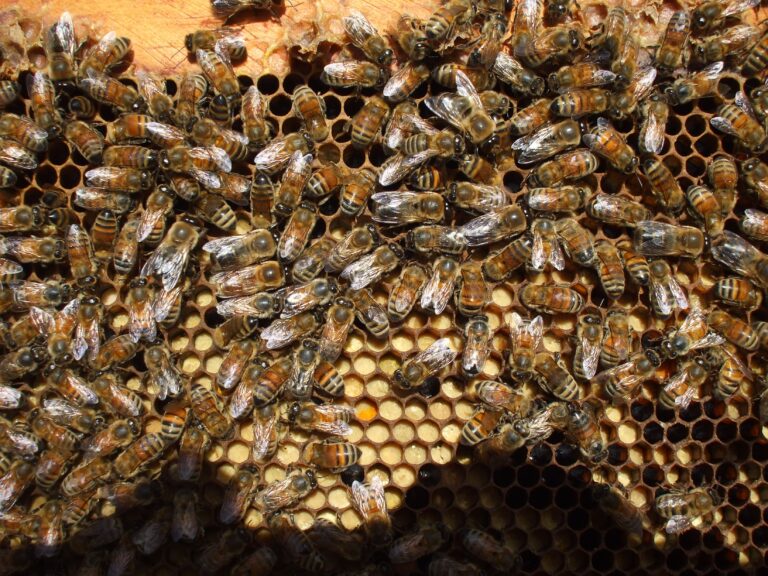
June bee colony expansion in Alberta is the fastest and most dramatic of any month in the provincial beekeeping calendar. Colonies that entered June covering 7-8 frames can reach 10 full frames of bees and brood by mid-June — a population explosion driven by lengthening days, warming temperatures, and increasing pollen availability from early summer wildflowers and clover.
Managing Hive Congestion Alberta — Preventing Late Swarms During Canola Prep
Managing hive congestion in Alberta in June is critical because a swarm during canola flow preparation is one of the most costly events in Alberta beekeeping. A colony that swarms in June loses approximately half its forager population — exactly the bees needed for the canola flow. Unlike Ontario where a June swarm still leaves enough season for partial recovery, an Alberta June swarm typically means no meaningful canola honey from that colony.
Signs of Hive Congestion in Alberta June Colonies
Hive congestion in Alberta June colonies shows as bees clustering outside the entrance (bearding) before temperatures are hot enough to explain it, multiple queen cups along frame bottom edges with larvae or eggs, rapid super fill rates combined with a brood box packed with honey leaving little room for the queen, and bees fanning aggressively at the entrance even in cool morning conditions.
How to Relieve Hive Congestion in Alberta June
The most effective congestion management in Alberta June beekeeping is proactive super addition — add a new super when the existing one is 70% full, not when it is completely capped. Place new supers below existing ones (bottom supering) directly above the queen excluder. If swarm cells are found during early June inspections, make a split immediately — this is the last viable window for Alberta splits before the canola flow makes splitting too costly.
Splitting Hives in June Alberta — Last Window Before Canola
Splitting hives in June Alberta must be completed in the first 7-10 days of the month at the absolute latest. Alberta’s compressed season means a split made after June 10th-15th has only 10-11 weeks before September 1st winter preparation begins — barely adequate for building sufficient winter stores even with aggressive autumn feeding.
For the complete Alberta hive splitting guide including the 3-week June window, walk-away vs mated queen decision, and step-by-step split instructions, see our dedicated article linked below.
Feeding Bees in June Alberta — The June Forage Gap
Feeding bees in June in Alberta is not always necessary — but understanding the June forage gap helps Alberta beekeepers make the right decision for their specific location and colony condition.
Never Feed Syrup While Honey Supers Are On
Once honey supers are installed in early to mid-June, stop all syrup feeding immediately. Bees store sugar syrup in honey frames making the resulting “honey” unmarketable and potentially illegal to sell as natural honey in Canada. In Alberta where canola honey commands premium prices, syrup contamination is a serious quality and commercial risk. Feed only before supers go on — never after.
Alberta Alfalfa Nectar Flow — Secondary June Opportunity
The Alberta alfalfa nectar flow provides a secondary honey production opportunity for beekeepers in southern and central Alberta where alfalfa is widely grown for hay production. Alfalfa blooms approximately 2-4 weeks after canola in most Alberta locations — extending the honey production season into August in areas with significant alfalfa acreage.
Wind Protection and Prairie Storm Management in Alberta June
Wind protection for bee hives in Alberta becomes critical in June as the province’s summer thunderstorm season peaks. Alberta’s prairie landscape, combined with intense June heating, creates conditions for rapid and severe storm development — including microbursts with winds exceeding 120 km/h that can tip unprotected hives within seconds.
June Storm Risks for Alberta Apiaries
June in Alberta brings three specific wind threats to bee hives: summer thunderstorm microbursts arriving with minimal warning from the northwest, sustained prairie winds accelerating through gaps in windbreaks around tall honey super stacks, and early Chinook events in foothills locations. A hive at peak June height — two brood boxes plus two partially filled supers — is significantly more vulnerable to tipping than the same hive in April with only brood boxes.
Pre-Storm Checklist for Alberta June
Before any forecast Alberta storm: re-tension all ratchet straps, add extra weight to outer covers, remove empty supers that make hives top-heavy without adding weight, and secure all loose equipment (empty boxes, feeders, nuc boxes) that could become projectiles. A fully strapped and anchored hive will survive most Alberta summer storms intact. An unstrapped hive with supers added may not. For the complete wind protection guide see our dedicated article linked below.
For the complete guide to anchoring bee hives in windy areas, bee hive straps for storms, and windbreak ideas for Alberta apiaries, see our dedicated article linked below.
Alberta Bee Act Registration — June 30 Deadline
Any person keeping honey bees or beekeeping equipment in Alberta is required by law to register by June 30 of each year. June is when this annual deadline arrives — and completing registration during the first week of June ensures it is done before the busy canola flow management period consumes all available time.
June Beekeeping Checklist Alberta — Complete
✅ Week 1 — Early June (June 1–7)
- Complete Alberta Bee Act registration — deadline June 30, do it now
- Final swarm cell inspections — weekly through June 10th
- Make any necessary hive splits — mated queens only, last viable window
- Remove Apivar strips if 42+ days have passed and supers are imminent
- Add first honey supers when bees cover 7+ frames
- Stop pollen patties when natural pollen is consistently abundant
- Re-tension all hive straps — storm season begins in June
✅ Week 2-3 — Mid June (June 8–21)
- Monitor honey super fill rate — add new super when 70% full
- Bottom super new supers — place below existing ones above excluder
- Watch canola fields near apiary — prepare for flow at 5% bloom
- Stop all syrup feeding — honey supers are on
- Check hive strap tension after any wind event above 70 km/h
- Secure loose equipment before any forecast storm
- Do Varroa alcohol wash — confirm treatment effectiveness
✅ Week 4 — Late June (June 22–30)
- Canola flow begins in southern Alberta — check supers weekly
- Confirm Alberta Bee Act registration complete before June 30
- Monitor refractometer moisture readings as canola honey accumulates
- Begin harvest planning — assemble extractor and settling tank
- Record hive weights and super fill progress for harvest timing
- Check split colonies — confirm new queens laying and population growing
FAQ — June Beekeeping Alberta Questions & Answers
The Alberta canola honey flow typically begins in late June in southern Alberta — around June 20-25 in the Lethbridge, Taber, and Red Deer County areas. In central Alberta (Edmonton, Lacombe region) canola bloom usually begins in early July. Commercial beekeepers receive approximately 72 hours’ notice from growers when canola fields reach 5-10% bloom. For hobby beekeepers, watching canola fields near your apiary for the first yellow flowers is the most reliable indicator. Have honey supers in place before bloom begins — not after you notice the flow has started.
Hive splits in June Alberta are viable only in the first week of June (June 1-7) using mated queens exclusively. After June 7th, splits become increasingly risky as the season remaining before September winter preparation shortens below 10 weeks. Never make walk-away splits in June Alberta — the 4-6 week queenless period consumes too much of the available season. If colonies show urgent swarm pressure in mid-to-late June, remove queen cells and add super space rather than making a full split. Save splitting for next spring unless swarming is certain and immediate.
A brief June forage gap can occur in some Alberta locations between mid-June — when spring wildflower flows are ending — and late June when canola begins blooming. This gap is most noticeable in areas with limited natural forage diversity and in years when canola bloom is delayed by cool weather. Signs of a June gap: reduced forager activity, decreased weight gain on hive scales, or colonies drawing down on honey stores. If a June gap occurs and supers are not yet on, resume temporary syrup feeding but stop the moment canola bloom begins. Never feed syrup while honey supers are in place.
To protect Alberta bee hives from June storms: ensure heavy-duty ratchet straps are installed and tensioned on all hives — re-tension before any forecast storm event. Place cinder blocks at all four corners of hive stands for base stability. Remove empty or partially empty supers that make hives top-heavy without adding meaningful weight. Secure all loose equipment (empty boxes, feeders, nuc boxes) that could become airborne projectiles in a microburst. Hives at peak June height — brood boxes plus multiple supers — are significantly more vulnerable to tipping than April hives. Monitor Environment Canada alerts for your Alberta region and act before storms arrive, not after.
Final Thoughts on June Beekeeping in Alberta
June beekeeping in Alberta is the culmination of everything you did in March, April, and May. The colonies you built with pollen patties and syrup in spring are now reaching peak population. The Apivar strips you installed in April are ready to come out. The supers you assembled in late May are about to fill with Alberta’s most valuable honey crop. And the hive straps you checked and tightened are about to prove their value in a June thunderstorm.
Act in June with the urgency Alberta’s season demands: complete your splits in the first week, add supers before the canola flow, register your hives before June 30, and check your storm protection before the first severe weather warning arrives. Alberta’s beekeeping season is short — but for beekeepers who prepare correctly, it is extraordinarily productive. 🐝🌻🏔️🍯
Questions about your Alberta June hive? 🐝
Ask our AI beekeeping assistant — describe your colony strength, location and current flow status and we’ll advise on the right June management strategy for your Alberta apiary.
🐝 Ask Bee Now — It’s Free🐝 WiseBee Disclosure
Affiliate Disclosure: This article contains Amazon affiliate links. If you purchase through our links, we earn a small commission at no extra cost to you. Learn more →
Disclaimer: This article is for educational purposes only and does not constitute professional apicultural or veterinary advice. Always consult a qualified beekeeper for guidance specific to your situation. Full disclaimer →