May Beekeeping Ontario:
5 Critical Tasks to Prevent Swarming
📋 In This Article
- May Beekeeping Ontario — Why This Month Defines Your Season
- Ontario Dandelion Nectar Flow — The Signal to Act
- Task 1 — Swarm Control Ontario Bees
- Task 2 — Splitting Bee Hives Ontario
- Task 3 — Reversing Brood Boxes Ontario
- Task 4 — Varroa Mite Treatment Ontario Spring
- Task 5 — Installing Bee Packages Ontario
- Ontario Honey Bee Forage May — What’s Blooming
- May Beekeeping Checklist Ontario — Complete
May beekeeping in Ontario is the most action-packed month of the entire Canadian beekeeping calendar. Colonies that survived winter are exploding in population, the dandelion flow is triggering swarm instinct, and every decision you make in May will determine your honey harvest in July and your colony strength going into next winter. These 5 critical tasks will keep your Ontario bees in the hive — and keep you ahead of the swarm.
May Beekeeping Ontario — Why This Month Defines Your Season
May beekeeping in Ontario operates under a unique pressure that beekeepers in warmer climates rarely experience: the combination of explosive spring population growth and a very short active season creates intense swarm pressure that peaks in May and early June. A colony that swarms in May loses half its bees and potentially your entire honey harvest — because a depleted post-swarm colony rarely fills supers in the limited time before the main flow ends.
The good news: swarming is predictable and preventable. Ontario beekeepers who inspect weekly in May, manage space proactively, and take decisive action when swarm cells appear will keep their bees home and their supers full. The 5 tasks in this guide are your complete May beekeeping action plan for Ontario.
The 9-Day Swarm Window in Ontario
From the time bees begin preparing swarm cells to the day they actually swarm is approximately 9 days. Weekly inspections in May leave you with only a 2-day margin of error. If you miss one week in May, you may return to find an empty hive. May beekeeping in Ontario demands consistent, weekly attention — no exceptions.
Ontario Dandelion Nectar Flow — The Signal to Act
The Ontario dandelion nectar flow is one of the most important events in the provincial beekeeping calendar. When dandelions carpet lawns and fields across Ontario — typically mid-May in southern Ontario and late May further north — your bees receive their first major nectar income of the year. This sudden abundance of food accelerates brood rearing and dramatically increases swarm pressure.
When the Ontario dandelion nectar flow begins, three things must happen immediately: stop syrup feeding, inspect for swarm cells within 48 hours, and add a honey super if bees cover 7 or more frames. The dandelion flow is also the signal that the Ontario honey bee forage season has truly begun — and that your colony is about to enter its most productive and most volatile period.
Task 1 — Swarm Control Ontario Bees
Swarm control for Ontario bees begins with understanding what triggers the swarm impulse. In May, three conditions combine to make Ontario bees exceptionally likely to swarm: a large, healthy population with nowhere to expand, the arrival of the dandelion nectar flow which signals abundance, and lengthening days which trigger reproductive instinct. When bees feel crowded and well-fed, they swarm.
How to Identify Swarm Cells in Ontario Bees
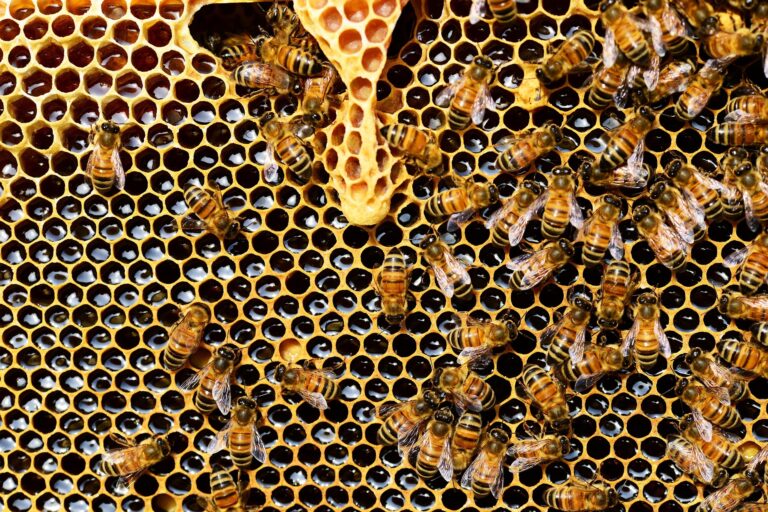
Swarm cells look like peanut shells — large, textured queen cells typically hanging from the bottom edges of frames or built along the lower face of comb. Finding queen cups (empty, no egg) is normal. Finding queen cells with eggs or larvae means preparations are underway. Finding capped swarm cells means swarming is imminent — usually within 1-3 days.
What to Do When You Find Swarm Cells
Finding swarm cells is not a failure — it is valuable information. The key is acting immediately. Do not simply remove swarm cells without addressing the underlying cause (crowding, lack of space, old queen). Removing cells without providing space or making a split only delays swarming by a few days — the colony will build new cells and swarm anyway.
Task 2 — Splitting Bee Hives Ontario
Splitting bee hives in Ontario is the most effective swarm prevention tool available — and it has the bonus of giving you a new colony. A split mimics what a swarm does naturally: divides the colony into two units, each with a queen or the means to raise one. By making a split before the colony swarms, you keep all the bees and control the process.
When to Split Bee Hives in Ontario
The ideal time for splitting bee hives in Ontario is when the colony covers 8 or more frames and swarm cells have been found or are expected. Mid-May in southern Ontario is typically the right window — the colony is strong enough to support two units, and there is enough season ahead for both halves to build up before winter.
Basic Split Method for Ontario Beginners
Find the queen in the original hive and move her — along with 3-4 frames of brood, bees, and food — to a new hive box. Leave the original hive with frames containing open brood and at least one good queen cell. The queen-right split (with the original queen) will continue laying immediately. The queenless half will raise a new queen from the brood left behind — usually within 3-4 weeks.
Task 3 — Reversing Brood Boxes Ontario
Reversing brood boxes in Ontario is a spring management technique that reduces swarm pressure by giving the colony a sense of more available space. Over winter, the cluster moves upward through the hive consuming honey stores — by spring, the upper box is typically full of bees and brood while the lower box is empty or mostly empty. This upward congestion is one of the triggers for swarming.
How Reversing Brood Boxes Ontario Works
Reversing brood boxes means simply swapping the position of the two boxes — the upper box (full of bees and brood) goes on the bottom board, and the lower empty box goes on top. This gives the expanding cluster empty cells to move into above them — reducing the feeling of congestion that triggers the swarm impulse.
When to Reverse Brood Boxes in Ontario
Reverse brood boxes in early to mid-May in Ontario — when the colony is actively building up but before swarm cells have been found. Do it on a warm day above 15°C when bees are flying actively. Only reverse if the upper box is genuinely full — if the colony is still small and clustered tightly, reversing may expose the cluster to cold and cause chilling of brood.
WiseBee Tip: Reversing Is Not a Cure for Swarming
Reversing brood boxes reduces swarm pressure but does not eliminate it. A colony determined to swarm will still swarm after reversal if other conditions — population density, queen age — remain unchanged. Use reversal as one tool among several, not as your sole swarm prevention strategy for Ontario spring beekeeping.
Task 4 — Varroa Mite Treatment Ontario Spring
Varroa mite treatment in Ontario spring is one of the most time-sensitive tasks of the May beekeeping calendar. May is your last opportunity to apply a Varroa treatment before honey supers are added — and most treatments cannot be used with supers on the hive. Missing this window means managing Varroa through the honey flow with limited options.
Spring Varroa Monitoring in Ontario
Before treating, check your actual mite levels with an alcohol wash. The spring treatment threshold in Ontario is 2 mites per 100 bees. If you installed Apivar strips in April, May is when those strips come out — confirm they have been in for a minimum of 42 days, then do an alcohol wash one week after removal to verify treatment effectiveness.
Varroa Treatment Timing for Ontario Supers
If using Apivar (amitraz strips), they must be removed at least 2 weeks before adding honey supers. Plan carefully: if your first supers typically go on in late May, Apivar strips need to be removed by May 10-15 — which means they needed to be installed by early April at the latest. Formic Pro is the only CFIA-approved treatment that can be applied with supers on.
Task 5 — Installing Bee Packages Ontario
Installing bee packages in Ontario is one of the most exciting moments in a new beekeeper’s journey — and May is the optimal window for most of Ontario. Packages installed in late April or early May benefit from the dandelion flow almost immediately, giving new colonies a strong nectar income during the critical establishment phase when they are drawing comb and raising their first brood.
May vs April Package Installation in Ontario
While late April installations are possible in southern Ontario (Windsor, Hamilton, Toronto area), May installations are safer across most of the province. Ontario’s weather is unpredictable in April — a week of cold, wet weather after installation can stress a small package severely. A May installation trades a slightly shorter season for significantly more reliable establishment weather.
What New Ontario Beekeepers Must Do Immediately After Installation
Feed 1:1 sugar syrup immediately in a frame or hive top feeder. Place pollen substitute patties directly on frames. Reduce entrance to smallest setting. Check queen acceptance on day 5. Do not open the hive for the first 5 days — regardless of how tempting it is. Ontario spring bees are defensive after long winter confinement and early disturbance significantly increases queen rejection risk.
Ontario Honey Bee Forage May — What’s Blooming
Understanding Ontario honey bee forage in May helps you predict colony behaviour and time your management decisions correctly. May forage in Ontario unfolds in stages — each bloom triggering a different response from your colony.
Early May Ontario Forage
Willows, silver maple, and early fruit tree blossoms provide the first pollen of the Ontario season — critical for nurse bees raising spring brood. These early pollen sources arrive before temperatures are consistently warm enough for full colony activity, so supplemental pollen patties remain important in early May even as natural pollen begins to appear.
Mid-May — The Ontario Dandelion Nectar Flow
The Ontario dandelion nectar flow is the most significant May forage event. Dandelions provide both abundant nectar and high-quality pollen simultaneously — triggering the queen to dramatically increase egg-laying and pushing colony population toward its spring peak. This is the moment when swarm pressure becomes critical and weekly inspections become non-negotiable.
Late May Ontario Honey Bee Forage
Apple, cherry, and other fruit tree blossoms peak in late May in most of Ontario, followed by the beginning of early clover and wildflower forage. Late May also brings the notorious “dandelion gap” — a brief period between the end of dandelion bloom and the start of clover when nectar income drops sharply. Watch for this gap and be prepared to resume syrup feeding briefly if colonies feel light during inspections.
Plant for Ontario Honey Bee Forage Now
May is the ideal time to plant melliferous flowers that will bloom by July and August — bridging the gap between spring flows and goldenrod. Borage, phacelia, cosmos, and sunflowers sown in May provide weeks of additional nectar in July and August when many Ontario beekeepers see a midsummer forage gap.
May Beekeeping Checklist Ontario — Complete
✅ Week 1 — Early May
- Remove Bee Cozy winter wrap if not already done
- Replace mouse guard with entrance reducer at medium setting
- Reverse brood boxes if upper box is full of bees and brood
- Continue 1:1 syrup feeding if dandelions not yet blooming
- Continue pollen substitute patties until natural pollen abundant
- Check Apivar strip timing — 42 days minimum before removal
- Alcohol wash Varroa count — treat if above 2% threshold
✅ Week 2 — Mid May (Dandelion Flow Begins)
- Stop syrup feeding immediately when dandelions bloom in your area
- Remove Apivar strips if 42+ days and 2 weeks before supers needed
- Inspect for swarm cells — bottom edges of frames, every 7 days
- Add first honey super when bees cover 7 of 10 frames
- Install queen excluder if using — between brood boxes and super
- Equalize colonies — move brood frames from strong to weak colonies
- Installing bee packages Ontario — install new colonies this week if ordered
✅ Week 3-4 — Late May (Peak Swarm Season)
- Weekly swarm cell inspections — non-negotiable
- Make splits from colonies showing swarm cells
- Add second super if first is 70%+ full
- Watch for post-dandelion dearth — resume feeding briefly if needed
- Check queen performance in all colonies
- Record all inspection findings in hive log
- Plant melliferous flowers for summer forage gap
- Order additional supers for June honey flow
Final Thoughts on May Beekeeping Ontario
May beekeeping in Ontario is demanding — but it is also the most rewarding month of the year. Watching a colony that survived a Canadian winter explode into spring activity, seeing the first frames of capped honey appear in your supers, and successfully preventing a swarm through attentive management are milestones that make all the work worthwhile.
Follow the 5 critical tasks in this guide, inspect every 7 days without fail, act decisively when you find swarm cells, and complete your Varroa treatment before supers go on. A beekeeper who does these things in May will harvest honey in July and send strong, healthy colonies into their second Canadian winter. 🐝🌸🍯
Questions about your May colony? 🐝
Ask our AI beekeeping assistant — describe what you’re seeing in your Ontario hive and get personalized swarm prevention advice.
🐝 Ask Bee Now — It’s Free🐝 WiseBee Disclosure
Affiliate Disclosure: This article contains Amazon affiliate links. If you purchase through our links, we earn a small commission at no extra cost to you. Learn more →
Disclaimer: This article is for educational purposes only and does not constitute professional apicultural or veterinary advice. Always consult a qualified beekeeper for guidance specific to your situation. Full disclaimer →