How to Harvest and Extract Honey in Ontario:
Moisture Levels and Best Practices
Ontario honey should be below 17.5% moisture before extracting for safe long-term storage. The technical fermentation threshold is 18.6% — above this level, naturally occurring yeasts in honey can become active and cause fermentation in the jar, producing a fizzy, off-flavoured product that cannot be sold or given as a gift. Ontario’s humid summer climate means ambient moisture can be absorbed by uncapped cells faster than in drier provinces, making the refractometer check non-negotiable. Target 17.5% or below for a comfortable safety margin — this gives you at least 1% buffer before approaching the fermentation threshold during storage.
To use a honey refractometer in Ontario: first calibrate with distilled water — the reading should display exactly 0% Brix or 0% water at ambient temperature. Place 2-3 drops of honey directly from the comb cell — not from the surface of the frame — onto the clean glass prism. Close the cover plate slowly without trapping air bubbles. Hold the refractometer toward a light source and look through the eyepiece. The moisture reading appears as the line between the blue (high moisture) and white (low moisture) zones on the scale. Read immediately after placing the sample — delay allows the honey to equilibrate with the prism temperature and shift the reading. Target 17.5% or below. Clean the prism with a damp cloth between frames. Optical refractometers cost $25-50 CAD and are accurate to ±0.5% — sufficient for harvest decisions.
You can extract Ontario honey that is not 100% capped as long as moisture tests below 17.5% on a refractometer. The 80% capping rule is a reliable visual shortcut because bees generally cap honey when it reaches safe moisture levels — but Ontario’s summer humidity means some frames can be safely extractable at 70-75% capping while other fully capped frames might read above 18% after humid weather. Always test with a refractometer rather than relying on visual capping percentage alone in Ontario. Never extract frames with more than 20-25% uncapped cells without first testing moisture — the uncapped cells contain the most recently added, highest-moisture honey and pull the whole frame’s average moisture up significantly.
Extracting honey above 18.6% moisture in Ontario leads to fermentation — a process where naturally occurring wild yeasts (Zygosaccharomyces rouxii) become active in the diluted honey and begin consuming sugars, producing carbon dioxide and alcohol. Signs of fermented honey in the jar include bubbles around the lid seal, a yeasty or sour smell when opened, a slightly fizzy texture on the tongue, and foam forming on the surface. Fermented honey cannot be unfermented — it must be discarded or used for mead making. In Ontario’s humid late summers, the fermentation risk is higher than in western provinces. Always test before extracting. Prevention costs 30 seconds. Replacement costs the entire batch.
The most effective and least disruptive method for clearing bees from Ontario honey supers before harvest is the bee escape board. Install a bee escape board — a board with a one-way valve — under the target supers at dusk the evening before harvest day. Bees exit downward through the valve overnight following the warmth of the brood cluster but cannot return upward into the supers. By morning, 95-99% of bees have cleared without smoke, chemical repellents, or physical disturbance. A bee blower or soft brush can be used for same-day clearing if escape boards are unavailable, but requires working frame-by-frame in the open — a robbing risk during Ontario’s late summer nectar gap. Always cover cleared supers immediately and do not leave them accessible in the apiary during dearth periods.
📋 In This Article
- The Ontario Honey Moisture Rule — Why 17.5% Is Your Target
- Ontario’s Humidity Problem — Why Visual Checks Are Not Enough
- How to Use a Refractometer for Honey in Ontario — Step by Step
- Clearing Bees from Honey Supers — Methods for Ontario Beekeepers
- Uncapping Ontario Honey Frames — Electric Knife vs Manual Fork
- Extracting, Filtering and Settling Ontario Honey
- Bottling and Storing Ontario Clover and Wildflower Honey
- Recommended Equipment for Ontario Honey Harvest
- FAQ — Harvesting Honey Ontario
Harvesting honey in Ontario is one of beekeeping’s most rewarding moments — and one of its most consequential decisions. The single most common mistake made by Ontario beekeepers at every experience level is extracting honey before it is ready. Honey extracted even slightly above the 18.6% fermentation threshold will bubble, foam, and develop an off-flavour in the jar — sometimes within weeks of bottling. Ontario’s humid summer climate makes this risk higher than in any other Canadian province. This guide tells you exactly how to know when Ontario honey is ready, how to use a refractometer correctly, and how to extract, filter, and bottle a harvest that will stay stable on the shelf for years.
The Ontario Honey Moisture Rule — Why 17.5% Is Your Target
The moisture content of honey determines whether it is microbiologically stable or subject to fermentation by naturally occurring wild yeasts. Understanding the moisture thresholds — and why Ontario’s specific climate makes them particularly relevant — is the foundation of safe honey harvesting anywhere in the province.
Ontario’s Humidity Problem — Why Visual Capping Checks Are Not Enough
Ontario’s summer humidity — particularly in the humid continental climate of southern Ontario — creates a honey harvest challenge that Alberta, Saskatchewan, and BC Interior beekeepers rarely face. When ambient relative humidity exceeds 60-70%, uncapped honey cells in the super actively absorb moisture from the surrounding air rather than releasing it. This means that in humid August conditions, frames that looked close to capping at your last inspection may have actually increased in moisture content rather than decreased.
The practical consequence: a frame that is 85% capped on a humid Ontario August afternoon may test at 18.8% moisture — above the fermentation threshold — because the 15% of uncapped cells contains very high-moisture recently-deposited nectar that pulls the whole frame’s average upward. Visual capping percentage and refractometer reading must both be checked before any Ontario extraction decision. Capping is necessary but not sufficient.
Extract on clear, low-humidity days whenever possible. On humid days above 75% relative humidity, consider waiting 24 hours or warming the extraction room to 30°C to help moisture leave the honey during the settling phase.
How to Use a Refractometer for Honey in Ontario — Step by Step
A honey refractometer is the single most valuable piece of equipment for Ontario honey harvest quality control — more important than any extractor upgrade or bottling tool. An optical honey refractometer costs $25-50 CAD and takes 30 seconds to use. It is the difference between a shelf-stable harvest and a batch of fermented honey that must be discarded.
WiseBee Tip — Digital vs Optical Refractometer for Ontario Beekeepers
Optical refractometers ($25-50 CAD) are accurate, durable, and require no batteries — the ideal choice for apiary use where you may be testing dozens of frames in summer heat. Digital refractometers ($60-120 CAD) display results as a number rather than requiring you to read a scale through an eyepiece — faster and easier in bright sunlight where reading an optical scale can be difficult. Both types are accurate enough for harvest decisions at ±0.5%. For Ontario beekeepers testing many supers across multiple hive visits, a digital model saves significant time. Either works — what matters is using one consistently, not which type you choose.
Clearing Bees from Ontario Honey Supers Before Harvest
Before any Ontario honey can be extracted, the bees must be cleared from the supers — and during late summer’s nectar dearth, how you do this matters as much as when you do it. Any exposed honey during the Ontario August dearth triggers robbing from surrounding colonies within minutes.
Method 1 — Bee Escape Board (Recommended for All Ontario Beekeepers)
Install a bee escape board — a flat board with a one-way Porter escape valve or a rhombus escape — under the bottom super the evening before harvest day. Bees move freely downward through the valve following the warmth of the brood cluster, but cannot navigate back upward through the one-way structure. By morning, 95-99% of bees have left the supers. Remove supers first thing in the morning, cover immediately, and transport to your extraction space. One bee escape board handles all supers stacked above it simultaneously — a single board under a stack of three supers clears all three overnight.
Method 2 — Soft Bee Brush (Emergency Same-Day Clearing)
If escape boards are unavailable, a quality soft-bristle bee brush can clear frames for same-day extraction — but must be done frame-by-frame with each frame immediately covered after brushing. Work in early morning only during the Ontario dearth, never in the afternoon when forager activity is peak. Brush gently downward along both faces of each frame with 2-3 smooth strokes, hold the frame over the open hive for returning bees to drop back in, then immediately place the brushed frame in a sealed transport box. Never leave brushed frames sitting open at the apiary.
Never Use Chemical Repellents on Ontario Honey Frames
Bee repellents like Bee-Go (butyric anhydride) or Fume-Away work by placing a repellent-soaked pad on the top of the super — bees evacuate downward away from the scent. While effective, these products leave chemical residues in wooden super boxes and frames that can be detected in honey for weeks and potentially affect flavour. In Ontario, where artisan honey is increasingly tested by buyers for purity, chemical repellent use is not recommended. Bee escape boards achieve the same result with zero chemical contact and zero residue risk.
Uncapping Ontario Honey Frames — Electric Hot Knife vs Manual Uncapping Fork
- Glides through capping wax at 65-70°C
- Minimal torn comb — clean, smooth cuts
- Works 3-4× faster than cold knife
- Self-regulating temperature models available
- Handles uneven comb surfaces well
- Investment: $60-120 CAD
- No electrical requirement
- Perfect for sunken cells and low spots
- Works on top of hot knife pass
- Essential complement to any knife
- Investment: $12-25 CAD
- Slower for full production volumes
The Two-Tool Uncapping Method
The most efficient Ontario honey uncapping approach combines both tools in sequence. First pass: run the electric hot knife in long smooth strokes from top to bottom of each frame face, removing the majority of cappings in 45-60 seconds per frame. Second pass: run the uncapping fork or uncapping roller over any areas where the knife did not cut cleanly — sunken cells, corners near the frame rail, and any irregular comb surface. This combination gets every cell open with the minimum time investment and the least comb damage, preserving drawn comb for reuse next season.
WiseBee Tip — Let the Heat Do the Work, Not the Pressure
The most common electric knife mistake is pressing down while cutting — treating the hot knife like a cold blade. An electric hot uncapping knife should be held at a shallow 15-degree angle to the frame and drawn smoothly without downward pressure. The heat melts the wax cap ahead of the blade — pressure just pushes the blade into the comb and tears it. Light touch, smooth movement, let the temperature do the cutting. A properly used electric hot knife should leave a perfectly flat comb surface with virtually no torn or crushed cells.
Extracting, Filtering and Settling Ontario Honey
Bottling and Storing Ontario Clover and Wildflower Honey
Ontario Clover Honey — Crystallization Timeline
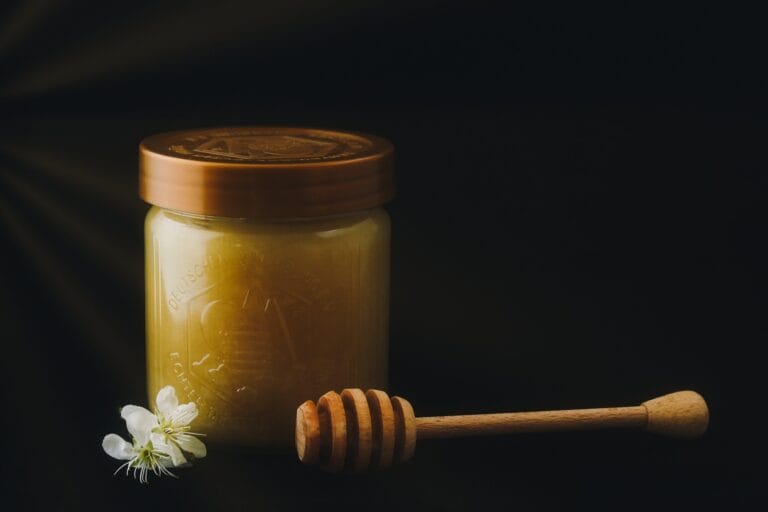
Ontario clover honey is primarily fructose-dominant — it crystallizes more slowly than canola honey but will eventually granulate over 3-12 months at room temperature. The crystallization produces a smooth, fine-grained texture in properly harvested Ontario clover honey — a natural process that does not affect quality or flavour. Customers unfamiliar with natural honey sometimes interpret crystallization as spoilage — a simple label note (“Natural honey may crystallize — this is normal and a sign of quality”) prevents confusion and returns.
Ontario Wildflower Honey — Variable Crystallization
Ontario wildflower honey’s crystallization rate depends on which flowers predominated in your local area that season. A wildflower honey with significant goldenrod content crystallizes faster and with a coarser grain than pure clover. Honey with high basswood (linden) content may remain liquid for a year or more. Test a small sample jar — if your wildflower honey shows crystallization within 4-6 weeks at room temperature, consider offering it as a premium creamed honey product by seeding with fine crystals at 14°C.
Ontario Honey — Competition and Premium Market Standards
For Ontario beekeepers entering honey in agricultural fairs or selling to premium buyers: Canadian honey standards require moisture below 17.8% for Grade Canada No.1. The Ontario Beekeepers’ Association recommends 17.5% or below for competition entry. HMF (hydroxymethylfurfural) levels must be below 40mg/kg for Canadian grade standards — this is only a concern if honey has been heated above 40°C during processing. Properly extracted and settled Ontario honey easily meets all Canadian grade standards without any special processing.
Recommended Equipment for Ontario Honey Harvest
Final Thoughts on Harvesting Honey in Ontario
Harvesting honey in Ontario is a skill that improves with every extraction — but the refractometer habit is one that must be established from the very first harvest and never abandoned. Ontario’s climate is generous with nectar and unforgiving with humidity. The beekeeper who checks moisture consistently, extracts only what is ready, and processes honey without delay produces a product that represents the extraordinary diversity of Ontario’s summer forage at its best: stable, clear, and genuinely delicious.
Test every frame. Extract every batch the same day. Bottle within 72 hours. These three rules, applied consistently, are the difference between honey that wins at the county fair and honey that ferments on the shelf. Ontario beekeeping produces some of the finest honey in Canada — make sure your harvest does it justice. 🐝🍯🌸🌿
Questions about your Ontario honey harvest? 🐝
Ask our AI beekeeping assistant — describe your super fill rate, moisture readings, and extraction setup and we’ll advise on the right harvest timing and technique for your Ontario apiary.
🐝 Ask Bee Now — It’s Free🐝 WiseBee Disclosure
Affiliate Disclosure: This article contains Amazon affiliate links. If you purchase through our links, we earn a small commission at no extra cost to you. Learn more →
Disclaimer: This article is for educational purposes only and does not constitute professional apicultural or veterinary advice. Always consult a qualified beekeeper for guidance specific to your situation. Full disclaimer →