Extracting Canola Honey in Alberta:
Preparing Your Honey House for the July Harvest
The two most effective methods for clearing bees from Alberta honey supers in July are bee escape boards and leaf blowers. Bee escape boards installed under the supers the evening before harvest allow bees to exit downward through a one-way valve overnight — by morning 95%+ of bees have left the supers without any chemical repellent or disturbance. This is the preferred method for hobbyist and sideliner beekeepers. Commercial Alberta beekeepers with dozens of hives often use a modified leaf blower or purpose-built bee blower to physically blow bees off frames at the apiary before transporting supers to the honey house — faster for large operations but requires handling frames in the open. Never bring uncovered supers into the honey house with thousands of bees still on them — the extraction room becomes dangerous and chaotic quickly.
An electric hot uncapping knife is the best tool for uncapping Alberta canola honey frames. Canola honey is significantly denser and more viscous than clover or wildflower honey, and its wax cappings sit closer to the comb surface — a cold knife drags, tears comb, and slows the entire extraction process. An electric hot knife glides through canola cappings cleanly at 65-70°C with minimal effort and virtually no torn comb. After the electric knife, an uncapping roller or uncapping fork handles low spots, sunken cells, and any areas the knife misses. This combination — hot knife for the main surface, roller for the detail — gets canola frames uncapped cleanly and quickly even at the production volumes Alberta beekeepers handle in July.
Filter Alberta canola honey immediately after extraction while it is still warm from the extractor — warm canola honey at 35-40°C flows easily through mesh strainers. Use a double stainless steel honey strainer: a coarse top screen (600 micron) catches wax chunks and comb debris, a fine bottom screen (200-300 micron) catches small wax particles. Run honey directly from the extractor gate through the strainer into a food-grade settling tank. Never press or squeeze wax through the strainer — this forces wax particles into the honey. Allow filtered honey to settle for 24-48 hours at 35-40°C so remaining air bubbles and micro-wax particles rise to the surface for skimming. Bottle immediately after settling — do not allow canola honey to begin crystallizing in the settling tank.
Extracted Alberta canola honey at room temperature (20-22°C) typically begins showing first crystallization within 2-4 weeks of extraction. At 14°C it crystallizes faster but with fine uniform crystals — the preferred creamed honey texture. At temperatures above 25°C crystallization slows but produces coarse grainy crystals when it eventually sets. For liquid honey sales, bottle within 48-72 hours of extraction and advise customers to store above 20°C. For creamed honey production, add seed honey immediately after extraction, bottle, and store at 14°C for 7-14 days. Never store bulk extracted canola honey in large open settling tanks for more than 72 hours at room temperature — the honey will begin to set unevenly and become very difficult to bottle or transfer.
For a hobbyist Alberta beekeeper with 1-5 hives, a 4-frame manual or electric radial extractor is sufficient for the July canola harvest. For a sideliner with 6-20 hives, an 8-frame electric radial extractor significantly reduces extraction time and physical effort — particularly important given canola honey’s density and the compressed Alberta harvest window. For commercial operations above 20 hives, a 20-frame or larger motorized radial extractor is standard. For any Alberta operation, electric motor drive is strongly recommended over manual — canola honey is physically demanding to spin out by hand due to its density, and hand cranking 50+ frames during a hot July extraction day is exhausting. An 8-frame electric radial extractor handles a 10-15 hive Alberta operation comfortably in a single extraction day.
📋 In This Article
- The Alberta Canola Extraction Timeline — Speed Is Everything
- Setting Up Your Honey House for Small-Scale Alberta Beekeepers
- How to Clear Bees from Honey Supers Before Harvest
- Best Tools for Uncapping Canola Honey Frames
- Extracting, Filtering and Settling Alberta Canola Honey
- Bottling and Storage — Beating the Crystallization Clock
- Complete Equipment Recommendations for the July Alberta Harvest
- FAQ — Extracting Canola Honey Alberta
Extracting canola honey in Alberta is unlike any other harvest in Canadian beekeeping. The volume is extraordinary — Alberta produces 40% of Canada’s total honey output — and the crystallization timeline is unforgiving. An Alberta beekeeper who is not ready to harvest the moment canola petal drop begins does not get a second chance. This guide covers everything you need to prepare your honey house, clear your supers, uncap efficiently, and extract, filter, and bottle Alberta canola honey before it turns to concrete in the comb or in the settling tank.
The Alberta Canola Extraction Timeline — Speed Is Everything
The most important thing to understand about extracting canola honey in Alberta is that the harvest is not a leisurely seasonal activity — it is a logistical race against chemistry. From the day canola fields begin showing petal drop, you have a narrow window measured in days to get supers off hives, bees cleared, frames uncapped, honey extracted, filtered, and into containers before crystallization begins.
Setting Up Your Honey House for Small-Scale Alberta Beekeepers
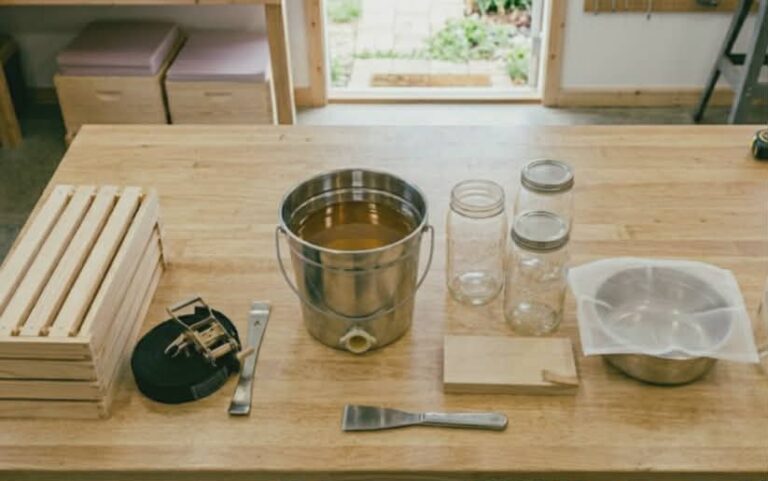
A honey house for extracting canola honey in Alberta does not need to be elaborate — but it needs to be organized, warm, and completely bee-proof. The three qualities that matter most are temperature control (warm honey extracts faster), impeccable cleanliness (required for Canadian food safety standards), and complete exclusion of bees and insects from the moment supers arrive.
WiseBee Tip — Warm the Room Before the Frames Arrive
Heat your honey house to 30°C before bringing in the first super. Canola honey frames that cool below 25°C during extraction become noticeably more viscous and spin out incompletely — leaving residual honey on the comb that is difficult to recover. A warm extraction room costs pennies in electricity and saves significant honey yield on every frame. If you have no dedicated heated space, extract on the warmest part of a July day (11am-3pm) when ambient temperatures naturally assist.
How to Clear Bees from Honey Supers Before Harvest
Before you can bring your heavy Alberta supers into the honey house, you need to clear out thousands of bees — and in July, those supers are packed. A bee escape board installed under the super the evening before harvest uses a one-way valve that allows bees to exit downward into the brood box but not return upward into the super. By morning, 95-99% of bees have left the super without any smoke, chemical repellent, or physical disturbance.
Install escape boards at dusk the evening before your planned extraction day — not in the morning. Bees need the overnight period to clear. In Alberta’s warm July nights, clearing is complete within 8-10 hours. Remove supers from the hive first thing in the morning before temperatures rise and bees become active — a warm morning sun can cause some bees to return upward through the escape.
Cover removed supers immediately with a tight-fitting cover or sealed box — exposed supers in the apiary trigger robbing within minutes during July’s dearth period after the canola flow ends.
Commercial Alberta beekeepers processing dozens of hives in a single day often use a modified leaf blower with a reduced nozzle to physically blow bees off frames at the apiary before transporting supers to the honey house. This eliminates the overnight escape board timing requirement and allows same-day harvest decisions when canola conditions align unexpectedly.
A soft high-quality bee brush works for smaller operations when escape boards are unavailable — brush gently downward along the frame surface and return bees to the hive entrance before loading supers into sealed transport boxes. A quality bee brush with long, soft bristles is essential — stiff bristles crush bees and increase defensive behaviour. Never shake frames in July — the sudden movement can dislodge capped honey from fully loaded canola frames and is aggressively provocative to bees in the dearth period.
Best Tools for Uncapping Canola Honey Frames
Canola honey is significantly denser and more viscous than clover honey, and its wax cappings can sit nearly flush with the comb surface — a combination that makes a standard cold uncapping knife genuinely impractical at production volumes. A cold knife drags through canola cappings, tears comb, and slows the uncapping process to a fraction of its potential speed. Investing in an electric hot uncapping knife slides through canola wax cappings like butter at 65-70°C — the heat melts the wax seal cleanly without pulling or tearing the underlying comb structure.
Hold the electric knife at a shallow angle and use long, smooth strokes from top to bottom of the frame. Let the heat do the work — do not press down. Rotate the frame and repeat on the other side. A practiced uncapper with an electric hot knife can uncap a fully loaded medium frame in 45-60 seconds — fast enough to keep pace with an 8-frame electric extractor running continuously.
No electric knife covers 100% of a canola frame’s surface perfectly. Sunken cells, irregular comb surfaces, and areas where cappings sit below the frame rail require a different tool. An uncapping roller (studded drum on a handle) or uncapping fork (multiple sharp tines) perforate these remaining cappings by puncturing them rather than slicing — allowing honey to flow out during extraction even from cells the knife could not reach. Run the roller or fork over any area that appears unbroken after the knife pass before loading the frame into the extractor.
Never Use a Cold Knife on Partially Crystallized Canola Frames
If your canola frames have begun to show early crystallization (Stage 2-3 — milky white appearance in cells) and you attempt to uncap with a cold knife, you will tear comb extensively and produce a waxy, crystallized mass that clogs strainers and coats the extractor basket. Warm partially crystallized frames to 35-40°C for 2-4 hours before uncapping — or use the hot knife with slower, lighter passes that melt the crystallized surface honey as it cuts. Speed matters, but warm frames matter more when canola has started to set.
Extracting, Filtering and Settling Alberta Canola Honey
The Extraction Process — Speed and Temperature
Load uncapped frames into a radial extractor immediately after uncapping — do not let them sit and cool. Start the extractor at low speed for the first 2-3 minutes to let honey begin moving before increasing to full extraction speed. Canola honey’s density means it moves more slowly from comb to extractor wall than lighter honeys — run extraction cycles 10-15% longer than you would for clover honey and confirm visually that frames are fully spun before removing.
Run the extractor gate valve into a double stainless steel honey strainer positioned over your settling tank. The coarse top screen removes wax chunks and comb debris while the fine bottom screen captures micro-wax particles. Keep the extraction room above 28°C throughout — honey that cools during filtering slows to a crawl through fine mesh strainers and adds hours to the process.
The 28-Hour Settling Rule for Alberta Canola Honey
Settle filtered canola honey for 24-48 hours at 35-40°C in a stainless settling tank. During this time, remaining air bubbles, micro-wax particles, and pollen debris rise to the surface and form a foam layer that can be skimmed off cleanly. Honey settled at the correct temperature produces a crystal-clear, competition-grade product. Do not allow the settling tank temperature to drop below 30°C during the settling period — partial crystallization can begin in the bottom of a large cold settling tank within 48-72 hours in Alberta conditions.
Bottling and Storage — Beating the Crystallization Clock
After settling, Alberta canola honey must be bottled or moved into the creaming process without delay. The bottling decision — liquid honey vs creamed honey — determines your entire post-extraction handling approach and should be made before extraction day, not after.
For Liquid Honey Sales
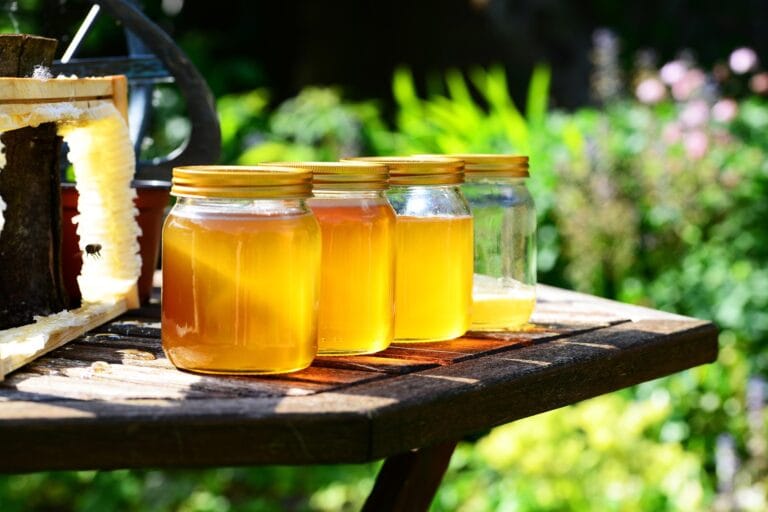
Bottle within 48-72 hours of extraction. Use food-grade buckets with honey gate valves for efficient, drip-free filling. Label immediately with harvest date — Alberta canola honey’s crystallization date is predictable and customers appreciate knowing when to expect it to set. Advise retail customers to store above 22°C for maximum liquid shelf life. Wholesale customers should be informed of the 3-4 week liquid window at room temperature.
For Creamed Honey Production
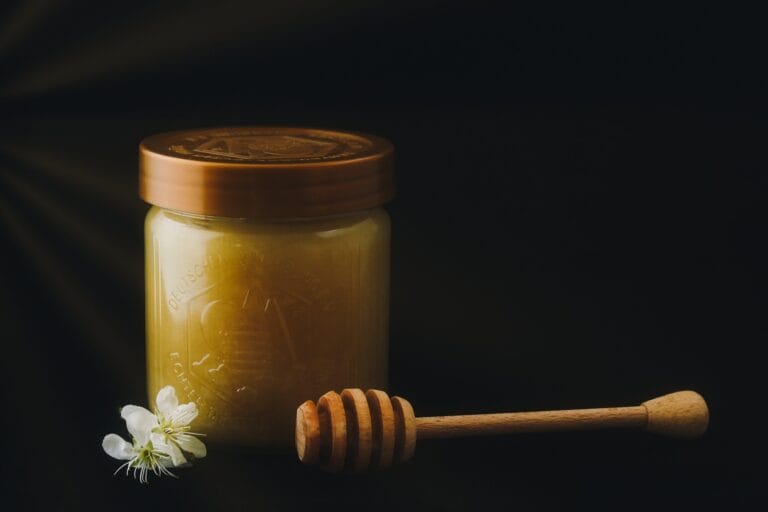
Add seed honey immediately after the settling tank is skimmed — do not wait. Mix thoroughly, bottle, and transfer to your 14°C creaming space. The creamed honey process is forgiving in timing as long as seed honey is added before any spontaneous crystallization begins in the settling tank. Once you see the first cloudiness forming at the bottom of the settling tank — you have missed the window for fine-grained creamed honey and must bottle immediately as-is or process as bulk crystallized honey.
Complete Equipment Recommendations for the July Alberta Harvest
⭐ The Most Important Investment — Your Extractor
Every other tool in the honey house supports the extractor. For Alberta canola honey volumes, a manual extractor is functional but exhausting — canola honey’s density requires significantly more force to spin out than clover honey, and July extraction days in Alberta can involve processing 20-60+ supers in a single session. An electric radial extractor eliminates physical fatigue from the equation entirely and reduces full-day extraction time by 40-60%.
Final Thoughts on Extracting Canola Honey in Alberta
Extracting canola honey in Alberta is the culmination of an entire season’s work — the payoff for splits made correctly in May, supers added proactively in June, and harvest preparation completed in advance of the July flow peak. The beekeeper who arrives at extraction day with a clean honey house, a working electric extractor, a set of bee escape boards already installed, and an electric hot knife ready to go captures the full value of Alberta’s extraordinary prairie honey flow.
The beekeeper who is not ready — who scrambles for equipment after petal drop, who leaves frames sitting in the honey house uncovered, who allows honey to settle for five days in a cooling room — watches Alberta’s most generous natural resource turn white and solid in the tank. Prepare early, move fast, and let Alberta’s canola honey season reward the preparation you put into it. 🐝🌻🍯🏔️
Questions about your Alberta honey extraction setup? 🐝
Ask our AI beekeeping assistant — describe your hive count, equipment on hand, and harvest timeline and we’ll advise on the right extraction setup for your Alberta operation.
🐝 Ask Bee Now — It’s Free🐝 WiseBee Disclosure
Affiliate Disclosure: This article contains Amazon affiliate links. If you purchase through our links, we earn a small commission at no extra cost to you. Learn more →
Disclaimer: This article is for educational purposes only and does not constitute professional apicultural or veterinary advice. Always consult a qualified beekeeper for guidance specific to your situation. Full disclaimer →