Ontario Beekeeping in August:
Honey Extraction, Winter Prep & Mite Control
Ontario beekeeping in August involves five sequential priorities. First, extract the main summer honey crop in early August — check that 80%+ of cells are capped and moisture reads 17.5% or below on a refractometer before pulling supers. Second, reduce hive entrances to prevent robbing as the summer nectar gap begins between clover and goldenrod flows. Third, install Varroa treatment (Apivar strips) the same day supers come off — this is the most important management action of the entire Ontario beekeeping year. Fourth, begin feeding 1:1 syrup and install pollen substitute patties to stimulate maximum queen laying through August and September, building the winter bee population. Fifth, do a full late summer hive inspection to assess population, brood pattern, and stores — any colony below 8 frames of bees in August needs immediate support.
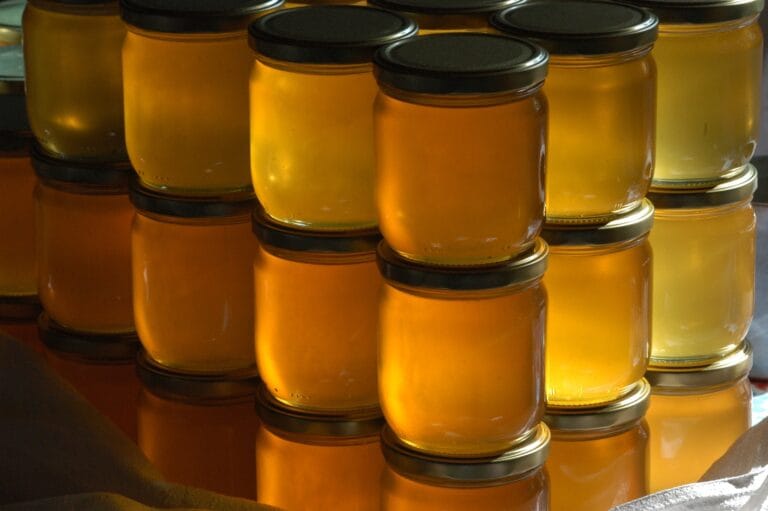
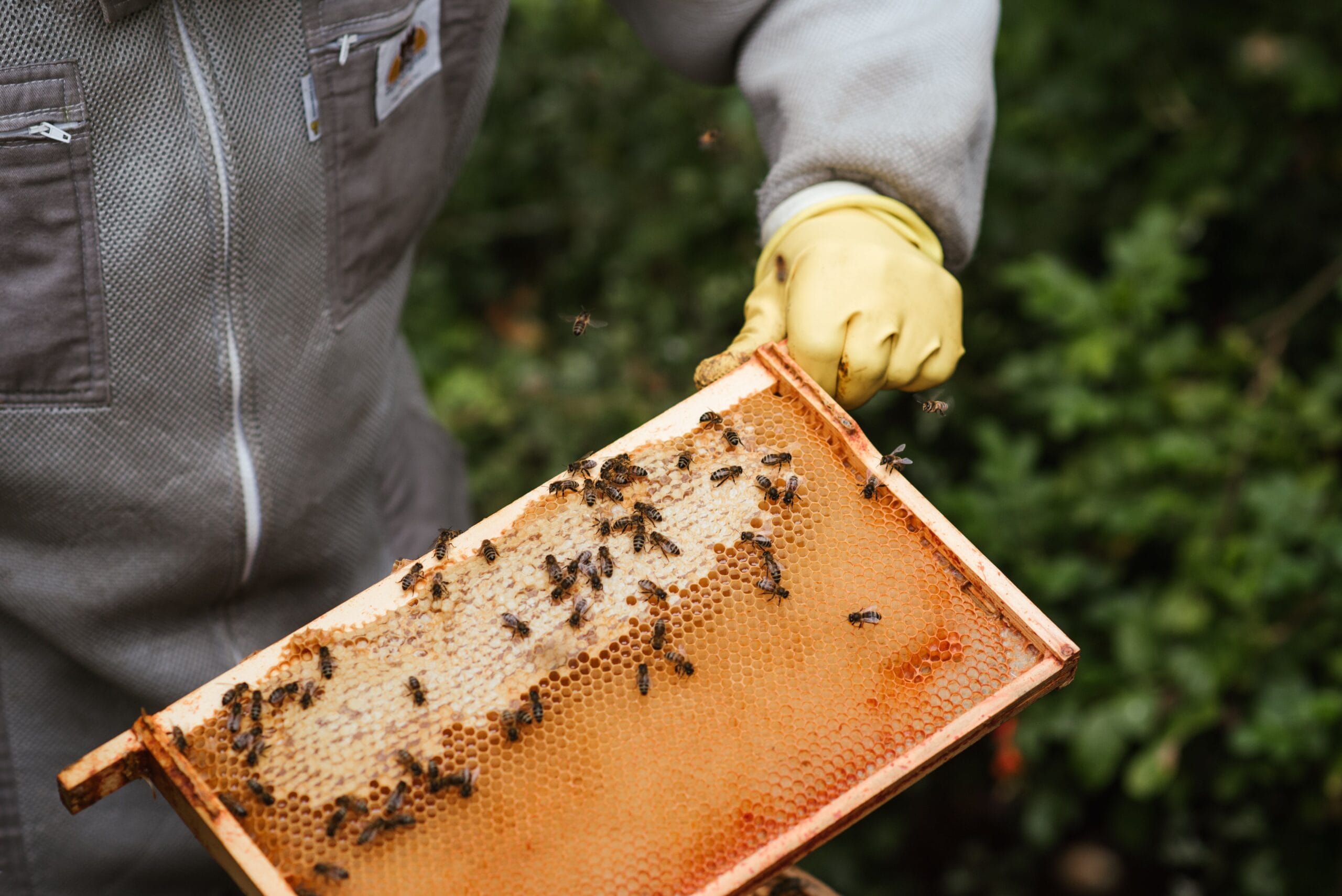
Extract Ontario honey in early August when at least 80% of cells in the super are capped and your refractometer confirms moisture below 17.5%. The Ontario clover flow ends in late July to early August — do not wait past August 15th to extract, as the dearth period following the clover flow can cause partially filled supers to be robbed or the honey to be moved back down into the brood nest. Install bee escape boards the evening before extraction day and extract the following morning. Never attempt to extract honey in Ontario during the late July to mid-August nectar gap without protective measures — exposed supers trigger robbing from neighbouring colonies within minutes.
August is the absolute deadline for Varroa treatment in Ontario because the bees raised in August and September are the winter bees — the long-lived fat-body bees that must survive 6-7 months of Ontario winter from October to April. When a larva is parasitized by Varroa in the capped brood stage, the emerging bee has reduced fat body development, shortened lifespan, and compromised immune function. A winter bee parasitized in August will die in December rather than living until April, collapsing the winter cluster before spring. Treating after September is not effective — the winter bee generation has already been damaged. The window for effective pre-winter Varroa management is August 1st through September 15th at the absolute latest.
Ontario’s summer nectar gap occurs roughly from late July through mid-August — the period between the end of the clover and wildflower flow and the beginning of the goldenrod flow. During this 2-4 week dearth, strong colonies actively rob weaker ones and any exposed honey source. Prevent robbing by reducing all hive entrances to 1-2 bee widths immediately when you notice reduced forager traffic, by never leaving honey supers uncovered outside, by avoiding syrup feeding with entrance feeders (use internal frame feeders only during dearth), and by combining any colony below 6 frames of bees with a stronger colony before it becomes a robbing target. Once goldenrod begins blooming in mid-August, the robbing pressure decreases significantly as bees focus on the new flow.
Stimulate queen laying in Ontario in August by feeding 1:1 sugar syrup (equal parts sugar and water by weight) via internal frame feeders — light syrup mimics a nectar flow and encourages the queen to maintain or increase her laying rate. Install a pollen substitute patty directly on the top bars above the cluster — nurse bees consuming protein produces brood food (royal jelly) that feeds larvae, supporting the maximum number of winter bees being raised simultaneously. Begin stimulation feeding in early August before the nectar gap deepens. Continue feeding until the goldenrod flow provides natural forage, then switch to 2:1 syrup (heavier concentration) in September for actual winter stores building rather than laying stimulation.
📋 In This Article
- The August Pivot — From Honey Production to Colony Survival
- Pulling and Extracting the Main Summer Honey Crop in Ontario
- The Late Summer Nectar Gap and Robbing Prevention
- August Varroa Control — Protecting the Winter Bee Generation
- Supplemental Feeding — Stimulating the Queen for Winter Bees
- The Late Summer Hive Inspection — What to Look For
- August Ontario Beekeeping Checklist
- Coming Next — Three Deep Dive August Articles
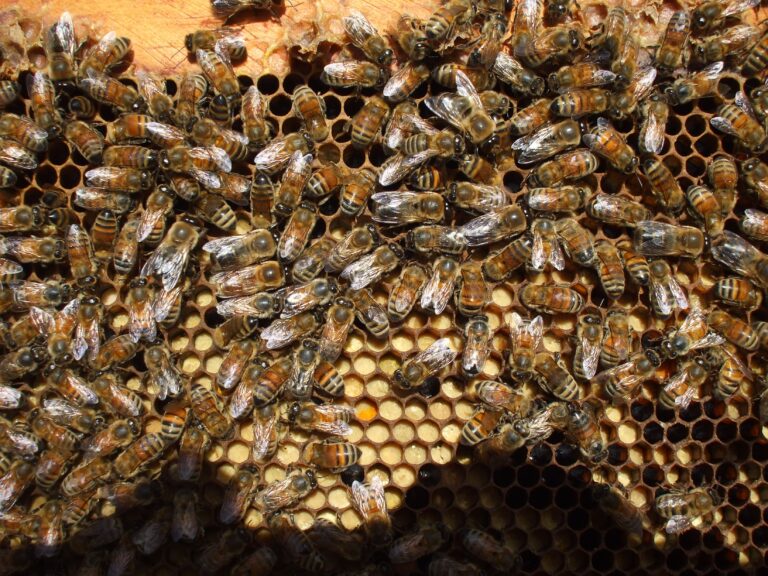
Ontario beekeeping in August is the month that determines which colonies will be alive in April. It does not feel dramatic — no swarms, no massive honey flows, no urgent splits. But the decisions made in August are irreversible by October: Varroa loads that go untreated, queens that stop laying due to nutrition stress, colonies that enter the nectar gap without adequate stores. August is when the beekeeper stops thinking about this year’s honey and starts thinking about next year’s bees.
The August Pivot: From Honey Production to Colony Survival
Every year, Ontario beekeepers make the same mental error in August: they continue managing colonies for honey production after the productive summer flow has ended. Supers stay on too long. Varroa treatment is delayed because “the goldenrod flow hasn’t started yet.” Feeding is postponed because “there’s still some forage out there.” Each of these delays costs winter bees and stores in a way that cannot be recovered once October arrives.
- Add supers proactively
- Maximize forager population
- Prevent swarming
- Monitor honey fill rates
- Measure success in kilograms
- Remove supers — treat Varroa
- Maximize winter bee population
- Prevent robbing
- Monitor brood quality and stores
- Measure success in April survival
The August pivot is not gradual — it should happen on a specific day, ideally August 1st, when the beekeeper makes a conscious decision to shift every management priority from production to survival. The colonies that thrive through Ontario winters are managed by beekeepers who made this pivot cleanly and early.
Pulling and Extracting the Main Summer Honey Crop in Ontario
For most Ontario beekeepers, August 1st to 15th is the primary window for pulling and extracting the main summer honey crop. The clover flow has ended or is ending, partially filled supers are at risk of being robbed or partially consumed by the colony during the dearth, and Varroa treatment cannot be installed safely while honey supers are present. Every week of delay past August 1st is a week of Varroa treatment lost from the critical pre-winter window.
The Two-Check Rule Before Pulling Supers
Before removing any Ontario honey super in August, confirm two conditions are met simultaneously. First, at least 80% of cells must be visibly capped with white wax — bees cap honey only when moisture content has dropped to safe levels through their fanning and evaporation work. Second, verify with a refractometer that moisture reads 17.5% or below — Ontario’s humid August conditions mean bees sometimes cap honey before it has fully evaporated to safe fermentation-proof levels. A super that passes the visual check but reads 19% on the refractometer will ferment in the jar within 3-6 months. Never skip the refractometer check during Ontario’s humid late summer.
WiseBee Tip — Escape Boards the Evening Before, Extract Same Morning
Install bee escape boards under all target supers at dusk the evening before extraction day. By morning, 95%+ of bees have moved downward through the one-way escape valve. Remove supers first thing in the morning before temperatures rise — cover each super immediately and transport to your extraction space. Begin extracting the same morning supers arrive — partially uncovered frames sitting in a warm room attract any bee that enters within minutes, restarting the robbing risk indoors. Extract, filter, settle, and have honey in sealed containers by evening of extraction day.
Never Leave the Brood Box Without Adequate Stores After Pulling Supers
When pulling honey supers in August, check that the brood box retains at least 2 full frames of honey after extraction. Do not pull every frame of honey from the colony — leave enough to prevent starvation during the nectar gap while feeding and Varroa treatment are being established. A colony with zero stores and no super during the August dearth can starve within 7-10 days in a severe gap year. Leave the colony’s emergency reserves intact and supplement immediately with 1:1 syrup.
The Late Summer Nectar Gap and Robbing Prevention in Ontario
Ontario’s late summer nectar gap — the 2-4 week dearth between the end of the clover flow and the beginning of the goldenrod flow — typically runs from late July through mid-August in most of the province. During this period, strong colonies become aggressive foragers of any available sugar source, including neighbouring hives. A single weakened colony in an apiary during dearth can trigger a cascade of robbing that destabilizes multiple hives simultaneously.
The Goldenrod Gap — Ontario’s Unique Summer Dearth
Ontario’s goldenrod flow is one of the province’s most valuable late-season resources — a natural autumn feeding supplement that beekeepers in Alberta and most other provinces simply do not have. But the gap before it starts is one of the most dangerous periods of the Ontario beekeeping year. Goldenrod begins blooming at different times across Ontario — earlier in southern regions like Niagara and Essex County, later in northern areas like Sudbury and Thunder Bay. Know your local goldenrod timing and manage the gap aggressively until you see the first blooms.
Ontario’s Goldenrod Advantage — The Fall Flow That Alberta Doesn’t Have
When goldenrod (Solidago canadensis) and aster begin blooming in mid-August to September, Ontario beekeepers gain a second-season forage window that significantly reduces the supplemental feeding burden of autumn. A strong Ontario colony can collect 5-10kg of goldenrod honey in a good flow year — reducing the winter stores deficit created by any late August management decisions. Do not remove goldenrod honey from the colony — let bees fill the brood box to winter weight naturally before switching to 2:1 supplemental syrup in September.
Anti-Robbing Measures — August Protocol
During the Ontario nectar gap, implement the following simultaneously rather than reactively: reduce all hive entrances to 1-2 bee widths regardless of colony strength, switch all syrup feeding from entrance feeders to internal frame feeders immediately, never leave uncovered supers, wet frames, or cappings wax accessible anywhere in the apiary, combine any colony below 6 frames of bees before it becomes a robbing target rather than after the attack has begun, and schedule all hive inspections for early morning before forager activity peaks — manipulating hives mid-afternoon during the dearth triggers robbing from neighbouring colonies attracted by exposed honey scent.
August Varroa Control: Protecting the Ontario Winter Bee Generation
Of all the management decisions in Ontario beekeeping in August, Varroa treatment timing is the most consequential and the most commonly delayed. Understanding exactly why August is the absolute deadline for effective pre-winter Varroa control — and what happens to colonies when it is missed — is the single most important piece of knowledge for an Ontario beekeeper.
The declining survival rates above reflect what happens to the winter bee generation as Varroa treatment is delayed. Each week of delay past August 1st means more winter bees raised in Varroa-infested brood — bees with reduced fat bodies, shortened lifespans, and compromised virus resistance. A colony where winter bees were parasitized in August begins collapsing in December-January rather than surviving to April, regardless of how much food it has stored.
The Ontario August Varroa Treatment Standard
The standard Ontario post-harvest Varroa treatment protocol is Apivar (amitraz strips) installed immediately when honey supers come off — two strips per colony suspended between frames in the brood area for 42 days. Do not delay Apivar installation waiting for a more convenient time. The same day supers come off is the correct installation day — carry your Apivar strips to the apiary on extraction day and install immediately after removing the last super. Remove Apivar strips in mid-September before autumn feeding begins in earnest.
Temperature and Formic Acid in August — Ontario Consideration
Formic acid treatments (Formic Pro) are effective for Varroa and do not require honey super removal — a significant advantage in theory. However, Ontario’s August temperatures frequently exceed 30°C, which risks queen loss with formic acid at full-dose application. If you choose formic acid over Apivar in August Ontario, use the reduced-dose extended-release protocol and monitor the queen closely for the first week post-application. Apivar remains the safer standard choice for Ontario August treatment when temperatures are uncertain.
Supplemental Feeding: Stimulating the Queen for Maximum Winter Bees
The goal of August feeding in Ontario is not to build winter stores — that comes in September with 2:1 syrup. August feeding has one specific purpose: keeping the queen laying at her maximum rate through the nectar gap so that the winter bee generation being raised in August and September is as large as possible. Every frame of winter bees raised in August is a colony asset that cannot be replaced once October arrives.
1:1 Syrup — The Laying Stimulant
Feed 1:1 sugar syrup (by weight: 1kg sugar dissolved in 1L warm water) via internal frame feeders from August 1st through the start of the goldenrod flow. Light syrup mimics a modest incoming nectar flow — the physiological signal the queen uses to maintain or increase her laying rate. Colonies receiving 1:1 syrup consistently maintain larger late-summer brood nests than colonies with no feeding during the gap. Replace the feeder every 3-4 days to keep syrup fresh — warm August temperatures can cause light syrup to ferment in an entrance feeder within 48 hours.
Pollen Substitute Patties — Protein for Nurse Bees
Install a pollen substitute patty (MegaBee, Global Patties, or equivalent) directly on the top bars above the winter bee brood cluster. Nurse bees consuming protein produce the royal jelly that feeds developing larvae — adequate protein availability during August directly increases the number of winter bees that develop with full fat body reserves. Position the patty so bees can access it from the cluster without travelling far — cold nights in late August can reduce nurse bee mobility even before the formal winter cluster forms.
WiseBee Tip — Switch to 2:1 Syrup When Goldenrod Blooms
When goldenrod begins blooming in your area — typically mid-August in southern Ontario, late August in the north — switch from 1:1 to 2:1 syrup (2kg sugar dissolved in 1L water). Heavier syrup is processed more efficiently by bees for stores rather than triggering laying activity, and allows the colony to build winter honey reserves rapidly alongside the natural goldenrod forage. Continue 2:1 syrup feeding until the colony has a full 8-10 frames of honey stores or until temperatures drop below 10°C, whichever comes first.
The Late Summer Hive Inspection — What to Look for in August Ontario
The late summer hive inspection in Ontario — ideally completed in the first two weeks of August — is the diagnostic foundation for all winter preparation decisions. It answers three questions that determine everything that follows: Is the queen laying well enough to produce adequate winter bees? Is the colony strong enough to defend itself during the dearth? And is the Varroa load low enough, or does treatment need to begin immediately?
The August Inspection Checklist
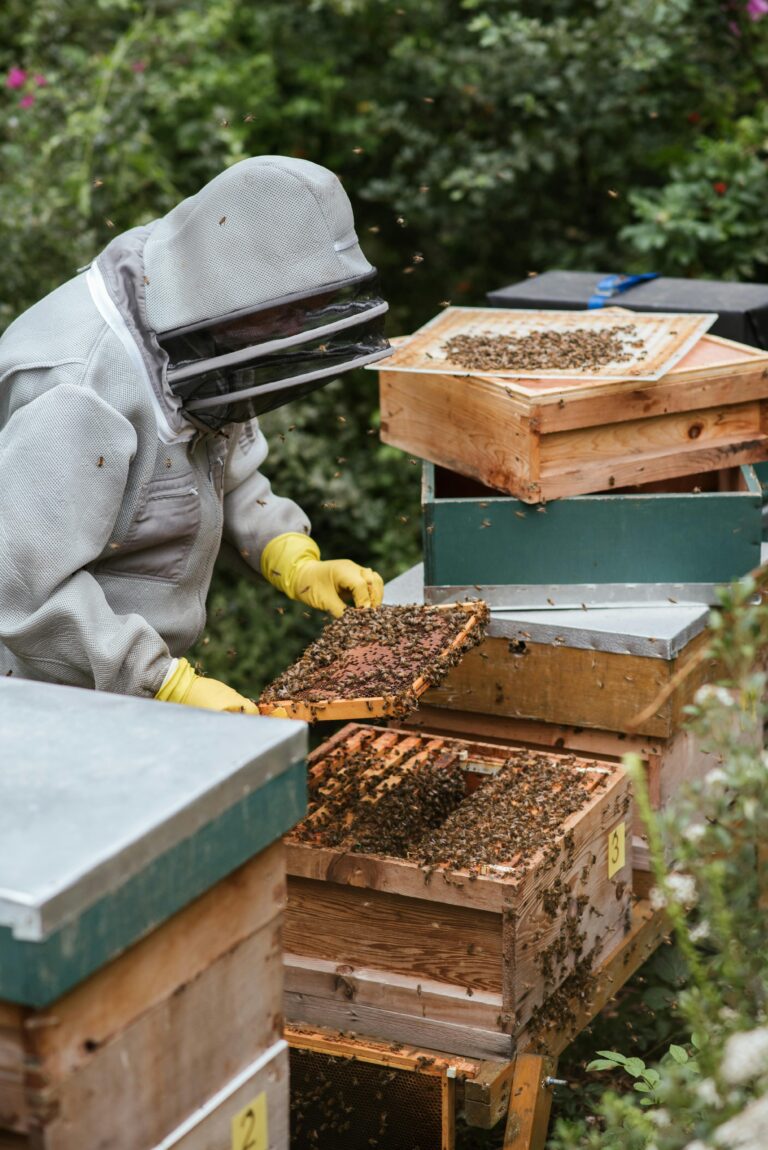
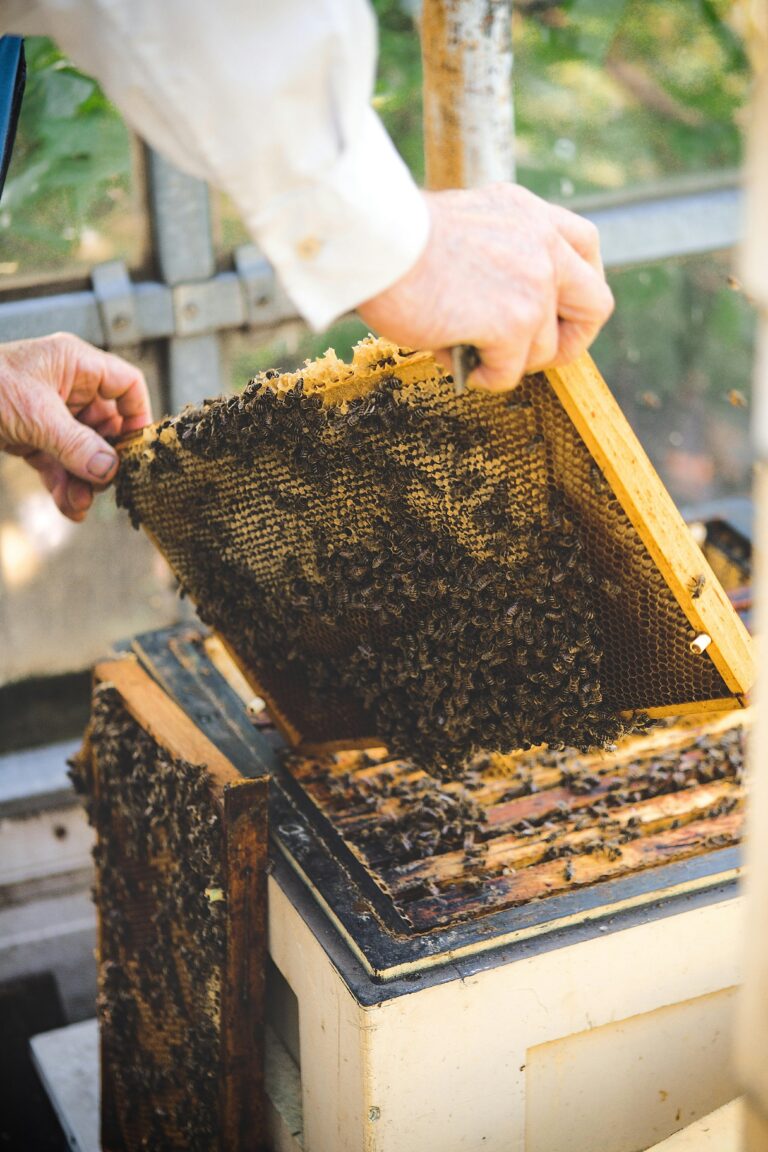
Queen and Brood: Confirm the queen is present and laying a solid brood pattern — minimal gaps, appropriate pattern for the colony’s summer population. A shotgun brood pattern in August (scattered, irregular) indicates either a failing queen or high Varroa-induced brood disease. A failing queen in August is an emergency — the replacement queen must be introduced immediately for her brood to contribute to the winter bee generation.
Population: Count frames of bees — a winter-ready Ontario colony needs a minimum of 8-10 frames well-covered with bees by September 1st. A colony on 5-6 frames of bees in early August can still recover with aggressive feeding and a productive queen, but it requires immediate intervention. A colony on 3-4 frames in August should be combined with a stronger colony rather than attempting to winter it independently.
Stores: After pulling honey supers, the brood box should contain at least 2 full honey frames. Mark any colony with less than this immediately for priority feeding — starvation during the August nectar gap is more common than most Ontario beekeepers expect.
August Ontario Beekeeping Checklist — Week by Week
✅ Early August (Week 1-2) — The Critical Window
- Check super fill rate and moisture (refractometer) — extract as soon as 80% capped + 17.5% moisture
- Install bee escape boards evening before extraction
- Extract, filter, settle and bottle same day supers are removed
- Install Apivar strips same day as super removal — 2 strips per colony in brood area
- Reduce all hive entrances to 1-2 bee widths immediately — dearth begins now
- Begin 1:1 syrup in internal frame feeders — stimulate queen laying
- Install pollen substitute patty on top bars above cluster
- Do full late summer inspection — queen, brood pattern, population, stores
✅ Mid August (Week 2-3) — Nectar Gap Peak
- Maximum robbing risk — never leave frames or supers uncovered near apiary
- Replace internal feeder syrup every 3-4 days — warm weather ferments light syrup quickly
- Combine any colony below 6 frames of bees with newspaper method
- Check Varroa strips are positioned correctly — touching brood frames, not outer walls
- Replace pollen patty when consumed — continue protein support
- Watch for goldenrod first blooms — signals end of dearth period
✅ Late August (Week 3-4) — Goldenrod Transition
- Switch to 2:1 syrup when goldenrod blooms — stores building vs stimulation
- Assess winter stores progress — target 8 frames of capped honey by October 1st
- Remove Apivar strips if 42-day treatment window is complete (if started Aug 1)
- Check colony populations again — any below 8 frames needs aggressive feeding
- Begin sourcing winter equipment — inner covers, mouse guards, wrapping materials
- Record hive weights for pre-winter baseline comparison in October
Coming Next — Three Deep Dive August Articles
Final Thoughts on Ontario Beekeeping in August
Ontario beekeeping in August is the month of invisible consequences. The beekeeper who extracts on time, treats Varroa immediately, feeds 1:1 syrup through the gap, and passes every late summer inspection threshold will not know until April just how decisive those August decisions were. The beekeeper who delays — waiting one more week to pull supers, planning to treat “next weekend,” figuring the colony will manage the gap on its own — will know in February when they open a dead-out that had plenty of stores but no winter bees left to cluster around them.
August is quiet. It does not demand your attention the way swarm season does or the way a full honey super does. That quietness is deceptive. Do the work in August with the same urgency you give to June splits and July harvest, and your Ontario colonies will reward you with the only thing that matters more than this year’s honey: living bees in April. 🐝🍂❄️🍯
Questions about your Ontario August apiary? 🐝
Ask our AI beekeeping assistant — describe your colony strength, super fill rate, and Varroa levels and we’ll advise on the right August management priorities for your Ontario hives.
🐝 Ask Bee Now — It’s Free🐝 WiseBee Disclosure
Affiliate Disclosure: This article contains Amazon affiliate links. If you purchase through our links, we earn a small commission at no extra cost to you. Learn more →
Disclaimer: This article is for educational purposes only and does not constitute professional apicultural or veterinary advice. Always consult a qualified beekeeper for guidance specific to your situation. Full disclaimer →