Ontario Beekeeping in September:
Fall Feeding, Hive Weight, Varroa and Mouse Guards
Ontario beekeepers in September should: verify actual hive weight or estimated stores (do not assume goldenrod filled the supers), conduct a post-treatment alcohol wash to confirm Varroa is below 1%, assess colony strength and queen status, begin 2:1 sugar syrup feeding for any colony below target winter weight, reduce the entrance to prevent robbing, and install metal mouse guards before October 1st. The order matters — weigh first so you know how much syrup is needed, retest Varroa before investing feeding effort in a colony that may not survive, and install the mouse guard last when temperatures drop and bees begin to cluster.
According to the Ontario Beekeepers’ Association Technology Transfer Program, a colony on a single brood box should weigh 70-90 lbs (31.9-40.8 kg) going into winter. A colony on two brood boxes should weigh 100-120 lbs (45.4-54.4 kg). These are total hive weights including the equipment — not just stores weight. To estimate without scales, place one hand under the back of the bottom board and heft the hive from one side. A hive ready for winter should feel heavy and require real effort to lift. This hefting method is a useful comparative indicator but is not a substitute for scale measurement when precision matters, such as when deciding how much syrup a light colony needs.
Start fall feeding Ontario bees as soon as you confirm a colony is below its winter weight target — ideally in early September while daytime temperatures are still consistently above 15°C. Below 10-13°C, bees slow syrup uptake and processing significantly; below 10°C, they cannot process syrup efficiently. The Ontario window for effective 2:1 syrup feeding is roughly September 1-20 for most of the province, with southern Ontario having a few additional days of viable temperature. Any colony still below target weight after mid-September should receive fondant or candy board as a supplement, since syrup feeding at near-freezing temperatures is ineffective and potentially harmful.
It depends on your region and colony strength — goldenrod is not a reliable stores-filling flow everywhere in Ontario. In southwestern Ontario and areas with dense agricultural field margins, goldenrod can produce a meaningful nectar flow that adds 5-15 lbs of honey to supers. In northern Ontario, urban areas, or during dry years, goldenrod may yield very little. Never assume supers are filling — inspect weekly during goldenrod bloom. If frames are being capped actively, leaving supers on is justified. If bees are present but not capping, the hive may be back-filling the brood nest rather than producing extractable honey. Remove supers by September 15th at the latest regardless of goldenrod status — any honey left in supers after this point in Ontario is rarely worth extracting and delays the fall preparation window.
A colony covering fewer than 6-7 frames of bees in September is unlikely to generate enough cluster heat to survive an Ontario winter — regardless of how much syrup you feed it. The OBA Technology Transfer Program suggests approximately 7-8 frames of bees as a minimum for colonies in colder Ontario regions. A weak colony that consumes more resources (syrup, your time, equipment) than it would cost to replace with a spring package or nucleus colony in April is not worth the risk of overwinter failure. The correct decision for a genuinely weak colony in September is to combine it with a healthy colony using the newspaper method — the combined colony enters winter with adequate population and the weak colony’s remaining bees contribute to winter survival instead of dying alone.
Install mouse guards in Ontario between September 15th and October 1st — when night temperatures consistently drop below 10°C and mice begin seeking winter shelter. Installing too early (August) is unnecessary while bees are actively guarding a reduced entrance. Installing too late (after cluster formation in October) requires opening a cold hive and disturbing the winter cluster. Always check for mouse presence inside the hive before installing — a torch inspection through the entrance reveals nesting material or droppings if a mouse has already entered. Never install a mouse guard trapping a mouse inside the colony.
📋 In This Article
- The Essential September Checklist
- The Goldenrod Question — What to Expect by Region
- Retest Varroa After Late-Summer Treatment
- Is the Colony Strong Enough to Winter?
- Winter Hive Weight Targets for Ontario
- Fall Feeding with 2:1 Sugar Syrup
- Reduce Entrances and Prevent Fall Robbing
- Install Mouse Guards Before Cold Weather
- What Not to Do in September
September is the last month in Ontario when your management decisions can meaningfully change winter outcomes. The colony that enters October with adequate stores, low Varroa, a functioning queen, and a protected entrance has every biological tool needed to survive until April. The colony that enters October with any one of those elements missing rarely does. The order of tasks in this guide is deliberate — assess before you act, and act before the window closes.
Ontario Beekeeping in September: The Essential Checklist
The September Transition — Goldenrod, Asters, and Colony Assessment
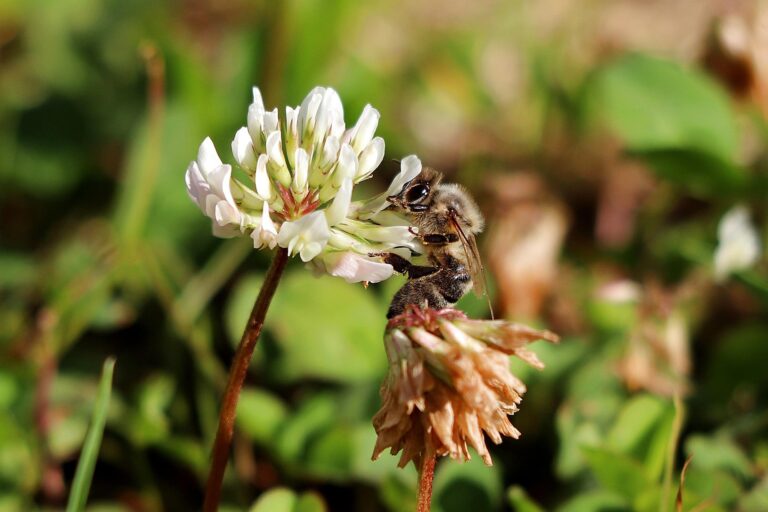
Goldenrod begins blooming in Ontario in late August and continues through September depending on region — asters follow and can provide nectar until the first hard frost. These late-season forage plants are ecologically important and can supplement colony stores in good years. The critical mistake Ontario beekeepers make in September is assuming the goldenrod flow is filling the hive without verifying it with weekly inspections.
Never Assume Goldenrod Filled the Hive
A common September error: the beekeeper sees goldenrod blooming, assumes the bees are collecting it, and skips the stores assessment until October — when it is too late to feed effectively. Bees visiting goldenrod may be back-filling the brood nest rather than adding to extractable honey stores. Always weigh or count capped frames before deciding how much feeding is needed. A weekly heft of the hive from the back takes 10 seconds and gives you the data you need.
Retest for Varroa After Late-Summer Treatment
Is the Colony Strong Enough to Survive Winter?
Before investing September feeding and preparation effort in a colony, assess whether it has the biological foundation to survive. The two most important indicators are bee population and queen status — stores can be supplemented, but a small cluster or a failing queen cannot be fixed by feeding alone.
Population — The 7-Frame Minimum
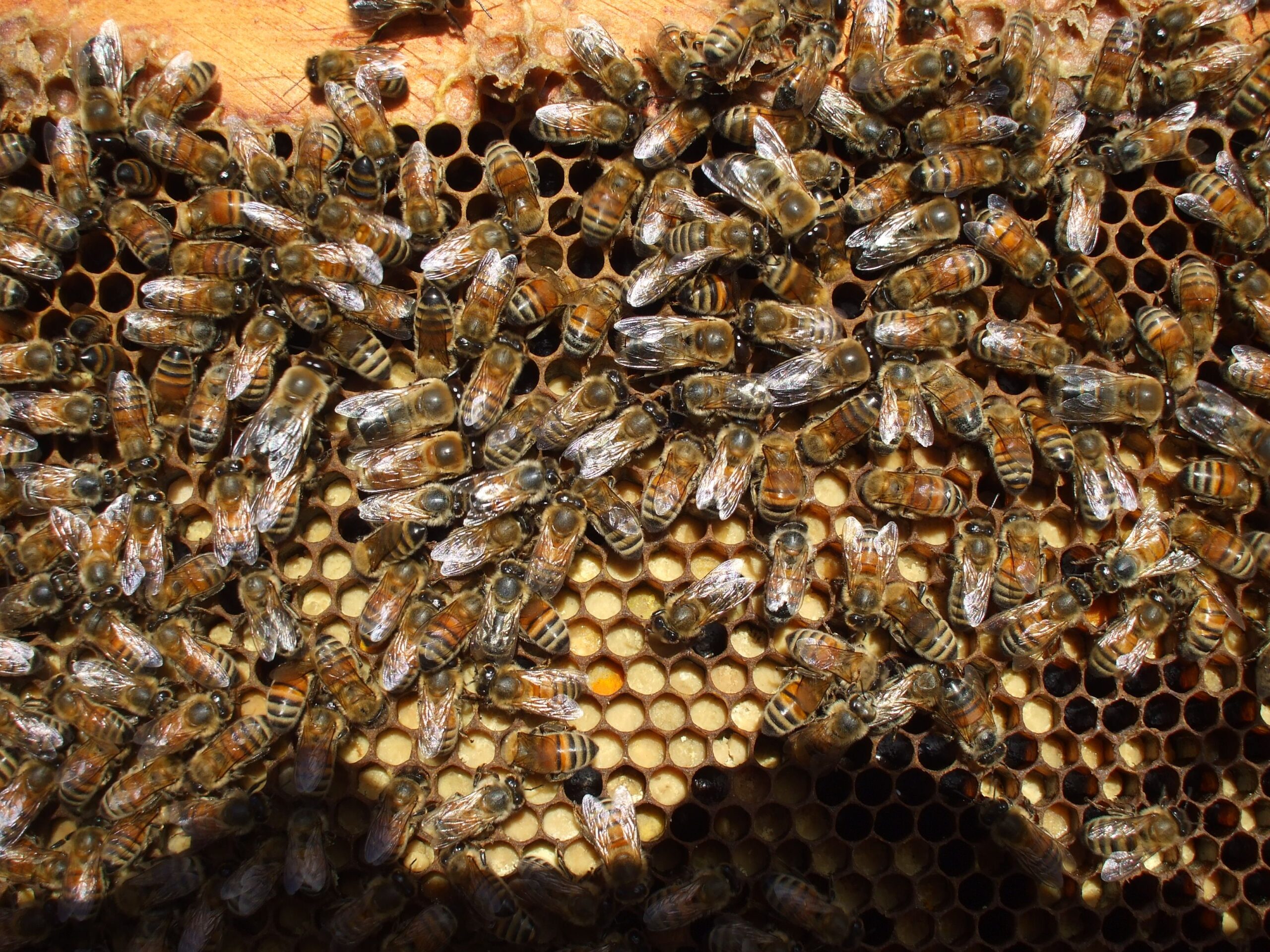
The OBA Technology Transfer Program references approximately 7-8 frames of bees as a minimum for colonies in colder Ontario regions heading into winter. A frame of bees is both sides of a Langstroth deep frame covered with workers. A colony covering fewer than 6 frames in September does not generate enough cluster heat to survive extended cold snaps — regardless of how much syrup you add. Count frames covered by bees during a warm afternoon inspection when bees are inside the cluster rather than foraging.
Queen Status — September Is Your Last Inspection Point
The September inspection is your final reliable opportunity to confirm the queen is present, laying normally, and producing a tight brood pattern. A queen failing in September cannot be replaced in time for her brood to contribute meaningfully to the winter bee generation. Signs of trouble: scattered brood pattern with many empty cells, no eggs visible despite capped brood present, unusual drone brood in worker cells, or a colony with very little brood at all. If in doubt — look for eggs, not just the queen herself.
When to Combine — Not Save — a Weak Colony
A September colony covering fewer than 6 frames, with dwindling population and no clear queen, is a better candidate for combination than for continued individual management. Attempting to save a genuinely weak colony with extra syrup and wishful thinking typically results in a dead colony by February — one that also consumed resources that a combined colony could have used productively.
Combining rules: only combine with a healthy colony — never combine a diseased colony. Use the newspaper method to slow introduction and allow pheromone mixing. The recipient colony should be well-supplied and headed by a young, productive queen. The weak colony’s bees, combined into a strong host, will contribute to winter bee numbers and cluster thermal mass rather than being lost entirely.
Winter Hive Weight Targets for Ontario
How to Heft a Hive From the Back
Place one hand flat under the back edge of the bottom board. Lift the rear of the hive a few centimetres and hold for 2-3 seconds. A hive at target winter weight should feel heavy — requiring deliberate effort to lift. A hive that lifts easily with one hand is light and needs feeding. This method works best as a comparative tool across multiple hives rather than as an absolute measurement — calibrate against a hive you know is well-stocked for reference.
Using a Luggage Scale for Precision
A luggage scale hooked under the back of the bottom board gives a half-weight reading — double the number for total hive weight. For example, if your luggage scale reads 48 lbs when lifting the back, total estimated hive weight is approximately 96 lbs — within range for a double brood box. This method is accurate enough for feeding decisions and costs far less than a dedicated hive scale. Subtract your known equipment tare weight (typical two-box Langstroth setup with frames: 40-45 lbs empty) to estimate stores weight specifically.
Fall Feeding With 2:1 Sugar Syrup
Any Ontario colony below its winter weight target needs supplemental feeding in September. The recipe is straightforward: two parts white granulated sugar to one part water, measured by weight. Two kilograms of sugar to one kilogram of water — not by volume. Measuring by weight produces consistent concentration every batch; measuring cups introduce variation because sugar density changes with humidity and granule size.
Why 2:1 — Not 1:1 — in September Ontario
1:1 syrup mimics nectar and stimulates colony expansion — useful in spring, counterproductive in fall when the goal is stores building before cold arrives. 2:1 syrup’s higher sugar concentration means bees evaporate less water during processing, allowing faster conversion to storable reserves. In Ontario September, when temperatures are already cooling and evaporation time is shrinking daily, 2:1 is not a preference — it is a practical necessity.
How Much Syrup Does a Light Ontario Colony Need?
Calculate the deficit: target weight minus current estimated weight equals the stores gap in pounds or kilograms. To convert stores gap to syrup volume: each kilogram of 2:1 syrup produces approximately 0.75-0.8 kg of processed stores after water evaporation. Divide your stores deficit in kg by 0.75 to get the approximate litres of 2:1 syrup needed. A colony 5 kg below target needs roughly 6-7 litres of syrup. A colony 15 kg below target needs roughly 18-20 litres — at Ontario September temperatures, this requires aggressive daily or every-other-day feeding across the full remaining warm window.
Stop Syrup Feeding When Nights Drop Below 10°C
Bees cannot efficiently process and evaporate syrup moisture below 10-13°C. Syrup fed at near-freezing temperatures sits uncapped in cells, absorbs humidity, and may ferment before bees can seal it — creating stores problems rather than solving them. When Ontario nights consistently drop below 10°C (typically late September in most regions), switch to fondant or candy board placed directly above the cluster. Solid sugar supplements at any temperature without the processing requirement.
Reduce Entrances and Prevent Fall Robbing
As the goldenrod and aster flow winds down in September, forager bees from stronger colonies begin investigating weaker neighbours for accessible stores. This robbing behaviour is opportunistic and rapid — a robbing attack on a weak colony can strip it of winter stores within hours. The entrance reducer is the first line of defence: a smaller opening is easier for house bees to defend against robbers than a full-width entrance.
Robbing Attack — How to Recognize It
Signs of an active robbing attack: large numbers of bees fighting at the entrance, bees entering with an unusual buzzing sound and a rapid, nervous flight pattern rather than the steady purposeful movement of returning foragers, wax chips or bee body parts on the landing board, and a colony that is more agitated than normal when you approach. A robbing attack in September can collapse a colony within 24 hours if not stopped. Reduce the entrance to a 3-4 cm opening immediately and do not open the hive until the attack subsides.
Entrance Reducer vs Robbing Screen — When to Use Which
An entrance reducer narrows the opening to a width two or three bees can defend simultaneously — adequate for most September dearth periods. A robbing screen redirects bees approaching the entrance through a side opening, confusing robbers who have memorized the direct entrance location while resident bees quickly learn the new route. Use the reducer for standard September dearth management. Switch to a robbing screen if you observe an active attack that persists despite the reduced opening.
Install Mouse Guards Before Cold Weather
As Ontario temperatures drop in late September, mice begin seeking warm winter shelter. A beehive offers exactly what they need: heat from the cluster, kilograms of stored honey and pollen, and soft wax comb for nesting. A standard wooden entrance reducer does not stop a mouse — a determined mouse can chew through softwood in a single night. Metal mouse guards with 8-9mm holes are the only reliable protection.
Install your metal mouse guard between September 15th and October 1st — after the robbing risk subsides with the end of the fall flow, and before cluster formation makes hive access disruptive. Always check for mouse presence inside the hive before installing: a quick torch inspection through the entrance reveals nesting material or droppings if a mouse has already entered. Never seal a mouse inside the colony.
Mouse Guard vs Entrance Reducer — They Are Not the Same Thing
An entrance reducer narrows the opening but does not prevent mouse entry if made of wood or plastic — mice chew through both materials. A mouse guard is specifically a metal barrier with holes sized to allow bee passage (8-9mm) while physically blocking a mouse’s skull. For September-October Ontario, you want a metal mouse guard installed, not simply a narrowed wooden reducer. Many beekeepers use both: the entrance reducer narrows the opening in September for robbing control, then the wooden reducer is replaced with a metal mouse guard in late September for winter rodent exclusion.
What Not to Do in September
- Assume goldenrod filled the hive — always verify stores by weight or frame count before deciding feeding is unnecessary
- Feed without estimating the stores deficit — syrup fed to a colony already at target weight is wasted and may cause burr comb problems
- Skip the post-treatment Varroa retest — a completed treatment course does not guarantee success; reinfestation and resistance both produce high counts despite treatment
- Leave Varroa treatment strips in longer than the label period — Apivar left beyond 56 days contributes to amitraz resistance development
- Try to save a colony with fewer than 5-6 frames of bees by feeding alone — combine it with a healthy colony instead
- Open and reorganize the hive repeatedly in cold September weather — each disruption releases cluster warmth that bees must regenerate at caloric cost
- Install a mouse guard without checking for a mouse already inside — inspect through the entrance with a torch first
- Use a wooden or plastic entrance reducer as a mouse guard — mice chew through both materials in one night
- Leave honey supers on past September 15th hoping for more goldenrod — any honey remaining after this date in Ontario rarely justifies the extraction effort and delays fall preparation
Final Thoughts on Ontario Beekeeping in September
September in Ontario beekeeping is not a month for new experiments — it is a month for honest assessment and decisive action on what the assessment reveals. Weigh your hives. Count your mites. Look your queens in the eye. Feed what is needed, combine what cannot be saved, protect what can be, and install the mouse guard before you forget.
The OBA’s 2024-25 winter loss survey recorded a total annual average loss of 39.3% for Ontario beekeepers — nearly four in ten colonies. The data consistently shows that most of those losses were preventable at the September management point. The beekeeper who works through this month’s checklist thoroughly — not partially — is the one whose colonies open in April ready to build into another productive Ontario season. 🐝🍂❄️
Questions about your September hive assessment? 🐝
Describe your hive weight, Varroa count, and colony population to our AI assistant — we’ll walk you through the right September decisions for your specific situation.
🐝 Ask Bee Now — It’s Free🐝 WiseBee Disclosure
Affiliate Disclosure: This article contains Amazon affiliate links. If you purchase through our links, we earn a small commission at no extra cost to you. Learn more →
Disclaimer: This article is for educational purposes only and does not constitute professional apicultural or veterinary advice. Always consult a qualified beekeeper for guidance specific to your situation. Full disclaimer →