Canola Honey Crystallization in Alberta:
Why It Happens and How to Beat It
Canola honey crystallizes faster than almost any other honey because of its chemistry — specifically its very high glucose-to-fructose ratio of approximately 1.2:1. Glucose has significantly lower water solubility than fructose and readily forms solid crystals when honey cools or loses water through evaporation. Canola nectar is naturally glucose-dominant compared to clover, wildflower, or buckwheat nectars. Combined with Alberta’s low humidity (which speeds moisture loss from honey), the conditions for rapid crystallization are ideal. No amount of handling or processing prevents canola honey from eventually crystallizing — the question is only whether crystallization happens in a controlled, fine-grained way (premium creamed honey) or an uncontrolled coarse way (locked in the comb).
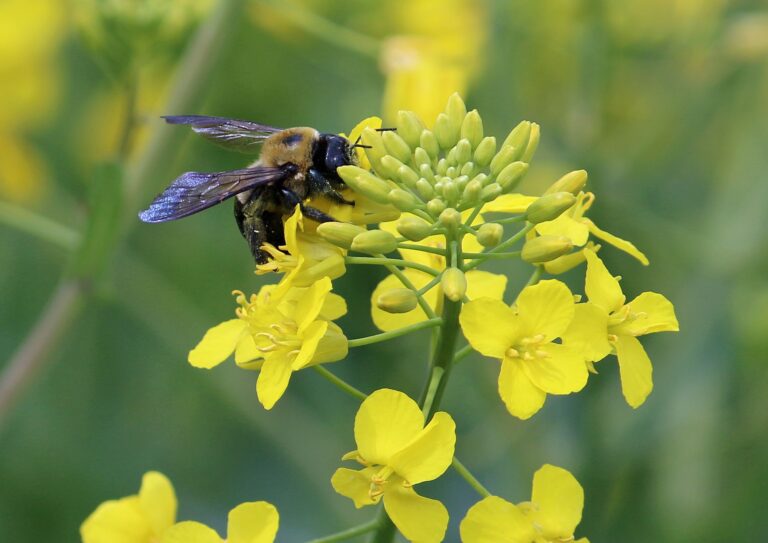
The best early warning signal for canola honey crystallization in the comb is watching the canola fields near your apiary — when yellow petals begin dropping, begin harvest preparations immediately. The visual check in the frame: look for honey that appears cloudy, milky-white, or slightly grainy rather than golden and translucent — this cloudiness is the first sign of micro-crystallization beginning in uncapped cells. Confirm with a refractometer — target 17.5% moisture or below. Install bee escape boards the same evening you notice petal drop. Extract the following morning. Every day of delay after petal drop increases crystallization risk in uncapped cells.
If canola honey has crystallized in your frames, you have three options. First, warm the frames in a heated room at 35-40°C for 24-48 hours — soft crystallization (less than 2 weeks old) can often be liquified enough to spin out in a radial extractor. Do not heat above 40°C or you destroy enzymes and degrade quality. Second, return crystallized frames to a strong hive in spring — bees can consume and reconvert mildly crystallized stores. Third, crush and strain — cut comb from the frames, mash it, heat gently, and strain through mesh to extract honey. Crushed and strained honey may be darker with more wax but remains perfectly edible and saleable as raw honey.
Yes — crystallized canola honey is completely safe to eat and is not a sign of spoilage or poor quality. Crystallization is a natural physical process — the honey’s sugar chemistry is simply reverting to a more stable solid form. Alberta premium canola honey is deliberately sold in its crystallized state as creamed honey — the fine white texture is considered a quality indicator, not a defect. The only safety concern with honey (crystallized or not) is moisture content above 18.6% which can allow fermentation — but this is prevented by harvesting at the right moisture level, not by preventing crystallization.
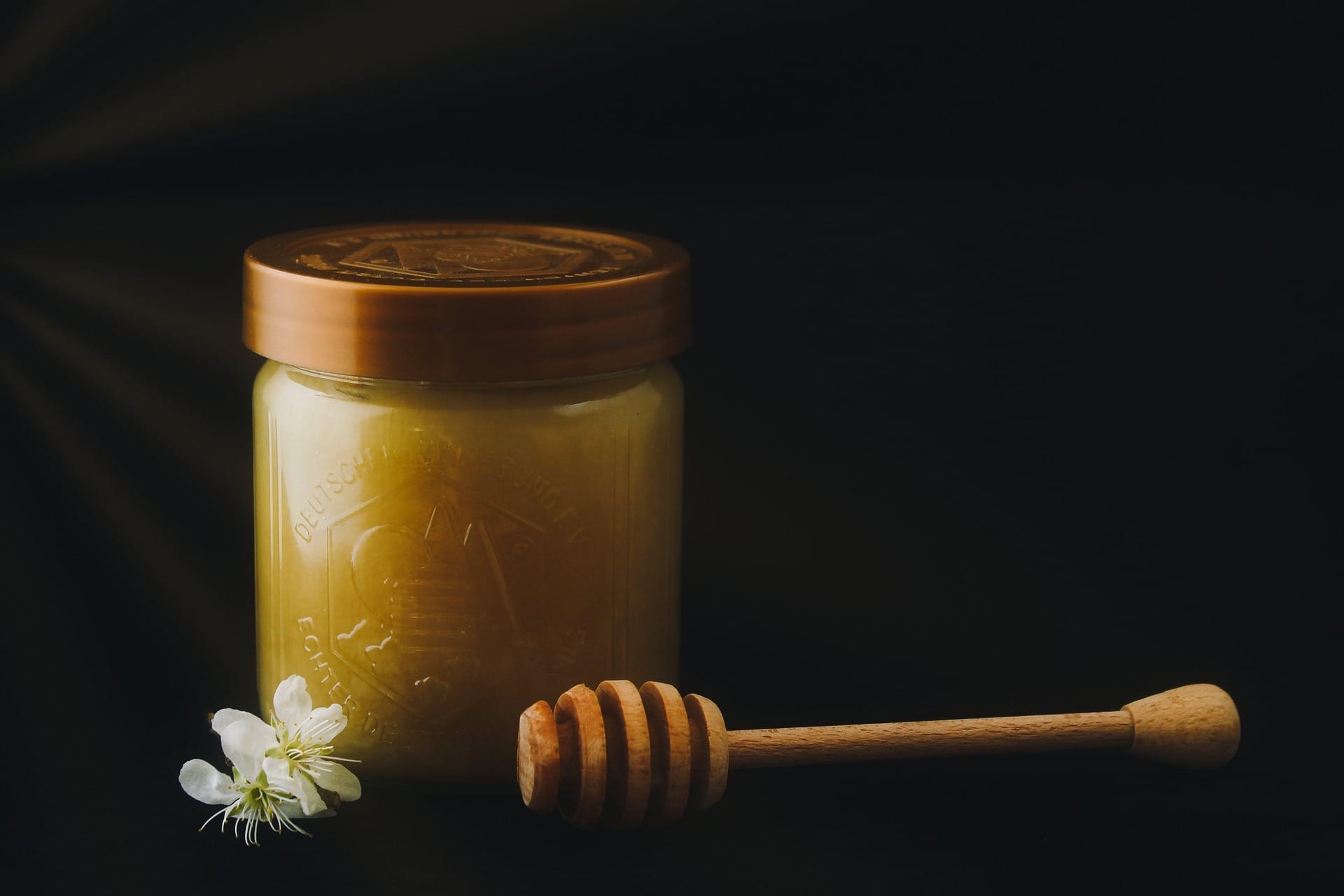
To make premium creamed canola honey: extract and filter while warm (35-40°C). After filtering, add 5-10% by weight of fine-grained seed honey — previously crystallized canola honey with small, uniform crystals — and stir thoroughly. Bottle immediately and store at 14°C (a spare refrigerator). The seed crystals act as nucleation points that produce thousands of tiny, uniform crystals rather than a few large coarse ones. Stir gently every 24 hours for the first 3-4 days as crystallization progresses. The result after 7-14 days at 14°C is a smooth, spreadable, white creamed canola honey — one of Alberta’s most distinctive and premium honey products.
You cannot permanently prevent canola honey crystallization — the chemistry of canola honey makes crystallization inevitable. What you can control is the speed and texture of crystallization. Storing canola honey above 25°C keeps it liquid for longer but produces coarse, grainy crystals when it eventually sets. Storing at 14°C produces fine, uniform crystals quickly — the premium creamed texture. Storing below 10°C (freezer) slows crystallization significantly but produces coarse crystals when thawed. The correct approach for Alberta canola honey is to embrace controlled crystallization at 14°C with seed honey — turning the inevitable into a premium product rather than fighting chemistry you cannot win.
📋 In This Article
- The Biology of Canola Honey Crystallization in Alberta
- The 5 Crystallization Stages — What Happens in the Comb
- How to Recognize the Optimal Extraction Moment in Alberta
- 4 Detection Methods Before It’s Too Late
- Rescuing Crystallized Canola Honey Frames — What to Do
- Turning the Problem Into a Premium Product — Creamed Canola Honey
- FAQ — Canola Honey Crystallization Alberta
Canola honey crystallization in Alberta is not a problem to be solved — it is a biological reality to be managed. Alberta produces more canola honey than any other province in Canada, and every experienced Alberta beekeeper has at least one story about frames locked solid with white granulated honey that would not spin out. Understanding the biology behind crystallization, recognizing the early warning signs, and knowing exactly what to do with crystallized frames transforms this annual challenge from a production disaster into a manageable and even profitable part of Alberta beekeeping.
The Biology of Canola Honey Crystallization in Alberta
Canola honey crystallization in Alberta is driven by a fundamental chemistry difference between canola nectar and most other floral nectars. To understand why canola honey sets faster than almost any other variety, you need to understand what is actually happening at the molecular level in the jar or in the comb.
Glucose vs Fructose — The Chemistry That Determines Everything
All honey is a mixture of glucose and fructose — the two primary sugars that nectar is transformed into during honey production. The ratio between them determines how fast a honey crystallizes. Glucose has significantly lower water solubility than fructose — it readily precipitates out of solution as solid crystals when honey cools or loses water. Fructose stays liquid. The higher the glucose relative to fructose, the faster the honey crystallizes.
The glucose-to-fructose ratio in canola honey (approximately 1.2:1) is one of the highest of any common honey variety in Canada. For comparison, clover honey has a ratio closer to 0.9:1 (more fructose than glucose), which is why clover honey stays liquid for months. Canola honey’s reversed ratio makes crystallization not just likely but essentially guaranteed within weeks of extraction — and within days in the comb after the flow ends.
Why Alberta’s Climate Accelerates Crystallization
Beyond the chemistry, Alberta’s low humidity amplifies crystallization speed. Low ambient humidity causes honey to lose additional moisture through evaporation — which increases the concentration of glucose relative to water, pushing it further above its solubility limit and accelerating crystal formation. Ontario’s humid summer climate actually slows canola honey crystallization slightly because ambient moisture counteracts the concentration effect. Alberta’s dry prairie air has no such buffering effect.
The 5 Crystallization Stages in the Comb — What Happens and When
How to Recognize the Optimal Extraction Moment in Alberta
Recognizing the optimal canola honey extraction moment in Alberta is one of the most important skills in prairie beekeeping — and it requires reading three signals simultaneously, not waiting for any single trigger.
Why You Cannot Rely on Capping Alone in Alberta
In most honey varieties, 80% capping is a reliable harvest signal because bees cap honey when moisture is at a safe level. In Alberta canola honey, bees sometimes cap at slightly higher moisture levels because the flow is so intense — they prioritize keeping up with incoming nectar over perfect moisture reduction. Always verify with a refractometer, never assume. A refractometer reading above 18% on a fully capped canola super is not uncommon during heavy flow periods and represents a fermentation risk if bottled without further processing.
4 Detection Methods to Catch Crystallization Before It’s Too Late
- Honey golden/amber, fully translucent
- 80%+ cells capped with wax
- Refractometer: 17.5% or below
- Canola petal drop just beginning
- Frames feel heavy, liquid movement inside
- Slight cloudiness in uncapped cells
- 60-79% capped — continue ripening
- Refractometer: 17.5-18.5%
- Canola petals actively dropping
- Act within 3-5 days maximum
- White/milky colour in uncapped cells
- Honey feels viscous when probe touched
- Micro-crystals visible with magnification
- Fields fully past petal drop
- Warm frames to 35°C before extracting
- Honey solid white, pasty or firm
- Frame feels rigid, no liquid movement
- Comb may look grainy or powdery
- Normal extraction will not work
- See rescue methods below
WiseBee Tip — The Refractometer Is Your Early Warning System
Begin using your refractometer daily on canola supers from the first day you see canola fields showing petal drop — not weekly. A single daily reading takes 30 seconds and tells you whether the harvest window is open, approaching, or closing. Alberta beekeepers who check moisture daily consistently harvest at better moisture levels and lose far fewer frames to crystallization than those who check weekly. A refractometer costs $30-50 CAD and pays for itself in a single season of avoided crystallized frame losses.
Rescuing Crystallized Canola Honey Frames — What to Do
Despite best intentions and careful monitoring, crystallized canola honey frames happen to every Alberta beekeeper sooner or later. The correct rescue method depends on how far crystallization has progressed and when the frames will be used.
Place crystallized frames in an insulated warming room or dedicated warming cabinet at 35-40°C for 24-48 hours. At this temperature, canola honey crystals dissolve back into solution gradually without damaging enzymes or degrading flavour — the critical difference from higher-temperature melting. Do not exceed 40°C: above this threshold you destroy diastase enzymes, darken the honey, and lose the delicate flavour characteristics that make Alberta canola honey distinctive.
After 24-48 hours at 35-40°C, test a cell with a probe — if the honey flows off the probe in a thin stream, it is ready to extract. Run the extractor at low speed initially with warmed frames to prevent comb damage from the increased viscosity. This method works reliably for Stage 3 crystallization and sometimes Stage 4 if the warming period is extended.
Frames with mildly to moderately crystallized canola honey can be returned to strong colonies in early spring — typically April in Alberta. Bees readily consume and reconvert crystallized honey stores when temperatures warm sufficiently. Place crystallized frames directly adjacent to the winter cluster as colonies begin expanding in late March-April. Bees heat the comb, dissolve the crystals, and process the honey — either consuming it directly for spring buildup or moving it to make room for the queen’s early spring laying.
This method loses the honey as a human harvest but preserves the frame and provides free spring nutrition for the colony — a reasonable trade-off when the alternative is discarding locked frames entirely. Store frames intended for spring return in sealed boxes in a cold garage through winter to prevent wax moth damage.
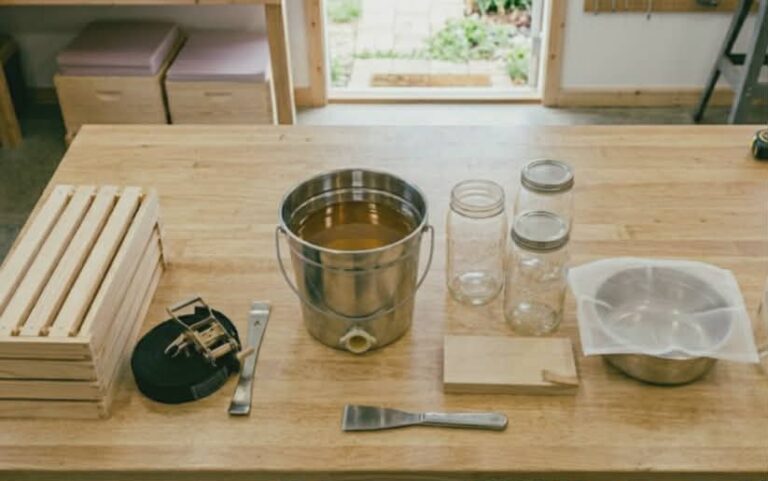
For frames that have reached Stage 5 cement crystallization where warming is not sufficient for extraction, crush and strain is the recovery option. Cut the comb from the frame with a knife, place sections into a large bowl, and mash thoroughly with a potato masher or clean hands. Gently warm the mashed comb mass to 35-40°C in a water bath — enough to liquefy the crystals for straining. Pour through a coarse mesh strainer, then a fine mesh strainer. The resulting honey will be slightly darker with some wax particles and a stronger flavour profile than spinner-extracted honey, but is perfectly edible and marketable as raw crushed honey.
Crushed and strained canola honey often commands premium prices at Alberta farmers markets as “raw” or “artisanal” honey — turning what seemed like a production loss into a differentiated product. Clean empty frames after crush and strain — the drawn comb is permanently lost but frames can be reused with new foundation.
Never Microwave Crystallized Honey Frames
Microwaving crystallized canola honey frames creates dangerously uneven heating — hot spots can reach 70-80°C while adjacent areas remain cold. At temperatures above 40°C, enzymes are destroyed. Above 50°C, HMF (hydroxymethylfurfural) levels increase dramatically — a degradation compound that makes honey unsaleable under Canadian food standards. Microwave heating also risks melting and warping plastic foundation and cracking wax comb. Use only controlled water bath or warming room methods for crystallized frame rescue.
Turning the Problem Into a Premium Product — Alberta Creamed Canola Honey
The most sophisticated response to canola honey crystallization in Alberta is not to fight it — it is to control it so deliberately that the result is a premium product that commands significantly higher prices than liquid honey. Alberta creamed canola honey is the finest expression of controlled crystallization and one of the province’s most distinctive agricultural products.
Alberta Creamed Canola — A National Reputation
Alberta creamed canola honey has earned a national reputation as one of Canada’s finest honey products. Its smooth, white, spreadable texture and mild, buttery flavour profile make it a premium product at farmers markets, specialty food stores, and online retailers across Canada. The crystallization that terrifies beginning Alberta beekeepers is, when managed correctly, the defining characteristic of one of the country’s most distinctive artisanal food products.
Final Thoughts on Canola Honey Crystallization in Alberta
Canola honey crystallization in Alberta is inevitable — but it is not the enemy. It is a chemical reality that, understood correctly, defines one of Canada’s most distinctive honey products. The beekeeper who fights crystallization with panic and delays loses frames every season. The beekeeper who understands the 5-stage timeline, uses a refractometer daily during the harvest window, extracts promptly, and embraces controlled seeded crystallization builds a premium product line that other provinces cannot replicate.
Watch your fields. Read your refractometer. Extract on the day the signals align. And when crystallization beats you — rescue what you can, return the rest to the hive in spring, and come back next July better prepared. The canola flow’s generosity is extraordinary. Canola honey crystallization’s speed is its only catch. 🐝🌻❄️🍯
Questions about your canola honey crystallization? 🐝
Ask our AI beekeeping assistant — describe your frame condition, days since petal drop, and moisture readings and we’ll advise on the best rescue or harvest approach for your Alberta apiary.
🐝 Ask Bee Now — It’s Free🐝 WiseBee Disclosure
Affiliate Disclosure: This article contains Amazon affiliate links. If you purchase through our links, we earn a small commission at no extra cost to you. Learn more →
Disclaimer: This article is for educational purposes only and does not constitute professional apicultural or veterinary advice. Always consult a qualified beekeeper for guidance specific to your situation. Full disclaimer →