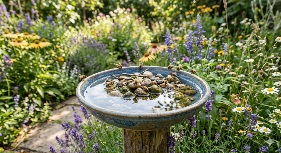
Bee Watering Station:
Do Bees Need Water? Complete Guide
📋 In This Article
- Do Bees Need Water? The Answer May Surprise You
- Bee Hydration — How Bees Use Water in the Hive
- What Makes a Good Bee Water Source
- Bee Watering Station in Canada — Seasonal Considerations
- How to Give Bees Water — The Key Rules
- DIY Bee Watering Station Ideas — Made at Home
- Bee Watering Station Products on Amazon Canada
A bee watering station is one of the most overlooked yet most important elements of a well-managed Canadian apiary. While most beekeepers focus on feeding, Varroa treatment, and hive insulation, providing a clean, reliable water source close to your hives can dramatically improve colony health and reduce bee stress — especially during Ontario and Alberta’s hot, dry summers.
Do Bees Need Water? The Answer May Surprise You
Do bees need water? Absolutely — and more urgently than most beekeepers realize. Water is as essential to a honeybee colony as nectar and pollen. Without a reliable water source, a colony under heat stress can collapse within days. Yet many beekeepers — even experienced ones — never set up a dedicated bee watering station near their apiary.
Unlike nectar and pollen, water cannot be stored in advance. Bees must collect fresh water continuously throughout the day during warm weather. A colony of 40,000 bees at peak summer population can consume several litres of water per day. If your apiary doesn’t have a safe, accessible water source nearby, your bees will find one — and it may be your neighbour’s swimming pool, a pesticide-contaminated ditch, or a stagnant puddle full of harmful bacteria.
The Simple Answer: Yes, Bees Absolutely Need Water
Bees need water year-round — not just in summer. Water is used for cooling the hive, feeding larvae, diluting crystallized honey, and maintaining colony health. A well-placed bee watering station is one of the simplest and most impactful things you can provide for your Canadian colony.
Bee Hydration — How Bees Use Water in the Hive
Understanding bee hydration means understanding the multiple critical roles water plays inside the hive. Bees are not simply drinking water to quench thirst — they are using it as an active tool for colony management.
Bee hydration is communicated socially — just as bees perform a waggle dance to share the location of nectar, they also communicate water source locations to the colony. Once bees establish a preferred water source, they are remarkably loyal to it. This is why establishing your bee watering station before your bees find an alternative source is critical — once they develop a habit of visiting your neighbour’s pool, redirecting them is extremely difficult.
The Neighbour’s Pool Problem
Bees are attracted to swimming pools because of the chlorine and salt content — they find these minerals appealing. Once your colony establishes a pool as their water source, redirecting them requires weeks of patient management. Set up your bee watering station on the first warm day of spring — before your bees start scouting for water sources.
What Makes a Good Bee Water Source
Not all water sources are equal in the eyes of a bee. Understanding what bees look for in a water source helps you create one they’ll actually use — rather than ignoring your carefully prepared station in favour of a muddy ditch.
What Bees Look for in a Water Source
Scent over sight: Bees find water primarily by smell, not vision. Clean, odourless tap water is often ignored. Water with a slight earthy, mineral, or organic scent is far more attractive. A few pebbles, a pinch of salt, or a leaf or two in the water will make it dramatically more appealing to foraging bees.
Safe landing: Bees cannot swim. A water source without a landing platform is a drowning trap. Always provide pebbles, rocks, marbles, corks, or wooden sticks that protrude above the water surface — giving bees a safe place to perch while drinking.
Shallow depth: Bees prefer very shallow water — 1-2cm is ideal. Deep water is dangerous even with landing aids.
Reliability: Bees are creatures of habit. A water source that dries up forces them to find alternatives — and they may find your neighbour’s pool. Top up your bee watering station consistently throughout the season.
Warmth: Bees prefer warm water over cold. A station in a sunny location will be more popular than one in deep shade — particularly during cool Ontario and Alberta spring mornings.
WiseBee Tip: Attract Bees to a New Water Station
To get bees to notice a new bee watering station, add a small pinch of salt or a drop of lemongrass oil to the water. Bees are drawn to minerals and this scent mimics pheromones. Once they’ve established the habit — usually within a few days — you can stop adding the attractant and they’ll return on their own.
Bee Watering Station in Canada — Seasonal Considerations
Setting up a bee watering station in Canada requires thinking through the full seasonal calendar — from spring emergence through autumn preparation. Canadian conditions create specific challenges that beekeepers in warmer climates don’t face.
Ontario & Alberta Specific — Hot Summer Warning
Ontario’s humid July and August heat combined with Alberta’s intense summer sunshine create the highest bee water demand in Canada. During heat waves above 30°C, a large colony can deplete a standard bird bath in hours. In peak summer, check and refill your bee watering station every morning. A larger reservoir — 5-10 litres — dramatically reduces the refilling burden.
How to Give Bees Water — The Key Rules
Knowing how to give bees water correctly prevents the most common mistakes that either drown bees or drive them to seek water elsewhere.
Rule 1 — Establish Early
Set up your bee watering station on the first warm day of spring — before bees start scouting. Once forager bees establish a water route to a source, the whole colony follows. Be the first option they find.
Rule 2 — Always Provide Landing Pads
Pebbles, rocks, wine corks, wooden sticks, marbles — anything that protrudes above the water surface gives bees a safe perch. Without landing pads, bees drown. This is the single most important rule of bee watering station design.
Rule 3 — Never Use Sweet Water
Do not add sugar or honey to your bee watering station. Sweet water attracts ants, wasps, and can trigger robbing behaviour between colonies. Plain water — with just a pinch of salt for attraction — is ideal.
Rule 4 — Place Away from the Hive Entrance
Position your bee watering station at least 3-5 metres from hive entrances. Water foragers taking off and returning create traffic that can interfere with nectar foragers. A station slightly away from the apiary — but still within easy flying distance — is the optimal position.
Rule 5 — Keep it Consistent
A water source that dries up is worse than no water source at all — bees that find an empty station will immediately seek alternatives and may not return. Check and refill your bee watering station on a regular schedule throughout the season.
DIY Bee Watering Station Ideas — Made at Home
A bee watering station does not need to be expensive or complicated. Some of the most effective bee water sources are made from everyday household items in under 10 minutes. Here are the best DIY options for Canadian beekeepers.
- Any shallow bowl, plate, or casserole dish
- Pebbles, gravel, or marbles
- Water
- Optional: pinch of salt
Pro Tip
Use a dark-coloured bowl — it absorbs sunlight and warms the water faster. Bees prefer warm water, especially in cool Ontario and Alberta spring mornings.
- Large plastic bottle (2L or larger) with cap
- Shallow tray or plate
- Pebbles or gravel
- A nail or skewer to make a small hole
- Large terracotta or plastic plant saucer (30-40cm diameter)
- A mix of pebbles, rocks, and wine corks
- Water
- Optional: a few small river stones for aesthetics
Terracotta saucers are ideal because the porous clay absorbs water and stays slightly moist — bees are attracted to the damp clay smell, which mimics a natural muddy water source.
- Existing bird bath or shallow garden fountain
- Large flat stones or bricks to reduce water depth
- Pebbles for the perimeter
A bird bath serves double duty — attracting birds that eat pest insects and providing bees with water. The slightly rough ceramic or stone surface gives bees excellent grip for safe drinking.
Bee Watering Station Products on Amazon Canada
If you prefer a ready-made solution or want to add to your DIY setup, these products on Amazon Canada are perfect for setting up a bee water source quickly and effectively.
Final Thoughts
A bee watering station is one of the simplest and most impactful investments you can make for your Canadian colony. Whether you spend five minutes arranging pebbles in a bowl from your garden or invest in a dedicated bee waterer from Amazon Canada — the result is the same: healthier bees, better honey production, and fewer conflicts with your neighbours over their swimming pools.
Set it up early in spring, keep it reliably full throughout the season, and your bees will reward you with a colony that is better hydrated, better cooled, and better equipped to produce the honey that makes Canadian beekeeping so rewarding. 🐝💧🍯
Questions about bee hydration? 🐝
Ask our AI beekeeping assistant — tell us about your apiary setup and we’ll recommend the best bee watering station solution for your situation.
🐝 Ask Bee Now — It’s Free🐝 WiseBee Disclosure
Affiliate Disclosure: This article contains Amazon affiliate links. If you purchase through our links, we earn a small commission at no extra cost to you. Learn more →
Disclaimer: This article is for educational purposes only and does not constitute professional apicultural or veterinary advice. Always consult a qualified beekeeper for guidance specific to your situation. Full disclaimer →