Best Beehives for
Canadian Winters — 2026
📋 In This Article
Not all beehives are built for -30°C winters. Canadian beekeepers face some of the harshest overwintering conditions in the world — and your choice of hive can be the difference between a thriving spring colony and an empty box in April. Here’s what actually works.
Why Canadian Winters Are Hard on Beehives
Honeybees don’t hibernate — they form a tight winter cluster and generate heat by vibrating their flight muscles, fuelled by stored honey. When temperatures drop below 10°C, worker bees gather around their queen and vibrate their wing muscles to generate heat, maintaining the hive’s internal temperature at a survivable level even in freezing conditions.
The challenge isn’t just cold — it’s moisture. Harsh winter conditions cause cold stress and increased moisture inside hives. Poor ventilation and insulation can result in heat loss, increased condensation, and eventual colony death. A colony can survive -30°C but will die from condensation dripping onto the cluster.
The #1 Winter Killer: Moisture, Not Cold
Most Canadian winter colony losses are caused by moisture buildup inside the hive — not the cold itself. Condensation forms on cold surfaces and drips back onto the cluster, chilling bees fatally. Proper upper ventilation and insulation are non-negotiable in Ontario and Alberta winters.
Bees need to maintain specific temperatures: the brood rearing area must stay at 34.4–35°C, while the outer edge of the cluster stays at 6–12°C. The cluster is in its tightest state once outdoor temperatures reach -10°C. This is why hive insulation matters so much — the less energy bees spend generating heat, the more honey stores they conserve, and the better their chances of survival.
The 3 Main Hive Types for Canadian Beekeepers
Langstroth Wooden Hive — The Canadian Standard
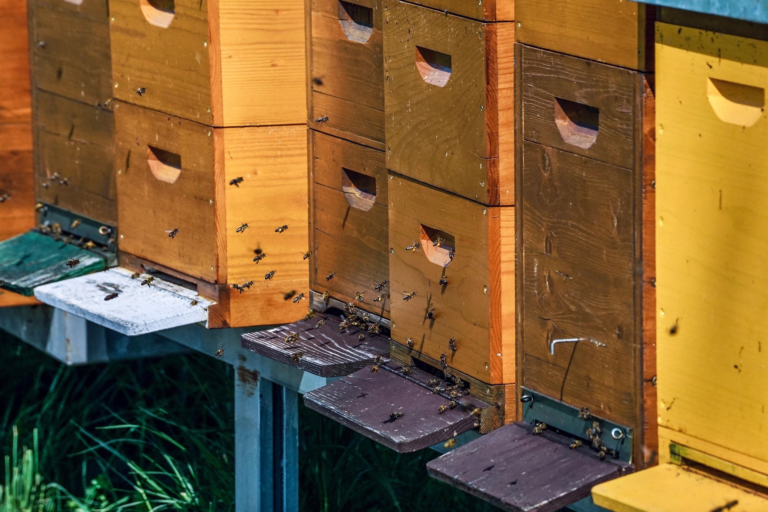
The Langstroth hive has been the backbone of Canadian beekeeping for over a century. Its modular design — stackable boxes with standardized frame sizes — makes it incredibly versatile and easy to manage. Replacement parts are available from dozens of Canadian and US suppliers, and virtually every beekeeping resource you’ll find is written with Langstroth in mind.
For Canadian winters, a wooden Langstroth hive needs help. Insulating beehives for winter ensures bees spend less energy maintaining warmth, minimizing food consumption and cluster stress. Many Canadian beekeepers artificially insulate hives when temperatures consistently drop below 13°C.
Making a Langstroth Work in Canadian Winters:
Two brood boxes — In cold climates it’s usually best to use two brood boxes — either one deep box and one medium, or two deeps. This gives the cluster more room to move up toward honey stores as winter progresses.
Upper ventilation — Drill a small upper entrance or notch in the inner cover to allow moisture and CO₂ to escape without creating a cold draft at the cluster level. This single modification dramatically reduces condensation deaths.
Hive wrapping — Black insulating wrap reflects solar heat on sunny winter days and reduces wind chill. The Bee Cozy wrap has been popular with Canadian beekeepers for over 25 years and is available on Amazon Canada.
WiseBee Tip: Two Brood Boxes for Ontario Winters
Never try to overwinter an Ontario or Alberta colony in a single brood box. The cluster needs space to move upward through the winter to access honey. A colony that reaches the top of a single box and runs out of honey above them will starve — even if there’s honey below the cluster they can no longer access.
Polystyrene Hives — The Cold Climate Upgrade
Expanded polystyrene (EPS) hives offer dramatically better insulation than wood — typically R-7 to R-10 compared to R-1 for standard pine boards. For Canadian beekeepers in Ontario and Alberta, this built-in insulation means bees consume significantly less honey over winter, reducing starvation risk and leaving colonies stronger for spring buildup.
The trade-off is cost and availability. Polystyrene hives cost roughly 2–3x more than equivalent wooden hives and have fewer suppliers in Canada. However, the long-term savings in reduced winter losses and less supplemental feeding make them worth considering for serious beekeepers.
Alberta Research — Insulated Hives Show Promise
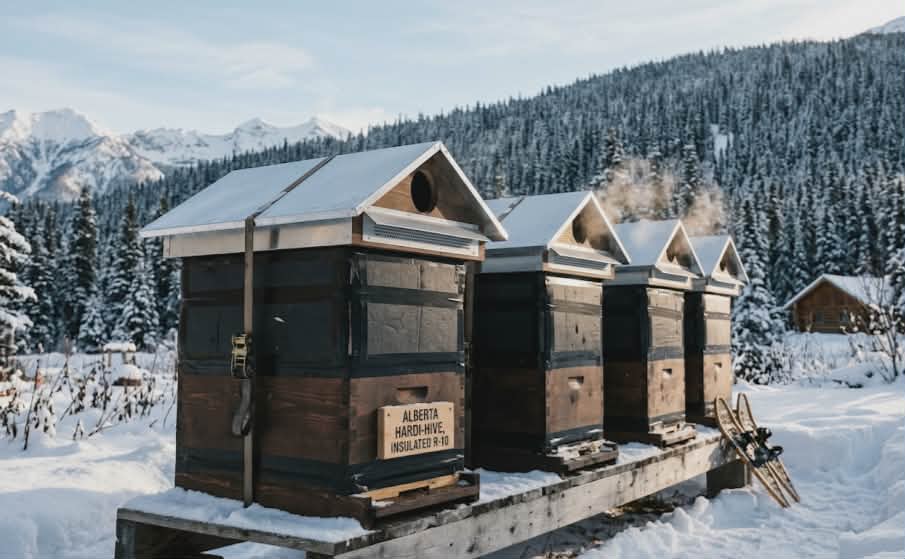
An Alberta beekeeper currently testing an insulated polystyrene hive system reports early results showing a significant increase in honey production compared to traditional wooden hives. Results are being shared widely when the study completes. Insulated hive technology is generating real interest across Western Canada.
Insulated Hives — The New Alternative
A new generation of purpose-built insulated hive systems is starting to gain traction in Canada. These hives are designed from the ground up to maintain stable internal temperatures in both extreme cold and summer heat — addressing one of the biggest challenges Canadian beekeepers face across a full season.
While still relatively rare in Canada, these systems are worth watching. Early results from Alberta suggest they may offer meaningfully better colony performance. For most beginners, a wooden Langstroth with proper insulation accessories remains the practical starting point — but experienced beekeepers looking to reduce winter losses should keep an eye on this space.
Side-by-Side Comparison
| Feature | Wooden Langstroth | Polystyrene Hive | Insulated System |
|---|---|---|---|
| Winter insulation | Low (needs wrapping) | Excellent built-in | Excellent built-in |
| Price (starter) | $80–$160 CAD | $180–$300 CAD | $300–$500+ CAD |
| Parts available | ✓ Everywhere | ✓ Growing | ✗ Limited |
| Beginner friendly | ✓ Yes | ✓ Yes | ✗ Not yet |
| Winter wrapping needed | ✗ Yes | ✓ No | ✓ No |
| Best for | Beginners | Intermediate | Advanced |
Essential Winter Accessories for Any Hive
Regardless of which hive type you choose, these accessories are non-negotiable for overwintering in Canada:
Hive wrap / insulation blanket — Reduces wind chill and reflects solar heat. The Bee Cozy wrap has been a Canadian staple for 25+ years. Leave it on until daytime temperatures are consistently above 10°C in spring.
Mouse guard — Install in September before mice start looking for winter shelter. A mouse inside a hive will destroy combs and kill a colony. Remove in April once the colony is strong enough to defend itself.
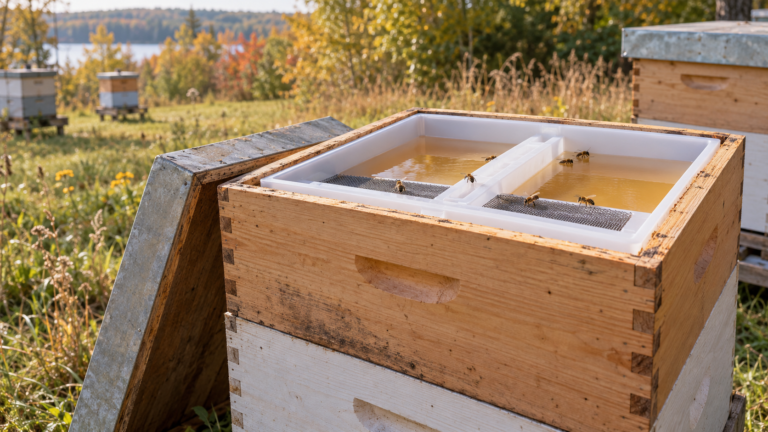
Moisture quilt or ventilated inner cover — The single most important modification for preventing condensation deaths. A box of wood shavings or burlap above the cluster wicks moisture away before it can drip back down.
Candy board — Place above the cluster in November as emergency food insurance. If your colony burns through its honey stores faster than expected, the candy board buys them time without requiring you to open the hive in the cold.
Top Picks on Amazon Canada
Final Thoughts
For Canadian beginners, the answer is clear: start with a 10-frame wooden Langstroth with two deep brood boxes, add a Bee Cozy winter wrap, install a mouse guard in September, and put a moisture quilt or ventilated inner cover on top. That setup has helped Canadian beekeepers survive brutal winters for generations.
If you’re ready to invest more — or if you’ve already experienced winter losses with a standard wooden hive — a polystyrene hive is the most evidence-based upgrade available in Canada right now. The built-in insulation genuinely makes a difference when temperatures drop to -20°C or below. 🐝
📚 Continue Reading — Complete Overwintering Series
❄️Which hive is right for your climate? 🐝
Ask our AI beekeeping assistant — tell us where in Canada you’re located and we’ll recommend the best setup for your specific winter conditions.
🐝 Ask Bee Now — It’s Free🐝 WiseBee Disclosure
Affiliate Disclosure: This article contains Amazon affiliate links. If you purchase through our links, we earn a small commission at no extra cost to you. Learn more →
Disclaimer: This article is for educational purposes only and does not constitute professional apicultural or veterinary advice. Always consult a qualified beekeeper for guidance specific to your situation. Full disclaimer →