Bee Medications Canada:
Complete Guide to CFIA-Approved Treatments
📋 In This Article
- Bee Medications in Canada — CFIA Approval Framework
- Bee Medications for Varroa Mites in Canada
- New Bee Medications Approved in Canada 2026
- Bee Medications for Foulbrood — Canada
- Bee Medications for Nosema in Canada
- Bee Medications in Nova Scotia (NS)
- Bee Medications in New Brunswick (NB)
- Bee Medications in PEI
- Bee Medications in Newfoundland & Labrador (NL)
- Full Bee Medications Comparison Table — Canada
- Bee Medications Available on Amazon Canada
Bee medications in Canada are regulated by the Canada Food Inspection Agency (CFIA) and the Pest Management Regulatory Agency (PMRA). Every treatment you apply to your hive must be CFIA-approved and used strictly according to its label. This guide covers every approved bee medication in Canada in 2026 — including the newest treatments just approved for Varroa control — with specific guidance for beekeepers in NS, NB, PEI, and NL.
Bee Medications in Canada — CFIA Approval Framework
Bee medications in Canada are classified under two regulatory systems. Varroa treatments and pest control products fall under the Pest Control Products Act (PCPA) and are regulated by the PMRA. Antibiotics for bacterial diseases require a veterinary prescription from a licensed veterinarian. Using any bee medication in Canada off-label — at unapproved doses or for unapproved conditions — is illegal and can result in honey contamination, residue violations, and significant fines.
Veterinary Prescription Required for Antibiotics
As of December 2018, antibiotic treatments for bee diseases in Canada require a prescription from a licensed veterinarian. This includes oxytetracycline (Oxytet/Oxysol) for American and European Foulbrood. If you need antibiotic bee medications in Canada, establish a relationship with a veterinarian who treats bees before the season starts — not after you discover a disease outbreak.
Class C vs Class D Bee Medications in Canada
Varroa treatments in Canada are classified as either Class C (Commercial/Agricultural) or Class D (Domestic) pesticides under provincial pest control regulations. Class C products require a valid pesticide applicator licence or permit in most provinces — including Ontario, New Brunswick, Nova Scotia, and PEI. Class D products are available to the general public without a licence. Always confirm the classification in your province before purchasing Varroa treatments.
Bee Medications for Varroa Mites in Canada
Varroa destructor is the most serious pest threat to Canadian bee colonies, and the most important category of bee medications in Canada. The following CFIA-approved treatments are currently registered in Canada for Varroa control:
New Bee Medications Approved in Canada 2026
February 2026 — Oxalic Acid Glycerin Strips Approved in Canada
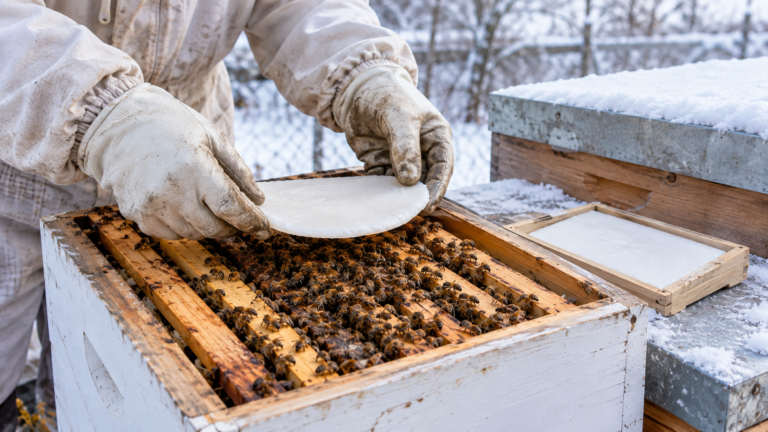
On February 20, 2026, the Canadian Honey Council announced PMRA registration approval for Oxalic Acid Glycerin Strips — a new delivery method using glycerin and cellulose strips to release oxalic acid slowly over an extended period. This is significant for Canadian beekeepers because it allows treatment during periods when brood may be present, unlike traditional oxalic acid vaporization. The CHC registered this treatment as part of its ongoing mission to give Canadian beekeepers access to effective Varroa control tools.
Bee Medications for Foulbrood — Canada
American Foulbrood (AFB) and European Foulbrood (EFB) are the two primary bacterial bee diseases requiring antibiotic medications in Canada. Both require a veterinary prescription under Canada’s antibiotic stewardship regulations. AFB is a reportable disease in all Canadian provinces — if you suspect AFB, you are legally required to report it to your provincial apiarist immediately.
Bee Medications for Nosema in Canada
Bee Medications in Nova Scotia (NS)
Bee medications in Nova Scotia are regulated under provincial pesticide regulations in addition to federal CFIA requirements. Class C Varroa treatments require a valid NS pesticide applicator licence. The primary resource for bee medications in NS is Country Fields Beekeeping Supplies in Fall River — Atlantic Canada’s largest beekeeping retailer, carrying Apivar, Formic Pro, Thymovar, Oxalic Acid, Fumagilin-B, and Oxytet specifically for Maritime climate beekeeping conditions.
Bee Medications NS — Provincial Apiarist Contact
Nova Scotia’s provincial apiarist can provide guidance on bee medication requirements, disease reporting obligations, and pesticide licence requirements for NS beekeepers. Contact the NS Department of Agriculture for current contact information. The Nova Scotia Beekeepers’ Association (NSBA) also provides member resources on approved bee medications for NS conditions.
Bee Medications in New Brunswick (NB)
Bee medications in New Brunswick follow the same federal CFIA approval framework as other provinces. Class C pesticide treatments for Varroa in NB require a valid NB pesticide applicator certification. The New Brunswick Beekeepers’ Association (NBBA — nbba.ca) is an active organization that provides regular updates on approved bee medications in NB and organizes training events including annual general meetings where new treatments like VarroxSan are presented.
Atlantic Canada beekeepers — including those in NB — benefit from the Atlantic Tech Transfer Team for Apiculture (ATTTA), which provides research-based guidance on bee medications and disease management specifically for Maritime conditions.
Bee Medications in PEI
Bee medications in PEI are particularly important given the island’s significant pollination industry. PEI has approximately 4,000 honey-producing hives and provides extensive pollination services for island fruit crops. PEI Beekeepers’ Association (PEIBA) annual data shows low Varroa levels and no detected American Foulbrood in recent provincial inspections — a testament to effective bee medication use by PEI beekeepers.
PEI beekeepers have access to all CFIA-approved bee medications available nationwide. The PEIBA annual general meeting in Charlottetown is an excellent venue for staying current on new bee medication approvals — the 2026 meeting featured presentations on the newly approved VarroxSan Varroa treatment and Oxalic Acid Glycerin Strips.
Bee Medications in Newfoundland & Labrador (NL)
Bee medications in Newfoundland and Labrador serve a unique beekeeping community managing colonies through some of the most challenging maritime conditions in Canada. NL’s isolation from mainland Canada means that bee medication availability and shipping logistics are important practical considerations for NL beekeepers.
NL beekeepers follow federal CFIA requirements for all bee medications. The extended winter period in NL — particularly in Labrador — makes the broodless period oxalic acid treatment especially important. NL colonies may reach a fully broodless state earlier than Maritime provinces, providing a longer window for oxalic acid vaporization treatment in late October or November.
Full Bee Medications Comparison Table — Canada 2026
| Medication | Target | Temp Range | With Supers | Kills in Brood | Rx Needed | Class |
|---|---|---|---|---|---|---|
| Apivar | Varroa | Any ✅ | No | Partial | No | Class C |
| Formic Pro | Varroa | 10–25°C | Yes ✅ | Yes ✅ | No | Class D |
| Thymovar | Varroa | 15–30°C | No | Partial | No | Class C |
| Oxalic Acid (vapour) | Varroa | Above -10°C | No | No (broodless) | No | — |
| OA Glycerin Strips 🆕 | Varroa | Extended | Yes ✅ | Yes ✅ | No | — |
| Oxytet / Oxysol | AFB + EFB | Any | No | N/A | Yes ⚠️ | Antibiotic |
| Fumagilin-B | Nosema | Any | No | N/A | No | Antibiotic |
Bee Medications Available on Amazon Canada
Final Thoughts on Bee Medications in Canada
Bee medications in Canada are more tightly regulated than in many other countries — and for good reason. The combination of CFIA approval requirements, veterinary prescriptions for antibiotics, and provincial pesticide licences for Class C treatments ensures that medications are used safely and effectively. For beekeepers in NS, NB, PEI, and NL, the Atlantic Tech Transfer Team for Apiculture (ATTTA) and Country Fields Beekeeping Supplies provide invaluable regional guidance on which bee medications work best in Maritime conditions.
The most important thing to remember about bee medications in Canada: always use treatments according to the label, rotate between product classes to prevent resistance, and monitor before you treat. A Varroa count before treatment tells you what you’re dealing with — treating blindly wastes money and accelerates resistance. 🐝🍯
Questions about bee medications in Canada? 🐝
Ask our AI beekeeping assistant — tell us your province and disease situation and we’ll recommend the right CFIA-approved treatment for your colony.
🐝 Ask Bee Now — It’s Free🐝 WiseBee Disclosure
Affiliate Disclosure: This article contains Amazon affiliate links. If you purchase through our links, we earn a small commission at no extra cost to you. Learn more →
Disclaimer: This article is for educational purposes only and does not constitute professional apicultural or veterinary advice. Always consult a qualified beekeeper for guidance specific to your situation. Full disclaimer →