Bee Overwintering Supplies Canada:
Ontario vs Alberta Complete Guide
📋 In This Article
- Why September/October Preparation Is Non-Negotiable
- Alberta Focus — Chinook Winds & Extreme Cold
- Ontario Focus — Humidity, Mold & Freeze-Thaw Cycles
- Alberta vs Ontario — Side-by-Side Comparison
- Must-Have Winter Supplies Checklist
- Best Overwintering Products on Amazon Canada
- When to Open Your Hive in Spring
Bee overwintering in Canada is not a passive process — it requires deliberate preparation starting in September. Whether you’re managing hives through Alberta’s brutal Chinook cycles or Ontario’s damp, freeze-thaw winters, the right bee overwintering supplies can be the difference between a thriving spring colony and an empty hive.
Why September/October Preparation Is Non-Negotiable
Canadian winters give beekeepers no margin for error. The bees born in August and September — your “winter bees” — will be responsible for maintaining cluster temperature for up to 6 months in Alberta and 5 months in southern Ontario. If these bees are Varroa-damaged, underfed, or poorly protected, no amount of intervention in January will save the colony.
The window for effective winter preparation closes faster than most beginners expect. By October 15th in Alberta and November 1st in Ontario, nighttime temperatures regularly drop below the threshold where bees can move freely within the hive to access food stores. Everything must be in place before that window closes.
The September Rule for Canadian Beekeepers
If you haven’t started winter preparation by September 15th in Alberta or October 1st in Ontario, you are already behind. Varroa treatment, autumn feeding, mouse guards, and insulation wrap installation must all be complete before temperatures drop consistently below 10°C. Late preparation dramatically increases winter mortality risk.
Your September and October checklist should cover four pillars: Varroa mite load reduction, adequate food stores, physical protection from cold and pests, and moisture management. Miss any one of these and you significantly reduce your colony’s survival odds.
Alberta Focus — Chinook Winds & Extreme Cold
Alberta presents some of the most challenging overwintering conditions for honeybees in Canada. Southern Alberta beekeepers face two distinct threats that don’t exist in Ontario: sustained extreme cold reaching -40°C, and the notorious Chinook winds — warm, dry föhn winds that can raise temperatures by 20°C or more in a matter of hours before plunging back to deep cold.
The Chinook Problem
Chinook winds are uniquely dangerous for wintering bee colonies. When a Chinook event raises temperatures to +10°C or above in January, bees may break cluster and begin flying — burning through precious winter food stores and potentially getting caught outside when temperatures crash again hours later. A colony that breaks cluster during a mid-winter Chinook and then faces a rapid return to -30°C can lose thousands of bees to cold exposure in a single event.
WiseBee Tip: Alberta Windbreak Strategy
Position your Alberta apiary with a solid windbreak on the north and west sides — a fence, hedge, or building that blocks prevailing winter winds. Chinook winds typically come from the west-southwest, so positioning hives against a north-facing structure or dense evergreen hedge reduces wind chill dramatically. Never position hives in open fields in Alberta.
R-Value Insulation for Alberta
Standard Bee Cozy wraps (R-value approximately 3–4) provide adequate protection for Ontario winters but are borderline for the most extreme Alberta conditions. For hives in central and northern Alberta, consider supplementing with additional insulation:
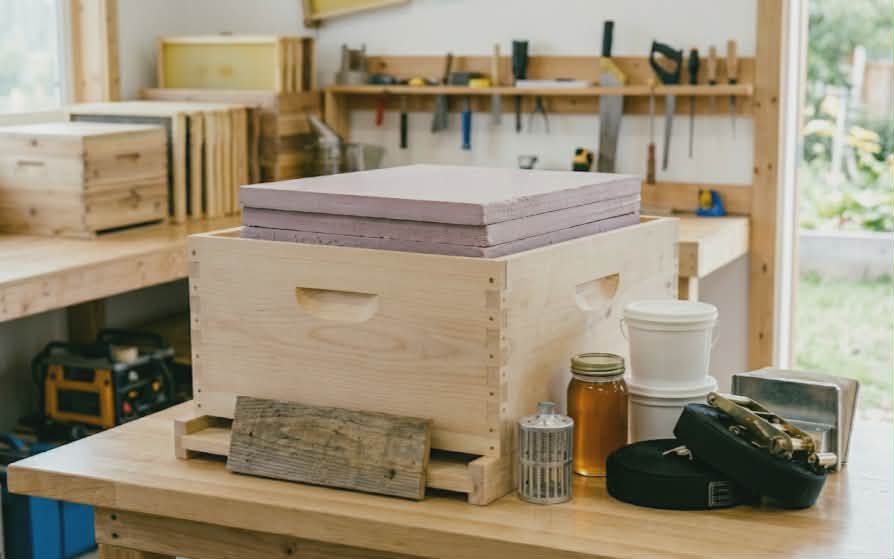
Top insulation is more important than side insulation — heat rises and is lost primarily through the hive roof. A 2-inch sheet of extruded polystyrene (XPS) foam under the outer cover provides an R-value of approximately 10 and dramatically reduces heat loss at the top of the cluster.
Side insulation via Bee Cozy wrap or equivalent should be installed by September 15th in most Alberta locations. The wrap reduces wind chill on exposed surfaces and helps maintain a more stable internal temperature during Chinook cycles.
Upper Entrance Ventilation — Critical for Alberta
Alberta’s dry climate means moisture buildup inside winter hives is less severe than in Ontario — but upper entrance ventilation is still essential. A small upper entrance (1/2 inch notch in the inner cover) allows CO₂ to escape and prevents the cluster from suffocating during extended cold periods when the lower entrance may be sealed with ice or snow.
In Alberta, the upper entrance also serves as an emergency exit if the lower entrance becomes completely blocked by snowdrift — a real risk during Alberta blizzard conditions.
Ontario Focus — Humidity, Mold & Freeze-Thaw Cycles
Ontario winters are generally less extreme than Alberta in terms of raw cold, but they present their own unique challenge: humidity. Southern Ontario’s proximity to the Great Lakes creates persistently damp winter conditions. Inside a wintering hive, the cluster produces significant moisture through respiration — and in Ontario’s humid climate, this moisture has nowhere to go without proper ventilation and moisture management.
The Condensation Death Trap
Warm, moist air from the bee cluster rises and condenses on the cold inner cover and hive walls. In a properly ventilated hive, this moisture escapes through upper ventilation. In a poorly ventilated Ontario hive, it accumulates, freezes on cold surfaces, and then drips back onto the cluster during warmer spells — chilling bees fatally. This condensation problem kills more Ontario colonies than the cold itself.
Moisture Quilts — The Ontario Solution
A moisture quilt is a shallow box filled with wood shavings or burlap placed above the inner cover. It absorbs moisture vapor from the cluster before it can condense on cold surfaces, dramatically reducing drip-back. For Ontario beekeepers, a moisture quilt is not optional — it is the single most important moisture management tool available.
WiseBee Tip: Ontario Freeze-Thaw Management
Southern Ontario experiences repeated freeze-thaw cycles throughout winter — temperatures above freezing during the day and below at night. This causes hive entrance ice buildup that can seal bees inside. Check hive entrances after any warm spell followed by a freeze, and clear ice from the lower entrance if necessary. Never leave a colony with a completely sealed entrance for more than a few days.
Mold Prevention in Ontario Hives
Ontario’s humid winters create conditions where mold can develop inside hives — particularly on unused frames stored in honey supers left on over winter. Remove all honey supers before wrapping for winter, ensure upper ventilation is functional, and consider replacing any dark, heavily propolis-covered combs that show signs of previous mold growth before the next season.
Alberta vs Ontario — Side-by-Side Comparison
| Factor | 🏔️ Alberta | 🌊 Ontario |
|---|---|---|
| Main winter threat | Extreme cold (-40°C) + Chinook swings | Humidity + condensation + freeze-thaw |
| Wrap installation | Mid-September | Mid-October |
| Wrap removal | Early May | Early April |
| R-value needed | R-8 to R-12 recommended | R-4 to R-6 adequate |
| Moisture quilt | Recommended | Essential — non-negotiable |
| Upper ventilation | Essential (CO₂ + emergency exit) | Essential (moisture escape) |
| Windbreak | Critical — Chinook + sustained wind | Helpful but not critical |
| Food stores needed | 35–40 kg minimum | 30–35 kg minimum |
| Varroa treatment deadline | August 15th — September 1st | August — September 15th |
| Oxalic acid cleanup | October — early November | November — December |
| Mouse guard install | September 1st | September 15th |
| Candy board install | October | November |
| Known suppliers | BeeMaid, Alberta Beekeepers Commission | Dancing Bee, OBA member suppliers |
Must-Have Winter Supplies Checklist
✅ September — Both Provinces
- Complete Varroa mite treatment (Formic Pro or Apivar) — before winter bees are raised
- Install mouse guard on lower entrance
- Assess food stores — minimum 30kg (Ontario) or 35kg (Alberta)
- Feed heavy 2:1 sugar syrup until bees stop taking it
- Remove honey supers before wrapping
- Alberta only: Install windbreak if not already in place
✅ October — Both Provinces
- Install hive wrap (Bee Cozy or equivalent)
- Install moisture quilt or ventilated inner cover
- Confirm upper entrance/ventilation is open
- Reduce lower entrance to smallest setting
- Alberta: Add additional top insulation (XPS foam board)
- Heft hives to assess weight — feed more if light
- Install candy board as emergency food reserve
✅ November/December — Both Provinces
- Oxalic acid vaporization when colony is fully broodless
- Check entrance is not blocked by ice or snow after storms
- Listen at entrance — cluster hum confirms colony is alive
- Do NOT open hive unless emergency feeding is required
Best Overwintering bee Products on Amazon Canada
When to Open Your Hive in Spring
One of the most common mistakes Canadian beekeepers make is opening their hives too early in spring — driven by anxiety about whether colonies survived. Premature inspections in cold weather chill developing brood and can trigger defensive behavior in a colony that is already stressed after months of confinement.
Spring Opening Guidelines by Province:
Alberta: Wait until daytime temperatures are consistently above 10°C for several consecutive days — typically late April to early May in southern Alberta. Remove the Bee Cozy wrap first, wait a few warm days, then do your first inspection. Check food stores by hefting before opening.
Ontario: First inspection can happen when temperatures reach 13°C+ in mid-afternoon — typically mid-April in southern Ontario. Remove wrapping once nighttime temperatures stay reliably above 0°C.
The Heft Test — Check Without Opening
Before any spring inspection, heft the hive from the back. A light hive means low food stores — feed immediately with fondant or candy board without opening. A heavy hive means adequate stores — you can wait for a warm day for a full inspection. This simple check can save you from unnecessary cold-weather interventions.
For our complete month-by-month spring management guides, see our March Beekeeping Ontario Guide and April Beekeeping Ontario Guide. For Varroa spring treatment timing, see our Complete Varroa Treatment Guide.
Questions about wintering your hive? 🐝
Ask our AI beekeeping assistant — tell us your province, hive type, and current mite levels and we’ll recommend the best overwintering strategy for your situation.
🐝 Ask Bee Now — It’s Free🐝 WiseBee Disclosure
Affiliate Disclosure: This article contains Amazon affiliate links. If you purchase through our links, we earn a small commission at no extra cost to you. Learn more →
Disclaimer: This article is for educational purposes only and does not constitute professional apicultural or veterinary advice. Always consult a qualified beekeeper for guidance specific to your situation. Full disclaimer →