Don’t Let Them Starve:
Emergency Feeding New Bee Splits in Canada
📋 In This Article
- Feeding New Bee Splits — Why Splits Starve Faster Than Established Hives
- Starvation Warning Signs in a New Bee Colony Split
- 1:1 vs 2:1 Sugar Syrup for Bee Splits — Which Ratio and When
- Preventing Robbing When Feeding Weak Bee Splits
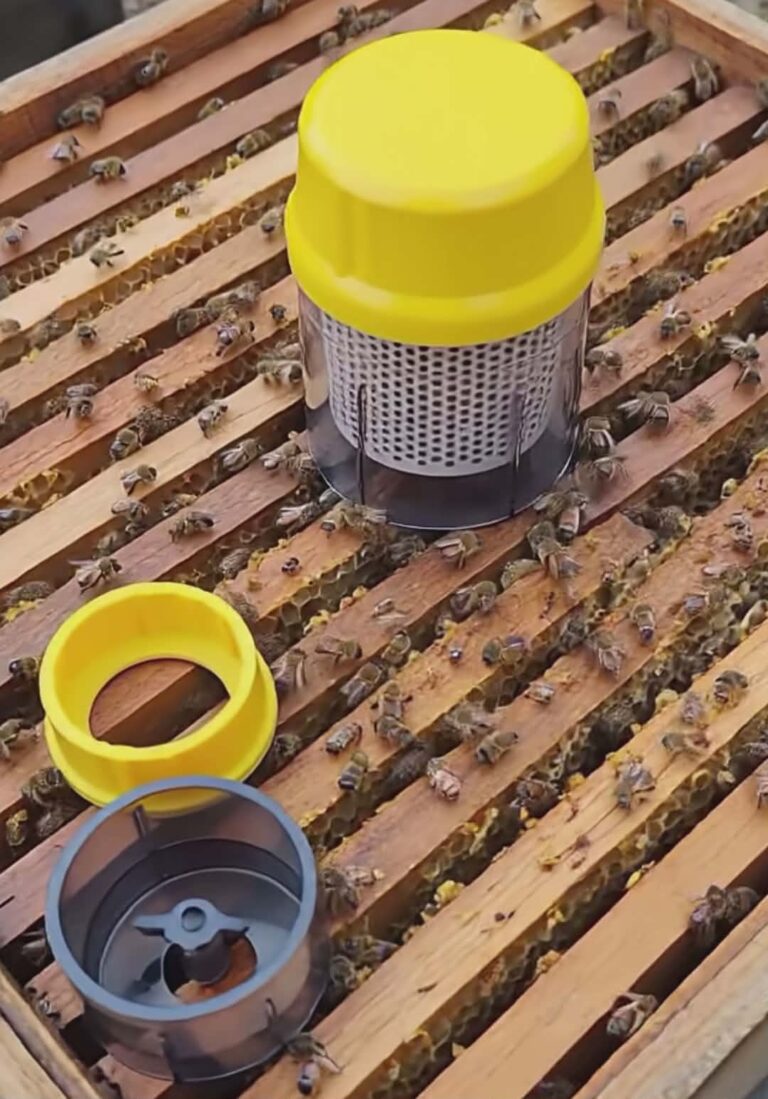
- Best Bee Feeders for New Splits — What Works and What Doesn’t
- Pollen Supplements for Bee Colony Splits — Why Protein Comes First
- Emergency Feeding During Rain — Ontario and Alberta June Dearth
- When to Stop Feeding New Bee Splits
- Ontario vs Alberta — Regional Feeding Differences for New Splits
- FAQ — Feeding New Bee Splits Questions & Answers
Feeding new bee splits in Canada is not optional — it is a survival necessity. A split colony has no forager bees for the first 2-3 weeks, no stored honey reserves, a queen that may not yet be laying, and a small cluster that burns through whatever food is present just maintaining colony temperature. Add a week of June rain in Ontario or a cold Alberta snap, and a neglected split can collapse within 4-5 days. This guide tells you exactly what to feed, when, how much, and how to prevent robbing from destroying everything you’ve built.
Feeding New Bee Splits — Why Splits Starve Faster Than Established Hives
Feeding new bee splits requires understanding why they are so much more vulnerable than parent colonies. An established hive has 40,000+ bees, thousands of foragers making multiple nectar trips daily, and significant honey reserves built over weeks or months. A newly made split has none of these advantages.
Starvation Warning Signs in a New Bee Colony Split
Recognizing starvation warning signs early in a new bee split saves the colony. By the time a split shows advanced starvation signs, recovery becomes much harder. Check your splits every 4-5 days in the first month — not weekly as you would an established hive.
The Heft Test — Your Most Important Tool for Split Starvation Prevention
Lift the back of your split box slightly before and after every rain event or cold snap — a light hive means low stores. If the box feels significantly lighter than your last check, feed immediately without waiting for the next scheduled inspection. A split that feels “almost empty” when lifted has 24-48 hours before critical starvation begins. Feed now, not tomorrow.
1:1 vs 2:1 Sugar Syrup for Bee Splits — Which Ratio and When
The syrup ratio for feeding new bee splits determines whether you are stimulating brood rearing (1:1) or building winter stores (2:1). For split feeding, these two ratios serve completely different purposes and must be used at the right time.
- Equal parts white sugar and warm water by weight
- Thin consistency — mimics nectar flow
- Stimulates queen to increase egg laying
- Triggers wax production — bees draw comb faster
- Easier for small split cluster to process
- Use from split day until natural flow is strong
- Two parts sugar, one part water by weight
- Thick consistency — processed and capped fast
- Builds winter stores efficiently in September
- Does not stimulate brood rearing strongly
- Less water for bees to evaporate
- Use from late August through October feeding
How Much Syrup Does a New Bee Split Need?
A new bee split should always have syrup available — never let the feeder run completely dry. A small split of 3-4 frames can consume 0.5-1 litre of 1:1 syrup per day during active brood rearing in warm conditions. Check feeder levels every 4-5 days and refill before empty. An empty feeder for more than 24 hours during a nectar dearth can trigger rapid starvation in a small split colony.
WiseBee Tip: Add Lemongrass Oil to Syrup
Adding 2-3 drops of food-grade lemongrass essential oil per litre of 1:1 syrup makes it significantly more attractive to new split bees. Lemongrass oil mimics Nasonov pheromone — the orientation pheromone bees use to signal food and hive location. Splits fed lemongrass-scented syrup typically begin feeding faster and more consistently than splits fed plain syrup. Available at most health food stores across Canada.
Preventing Robbing When Feeding Weak Bee Splits
Preventing robbing is the most critical aspect of feeding new bee splits — and the most commonly neglected. A weak split colony that is being fed with an accessible external feeder is broadcasting a food signal to every strong colony within 2 kilometres. During nectar dearths in Ontario and Alberta, robbing can destroy a split colony in hours.
How to Recognize Robbing vs Normal Activity
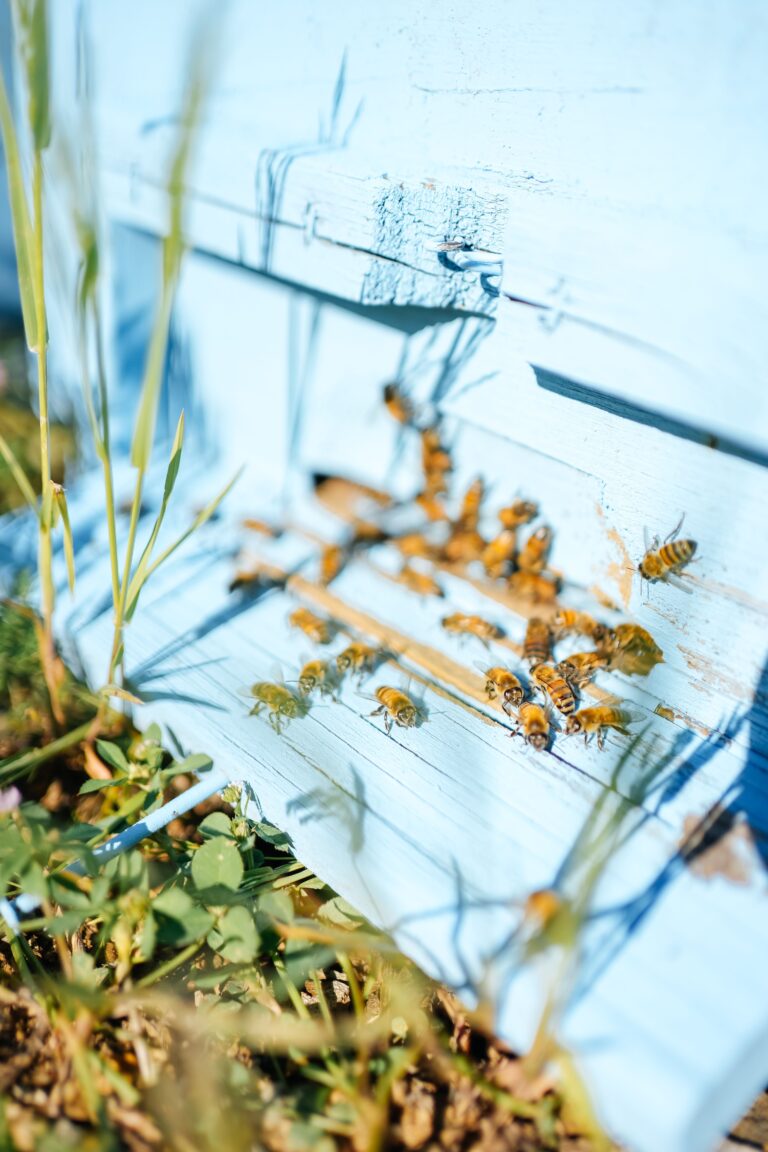
Robbing bees look different from normal foraging activity. Normal foragers leave and return in a purposeful, steady rhythm. Robbing bees circle the hive erratically before landing, attempt to enter through any gap including mesh screens and propolis cracks, and fight with resident bees at the entrance. A split being robbed shows bees fighting and tumbling at the entrance, dead bees accumulating rapidly, and a chaotic, frantic entrance with far more bees arriving than leaving.
Never Use Entrance Feeders for New Bee Splits During Dearth
Entrance feeders — the plastic or glass jar feeders that sit in the hive entrance — are the most dangerous feeding method for weak bee splits during nectar dearth conditions. The syrup smell attracts robber bees from established hives, foragers from other apiaries, wasps, and hornets. A split colony with 3,000-5,000 bees cannot defend against a robbing frenzy from a colony with 40,000. Use frame feeders or hive top feeders exclusively for new split feeding.
Best Bee Feeders for New Splits — What Works and What Doesn’t
Pollen Supplements for Bee Colony Splits — Why Protein Comes First
Pollen supplements for new bee colony splits are not a bonus — they are a nutritional requirement that sugar syrup cannot replace. Many beekeepers focus entirely on carbohydrate feeding (syrup) and overlook protein, then wonder why their split is not building brood population rapidly. The answer is almost always protein deficiency.
Protein Before Carbohydrates — The Correct Split Feeding Priority
The correct feeding priority for new bee colony splits is protein first, carbohydrates second. A nurse bee that is protein-deficient cannot produce royal jelly regardless of how much syrup is available — syrup provides energy but cannot substitute for amino acids. Place the pollen patty on Day 1 of the split, before or at the same time as the syrup feeder. A patty placed directly on the top bars above the cluster is accessible immediately without bees having to navigate away from the brood cluster to find it.
Natural Pollen vs Pollen Substitute — When Each Is Appropriate
Natural pollen is always superior to pollen substitutes — it contains a complete amino acid profile, enzymes, and micronutrients that artificial substitutes cannot fully replicate. However, natural pollen availability in Ontario and Alberta is inconsistent in May and June — cold rain days, late springs, and the June forage gap all create periods when even well-positioned apiaries have inadequate natural pollen incoming. Pollen substitute patties bridge these gaps reliably and consistently.
Emergency Feeding During Rain — Ontario and Alberta June Dearth
The June rain dearth is the most dangerous period for new bee splits in both Ontario and Alberta. A week of cold, wet weather in June stops nectar collection completely — bees cannot fly, flowers produce less nectar in cold temperatures, and small split colonies with minimal reserves can starve within 3-5 days.
- Cold, wet June weeks common around Great Lakes
- Humid conditions — bees slow to process syrup
- Dandelion-to-clover gap: mid-May to early June
- Southern Ontario splits most vulnerable May 15–June 5
- Action: check split every 4 days during rain
- Feed 1:1 syrup in frame feeder — never entrance feeder
- Cold June nights drop to 5-8°C — bees cluster not forage
- Pre-canola gap: mid-June before canola blooms
- Alberta splits most vulnerable June 1–June 20
- Cold syrup processing problem — warm frame feeder essential
- Action: check every 3-4 days in early June Alberta
- Fondant as backup when nights below 8°C
The Rain Rule — Feed Before the Storm, Not After
Check Environment Canada before every major rain forecast for your area. If 3+ days of rain are predicted, inspect your split and refill the feeder to maximum capacity before the rain begins — not after. A split that enters a 5-day Ontario rain event with a full frame feeder and a fresh pollen patty will survive. A split that enters with a half-empty feeder may not. Proactive feeding before weather events is far more effective than emergency rescue feeding during them.
When to Stop Feeding New Bee Splits
Signs the Split Is Self-Sufficient
A new bee split is nutritionally self-sufficient when foragers are consistently returning with full pollen loads in both saddlebags, cells adjacent to the brood nest are being backfilled with fresh nectar, the feeder is being consumed more slowly than in previous weeks (indicating natural forage is supplementing the syrup), and the population has grown visibly — the cluster covers more frames than the previous inspection.
Ontario vs Alberta — Regional Feeding Differences for New Bee Splits
Feeding new bee splits in Ontario and Alberta requires adjustments for each province’s climate realities. The principles are the same — protein first, internal feeders, prevent robbing — but the timing and specific methods differ.
Feeding New Bee Splits in Ontario
Ontario splits made in May and June benefit from Ontario’s warmer nights — bees can process 1:1 syrup efficiently even at 12°C. The primary challenge in Ontario is the dandelion-to-clover forage gap in mid-May and the humidity that slows syrup evaporation. Use frame feeders or hive top feeders. Watch for robbing from established colonies during the forage gap — reduce entrances to smallest setting and feed only internal feeders during this period.
Feeding New Bee Splits in Alberta
Alberta splits require more attention because of cold June nights. Syrup placed in external or entrance feeders drops to near-ambient temperature at night in Alberta June, making it harder for the small cluster to process. Always use frame feeders placed inside the split box — they stay at near-cluster temperature through cold Alberta nights. When nights drop below 8°C, switch from syrup to fondant or candy board temporarily — bees can consume solid sugar even at cluster temperatures without the cold-syrup problem.
FAQ — Feeding New Bee Splits Questions & Answers
The best way to feed a new bee split is with a frame feeder placed inside the split box, filled with 1:1 sugar syrup, combined with a pollen substitute patty placed directly on top of the frames above the cluster. The frame feeder stays at hive temperature and poses no robbing risk — critical for a weak new split colony that cannot defend an entrance feeder. The pollen patty provides the protein nurse bees need to raise brood. Install both on Day 1 of the split and check every 4-5 days, refilling before either runs out.
Feed a new bee split until all three conditions are met: a strong nectar flow is underway in your area, the split covers at least 5-6 frames of bees with a laying queen, and cells in the split are being backfilled with incoming nectar from foraging. In Ontario this typically means feeding from the split day through early July when the clover flow is fully established. In Alberta, feed from split day through the first week of canola bloom. Continue pollen patties until bees are consistently returning with full natural pollen loads. Err toward feeding longer rather than stopping too soon — running out of stores during a brief dearth can collapse a small split very rapidly.
Yes — feeding a weak split incorrectly can definitely trigger robbing from stronger hives in the same apiary. The key prevention measures are: use only internal feeders (frame feeder or hive top feeder), never entrance feeders during dearth conditions; reduce the entrance to the smallest setting so the small split cluster can defend it; feed at dusk when robber bee activity is lowest; and clean up any syrup spills immediately. If robbing begins despite these measures, temporarily cover the entrance with a damp cloth or entrance robbing screen, feed inside only, and wait for the dearth to end before resuming normal management.
Do not use honey from an unknown source to feed new bee splits — or any hive. Honey from outside your apiary can contain American Foulbrood spores, Nosema, and other pathogens that are destroyed during honey processing but remain viable in raw honey. Feeding contaminated honey is one of the most common ways AFB spreads between apiaries. If you want to use honey rather than syrup, use only honey from your own disease-free colonies — and even then, dilute it to 1:1 water ratio before feeding. White sugar syrup is always the safest and most practical feeding option for new bee splits.
When Alberta June temperatures drop below 8-10°C at night, switch from liquid syrup to fondant or a candy board placed directly on the frames above the cluster. Bees can consume solid sugar candy at cluster temperatures without the cold-syrup processing problem. Use a frame feeder for daytime feeding when temperatures are above 10°C, and keep fondant available as a backup for cold nights. A split that enters a cold Alberta night with only liquid syrup in an external feeder may not be able to access or process it until temperatures warm the next afternoon — and the delay can be fatal during a sustained cold spell.
Yes — pollen supplement or pollen substitute is just as important as syrup for new bee splits, and often more immediately critical. Sugar syrup provides carbohydrates (energy) but nurse bees need protein from pollen to produce royal jelly — the food that feeds developing larvae. Without adequate protein, brood rearing slows or stops even if the queen is laying actively and syrup is plentiful. Place a pollen substitute patty (Global Patties, MegaBee, or equivalent) directly on top of the frames above the cluster on Day 1 of the split. Replace every 5-7 days when consumed. Continue until bees are consistently returning with full natural pollen loads on both hind legs.
Final Thoughts on Feeding New Bee Splits
Feeding new bee splits correctly is one of the highest-return investments in Canadian beekeeping. The cost of a frame feeder full of syrup and a pollen patty is a few dollars. The cost of losing a split colony — the queen, the bees, the drawn comb, the potential honey production — is measured in hundreds of dollars and weeks of lost season time. Feed consistently, feed proactively, and never let your split run dry.
Start with protein on Day 1. Use internal feeders only. Reduce the entrance. Check every 4-5 days and refill before empty. Watch the weather forecast and feed before the rain, not after. A split colony that is fed correctly through its first 30 days becomes an independent, productive colony that will reward you with honey this season and strength for the next winter. 🐝🍯🇨🇦
Questions about feeding your new split? 🐝
Ask our AI beekeeping assistant — describe your split’s condition, location, and current weather and we’ll advise on the right feeding strategy.
🐝 Ask Bee Now — It’s Free🐝 WiseBee Disclosure
Affiliate Disclosure: This article contains Amazon affiliate links. If you purchase through our links, we earn a small commission at no extra cost to you. Learn more →
Disclaimer: This article is for educational purposes only and does not constitute professional apicultural or veterinary advice. Always consult a qualified beekeeper for guidance specific to your situation. Full disclaimer →