July Bee Splits in Ontario:
High Risk vs Emergency Rewards
For most Ontario beekeepers, July is too late for routine splits. A split made in July has only 8-10 weeks before September feeding should begin — barely enough time to build adequate winter stores even with aggressive management. However, July splits are justified in specific emergency scenarios: a Varroa mite crisis requiring a brood break, protecting a high-value queen from a honey-bound hive showing late swarm pressure, or if you have confirmed goldenrod and aster forage in your area from August through September. If you split in July, use a mated queen only and build the split to at least 4-5 strong frames from Day 1 — a 2-frame July split has almost no chance of surviving Ontario winter.
A brood break split is a technique where you divide a colony to create a period with no capped brood in one half — exposing all Varroa mites to direct treatment on adult bees rather than allowing them to hide in capped cells. In July Ontario heat above 30°C, formic acid treatments (Formic Pro) risk killing the queen. By splitting the colony, you create one queenless half with no new brood being laid — after 9 days all remaining brood hatches and no new capped cells exist. In this window, treatments like oxalic acid (Oxalic Acid Vaporization) are dramatically more effective because 100% of mites are on adult bees with nowhere to hide. This technique can cut Varroa load by 90%+ in a single treatment cycle.
Yes — Ontario has a significant fall nectar flow from goldenrod (Solidago canadensis) and aster species that runs approximately from mid-August through September in most parts of the province. This fall flow is one of Ontario’s most distinctive beekeeping advantages over western provinces like Alberta, where the season ends abruptly after canola. Ontario goldenrod honey is distinctively amber-coloured with a robust flavour. A July split that establishes successfully can collect substantial goldenrod forage in August-September — enough to significantly offset the winter stores deficit created by the late split timing. However, the goldenrod flow is not guaranteed in all Ontario locations — confirm it exists in your specific area before using it as justification for a July split.
📋 In This Article
- Why July Bee Splits in Ontario Are Generally a Gamble
- 3 Emergency Reasons to Make a July Bee Split in Ontario
- Emergency 1 — The Varroa Mite Crisis and the Brood Break
- Emergency 2 — Saving a High-Value Queen from a Honey-Bound Hive
- Emergency 3 — Setting Up for the Ontario Goldenrod and Aster Flow
- The Non-Negotiable Rules for July Bee Splits in Ontario
- FAQ — July Bee Splits Ontario
July bee splits in Ontario are a calculated risk — the kind of management decision that separates experienced beekeepers from optimistic ones. Unlike the generous May-June window described in our Ontario and Alberta split guides, a July split has the calendar working against it from the moment the split box closes. But there are three situations where making that split is the right call — and this guide tells you exactly when, how, and under what non-negotiable conditions.
Why July Bee Splits in Ontario Are Generally a Gamble
To understand why July bee splits in Ontario are risky, you need to count backward from the first hard frost. Ontario beekeepers should begin autumn feeding by September 1st and have all winter preparation complete before October 15th in most of the province. A split made on July 1st has exactly 10-12 weeks to accomplish what a May split does in 16-18 weeks.
The 30% success rate for routine July splits reflects what happens without aggressive intervention. The 3 emergency scenarios below can raise this to 55-70% — but only with strict adherence to the non-negotiable rules described later in this guide.
Honest Assessment — Most July Splits Need Autumn Feeding Support
Even a well-executed July split in Ontario with a mated queen and 5 strong frames will almost certainly need supplemental autumn feeding in September. Plan for this from the start — budget for 5-10 litres of 2:1 syrup per split colony in September. A July split that enters winter without supplemental feeding is a liability, not an asset. If you cannot commit to autumn feeding support, a July split is not advisable regardless of the emergency scenario.
3 Emergency Reasons to Make a July Bee Split in Ontario
Despite the general risk, three specific emergency situations make July bee splits in Ontario not just acceptable but the strategically correct decision. In each case, the alternative — doing nothing — carries higher risk than the split itself.
Emergency 1 — The Varroa Mite Crisis and the Brood Break Split
When a July alcohol wash reveals Varroa mite levels above 2-3% of adult bees, the beekeeper faces a dilemma unique to Ontario summers: temperatures regularly exceeding 30°C make formic acid treatments (Formic Pro) dangerous. At these temperatures, formic acid concentrations can spike to levels that kill the queen — losing your mite-infested colony’s most valuable asset.
The brood break split solves this problem by using colony division as the treatment intervention itself.
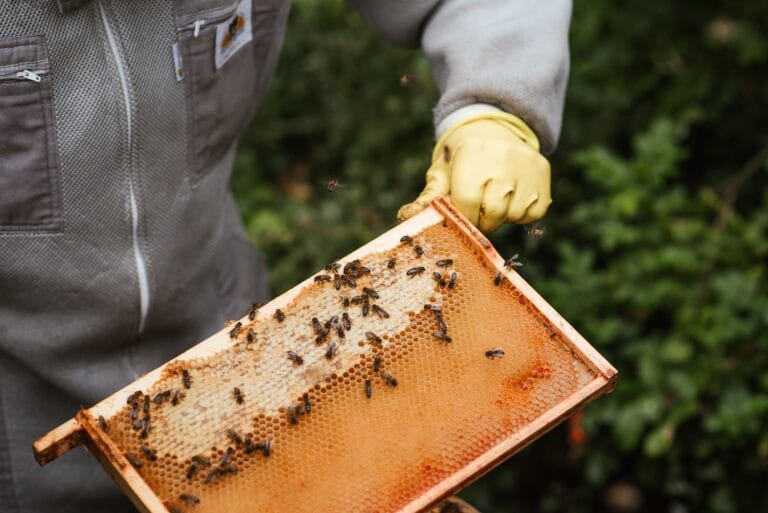
Divide the mite-infested colony into two halves. Move the queen to the queen-right half with 3-4 frames. Leave the queenless half — it will have no new eggs laid after the split. After 9 days (the incubation period for worker brood), all remaining capped brood hatches and there is no new capped brood in the queenless half. Apply oxalic acid vapour treatment at this point — 100% of mites are on adult bees with nowhere to hide. A single well-timed oxalic acid vapourization in a broodless split can reduce mite load by 90-95%, saving the colony’s genetic future even at the cost of a late-season split timeline.
WiseBee Tip — Time the Oxalic Acid Application Precisely
For the brood break split to achieve maximum Varroa reduction, apply oxalic acid vapour exactly 9-11 days after the split — no earlier, no later. Too early and some capped brood is still present, sheltering mites. Too late and a new queen in the split half may have begun laying, creating new capped brood. Mark Day 9 on your calendar the moment you make the split and do not miss it.
Emergency 2 — Saving a High-Value Queen from a Honey-Bound Hive
July in Ontario sometimes produces the colony management equivalent of a luxury problem: a production hive so productive that it has completely filled its brood nest with clover honey, leaving the queen with nowhere to lay and triggering late swarm preparations — or worse, supersedure of a recently purchased $80 mated queen that you cannot afford to lose.
A honey-bound colony with a valuable queen showing late swarm cell development is a situation where a July split is clearly the right call. The alternative — doing nothing — means losing either the queen to swarming or losing the colony’s production during the remaining honey season.
Extract the high-value queen immediately with 2-3 frames of capped brood and place her in a 5-frame nuc — her “safety nucleus.” This nuc is not a production unit this season — it is a queen bank. The original production hive continues working the remaining summer flow with the new queen that emerges from its best swarm cell. The nuc overwinters the valuable queen for next spring when she heads a full colony. The cost is a small split colony that needs autumn feeding support. The gain is a $80-150 queen and her genetics preserved for next season.
Emergency 3 — Setting Up for the Ontario Goldenrod and Aster Fall Flow
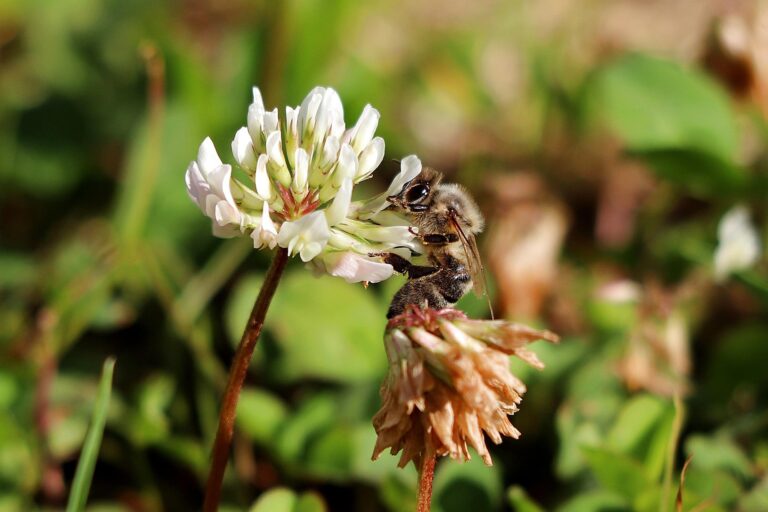
This emergency scenario is specific to Ontario and unavailable in Alberta — Ontario’s climate supports a significant fall nectar flow from goldenrod (Solidago canadensis) and aster species that Alberta beekeepers simply do not have. In areas of Ontario with abundant goldenrod — roadsides, fields, conservation areas, and forest edges — this flow runs from mid-August through September and can produce substantial honey while simultaneously providing the forage a July split needs to build winter stores naturally.
If you can confirm goldenrod and aster forage in your specific Ontario location (not assumed — actually confirmed by driving or walking the 2km radius around your apiary), a July split made with a mated queen and 4-5 frames can use the fall flow to build winter stores that partially offset the lost clover honey season. The split needs to establish, build population from the new queen’s laying, and have enough foragers by mid-August to work the goldenrod flow. It is tight — but possible, and it gives the split colony a nutritional lifeline that no Alberta split in the same timing window would ever have.
The Non-Negotiable Rules for July Bee Splits in Ontario
If any of the three emergency scenarios apply to your situation, the following rules are not suggestions — they are the minimum conditions for a July bee split to have a realistic chance of surviving an Ontario winter. Spring split techniques do not apply in July. Every decision must account for the compressed timeline.
A walk-away July split wastes 4-6 weeks on queen rearing — time that cannot be recovered in Ontario’s compressed late-season window. A split that doesn’t have a laying queen until late July or early August may not produce enough winter bees before cold weather ends foraging. Purchase a mated queen from an Ontario breeder and introduce her the same day as the split. She begins laying within 48 hours, saving those 4-6 weeks entirely.
Contact Ontario queen breeders in June for July availability — local Ontario-mated queens are the best choice for cold adaptation. The Ontario Beekeepers’ Association member directory lists registered Ontario queen breeders.
A July split cannot start small and grow — there is no time. The new split must begin with minimum 4-5 frames well-covered with bees, including at least 3 frames of capped brood ready to emerge within days. This capped brood is the split’s most critical asset: as it hatches over the following week, it doubles or triples the adult bee population before the new queen’s first brood even emerges. This rapid population injection gives the split the numbers it needs to forage the fall flow effectively.
Do not give a July split frames with only eggs and young larvae — these take 21 days to become adult bees. Capped brood emerges in days and immediately becomes foragers 3 weeks later — the fastest possible population growth pathway in a compressed timeline.
Install a frame feeder with 1:1 sugar syrup on the same day as the split. Place a pollen substitute patty directly on the frames above the cluster. Reduce the entrance to the absolute minimum — one to two bee-widths. July is peak robbing season in Ontario: strong colonies from neighbouring hives and apiaries will attack a small split aggressively, especially when the split is being fed externally accessible syrup.
Never use an entrance feeder for a July split. The syrup smell attracts robber bees from established colonies. A robbing event in July can destroy a new split in under an hour. Internal frame feeders only — the extra few minutes of installation pays dividends every day of the split’s vulnerable first weeks.
No July split in Ontario — even a perfectly executed one — should enter winter without supplemental autumn feeding. Before making the split, confirm you have the resources and availability to feed 5-10 litres of 2:1 syrup in September plus fondant if needed in October. A July split that is abandoned in August without follow-through on autumn feeding will almost certainly starve before April. The split is only viable if the autumn feeding commitment is made at the same time as the splitting decision.
Ontario Advantage Over Alberta — The Autumn Buffer
Ontario beekeepers have one significant advantage that makes July splits more viable here than anywhere else in Canada: the goldenrod and aster fall flow provides a natural autumn feeding supplement that reduces the gap between a late split’s stores and winter requirements. Alberta beekeepers have no equivalent fall flow — a July Alberta split is almost certain to need 100% supplemental feeding. An Ontario July split with confirmed goldenrod forage may only need 50-60% supplemental feeding, making the economics significantly more favourable.
Final Thoughts on July Bee Splits in Ontario
July bee splits in Ontario are a last resort — not a routine tool. The beekeeping guides that show you how to split in May and June exist precisely so you do not need this article. But reality does not always cooperate with ideal timing: Varroa crises do not wait for June, honey-bound hives show late swarm pressure in July, and Ontario’s goldenrod does provide a real second-season lifeline that other provinces lack.
If you find yourself facing one of the three emergency scenarios described above — act decisively, follow the four non-negotiable rules without exception, and commit to the autumn feeding support the split will need. A July split executed correctly, fed aggressively, and monitored weekly is a colony that can and does survive Ontario winters. It is just a colony that earned its survival the hard way. 🐝☀️🍂🍯
Considering a July split in Ontario? 🐝
Ask our AI beekeeping assistant — describe your situation, mite levels, queen status, and local forage and we’ll help you decide whether a July split is justified in your specific case.
🐝 Ask Bee Now — It’s Free🐝 WiseBee Disclosure
Affiliate Disclosure: This article contains Amazon affiliate links. If you purchase through our links, we earn a small commission at no extra cost to you. Learn more →
Disclaimer: This article is for educational purposes only and does not constitute professional apicultural or veterinary advice. Always consult a qualified beekeeper for guidance specific to your situation. Full disclaimer →