When and How to Combine Weak Bee Splits:
The Newspaper Method
📋 In This Article
- Combining Bee Colonies — When Plan B Is the Right Call
- Signs Your Split Has Failed — When to Stop Waiting
- Should You Combine or Keep Trying? — The Decision Guide
- The Newspaper Method — Step-by-Step Guide to Merging Bee Colonies
- Uniting a Queenless Split — Special Considerations
- Combining Two Weak Bee Colonies — Both Without a Queen
- Recovering Resources From a Failed Split
- What to Expect After Merging Bee Colonies
- FAQ — Combining Bee Colonies Questions & Answers
Not every split succeeds — and knowing when to combine weak bee splits is just as important as knowing how to make them. Waiting too long with a failing queenless colony means losing all the bees to starvation, laying worker takeover, or simple population collapse. The newspaper method gives you a reliable, low-stress way to merge colonies and salvage the bees, the brood frames, and the honey before it is too late.
Combining Bee Colonies — When Plan B Is the Right Call
Combining bee colonies is not a failure — it is an experienced beekeeper’s decision. Every season, even the most skilled Canadian beekeepers combine splits that did not work out. The goal is always to maximize the number of productive, healthy colonies going into winter — not to keep every split alive regardless of its viability.
Signs Your Split Has Failed — When to Stop Waiting
Recognizing split failure early saves the bees. The three main failure modes — drone layer (laying workers), missing queen after 30 days, and population collapse — each have distinct warning signs that tell you it is time to stop waiting and start combining.
Should You Combine or Keep Trying? — The Decision Guide
| Situation | Day | Action |
|---|---|---|
| No eggs — but no laying workers, season early | Day 21-25 | ⚠️ Try one more queen or cell |
| No eggs — laying workers confirmed | Day 25+ | 🔴 Combine now |
| Queen laying but poor scattered pattern | Day 21-35 | ⚠️ Wait 2 more weeks — young queen improving |
| Population below 3 frames, no queen | Any | 🔴 Combine immediately |
| Two queens rejected in a row | Any | 🔴 Combine — laying workers likely |
| Alberta — no queen by July 15th | July 15 | 🔴 Combine — season too short |
| Ontario — no queen by July 25th | July 25 | 🔴 Combine — winter stores impossible |
| Queen confirmed laying, pattern good | Day 21+ | ✅ Split succeeded — continue normally |
The Newspaper Method — Step-by-Step Guide to Merging Bee Colonies
The newspaper method is the most reliable and least stressful technique for merging bee colonies in Canada. It works by allowing bees from two colonies to mix gradually through a paper barrier — by the time they eat through it, the combined colony has had 24-48 hours to normalize pheromones and accept each other peacefully.
Confirm Which Colony Has the Queen
Before combining, confirm which colony is queen-right (the recipient) and which is queenless or failing (the donor). The queen-right colony always goes on the bottom. If combining two queenless colonies, introduce a mated queen to the combined unit after merging. Never stack a queenless colony on top of another queenless colony — you will have one large, queenless, doomed colony instead of two small ones.
Choose the Right Time
Combine colonies in the evening when flying bees have returned to both hives and forager activity is minimal. Evening combining reduces the number of disoriented bees and allows the combined colony a full overnight period to begin pheromone normalization before daytime activity resumes. Choose a day when no major nectar flow is occurring — combining during a strong flow can trigger fighting as both colonies have high defensive instincts.
Prepare the Newspaper
Use a single sheet of standard newspaper — any newspaper works, avoid glossy magazine paper which bees cannot chew through as easily. Cut slits in the paper with your hive tool — 3-4 short cuts of 1-2cm each. These slits allow pheromone exchange to begin immediately while still slowing the physical merging process. Place the paper flat across the top of the queen-right colony’s top box.
Stack the Failing Colony on Top
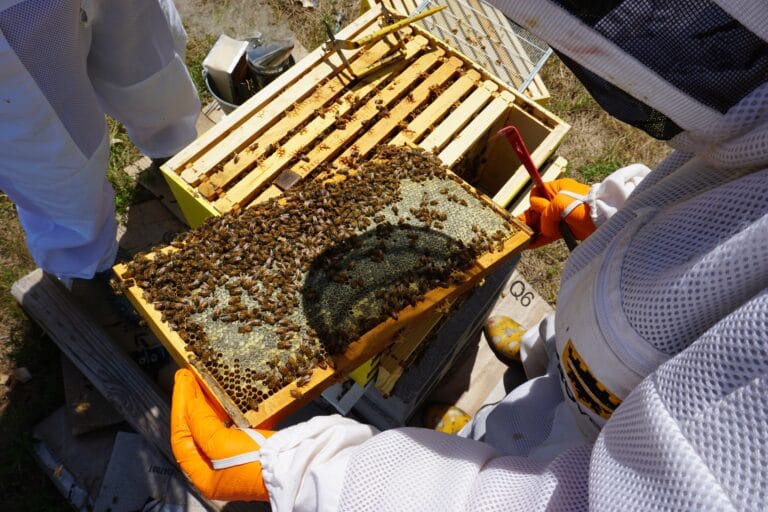
Move the failing split box directly on top of the newspaper layer — frames parallel to the frames below. If the failing split is in a nuc box, transfer its frames to a full-depth box first for a cleaner stack. The queen-right colony is on the bottom, newspaper in the middle, failing split on top. Place the outer cover on top of the failing colony’s box.
Use Smoke Generously
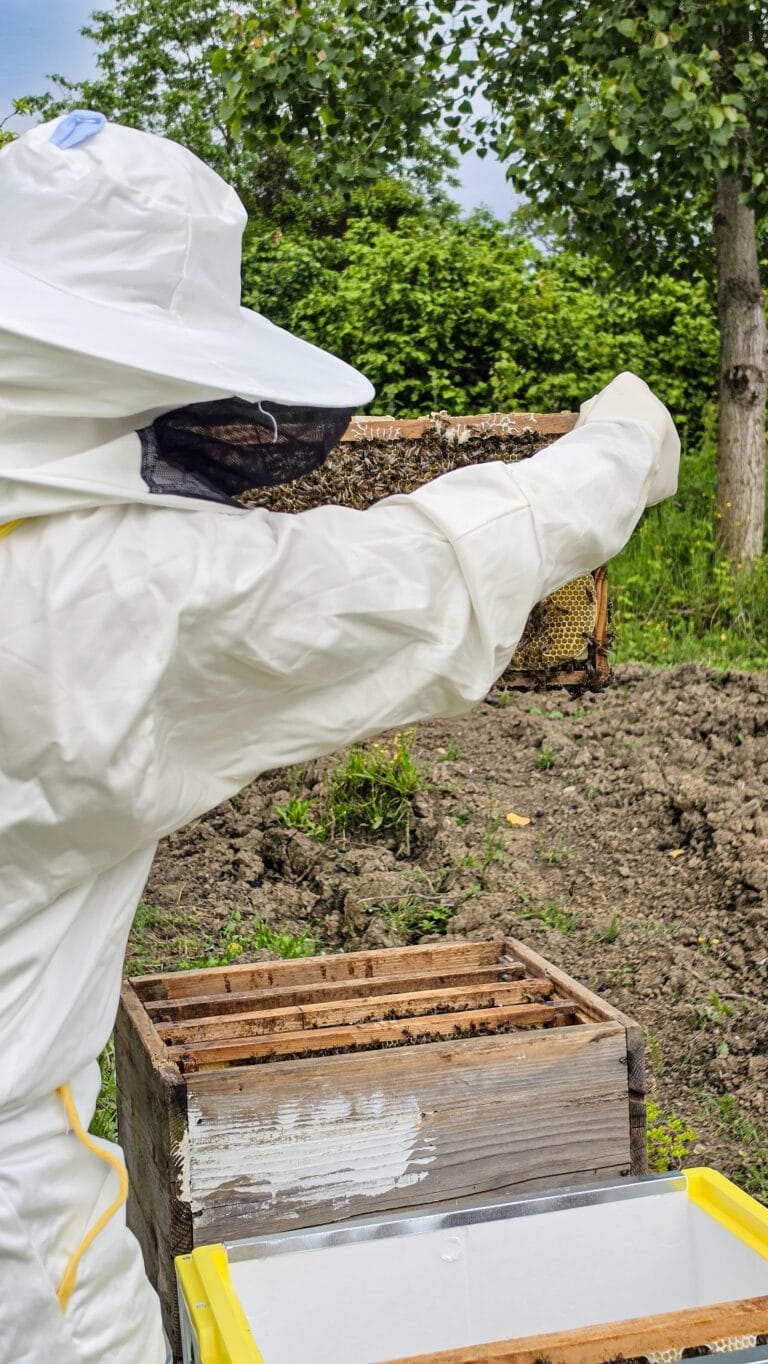
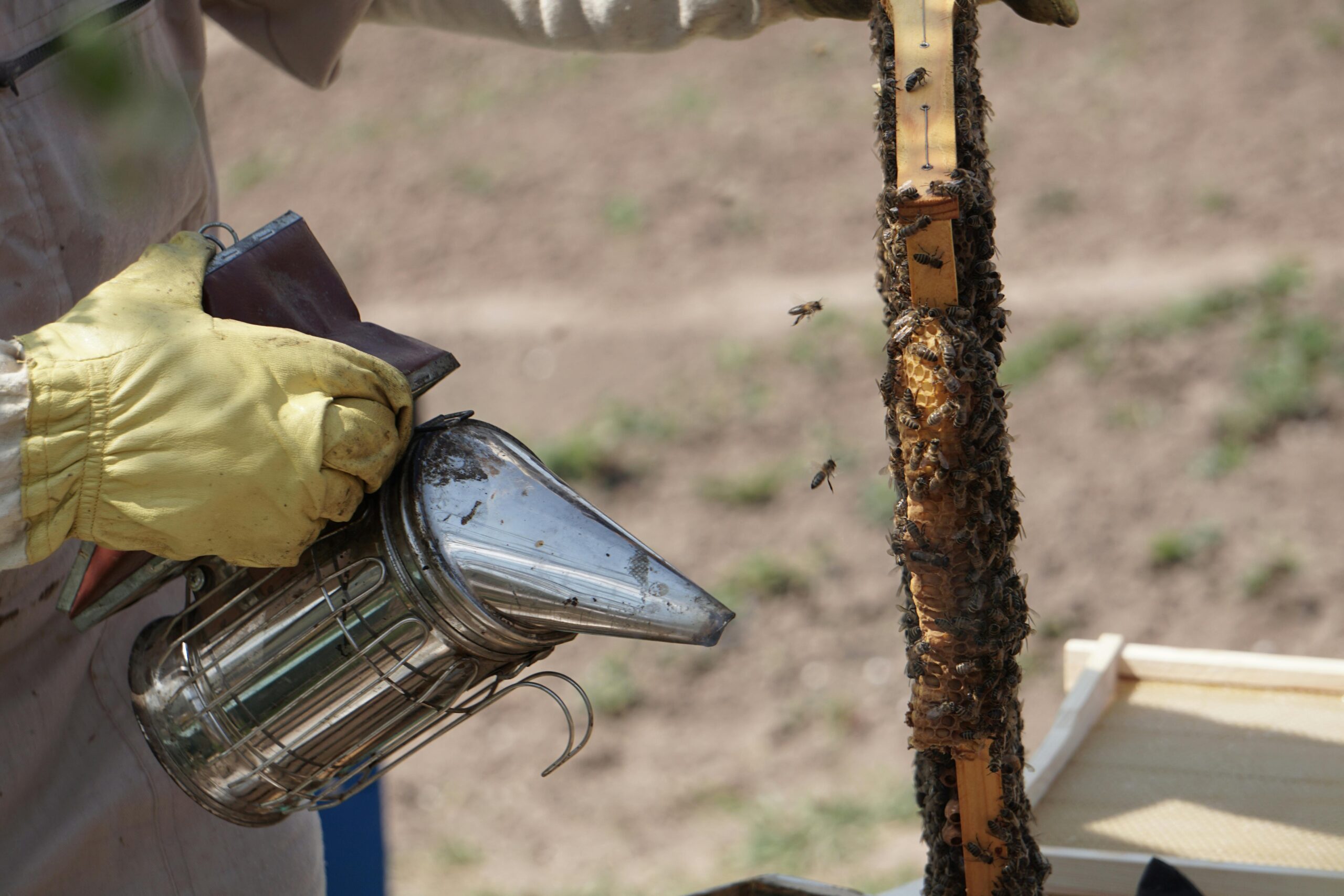
Apply generous smoke to both colonies before and during the stacking process. Smoke suppresses alarm pheromones and significantly reduces fighting when colonies first encounter each other through the newspaper slits. Smoke the entrance of the bottom colony, the top of its frames before placing newspaper, and the underside of the failing colony’s frames before placing them on top.
Leave Undisturbed for 48-72 Hours
Do not open the combined hive for 48-72 hours after combining. Bees will eat through the newspaper during this period and the colonies will merge naturally. After 72 hours, open the hive and remove any remaining newspaper shreds from between the boxes. Check that bees are moving freely between both boxes and that the hive sounds calm and organized. Do a full inspection at Day 7 to confirm the queen is laying normally in the combined colony.
Consolidate the Hive After One Week
At the Day 7 inspection, consolidate the combined hive to an appropriate number of boxes. Remove empty or nearly empty frames from the top box and reorganize so the brood nest is compact and contiguous. The combined colony will now be larger and stronger — assess whether additional super space is needed if a nectar flow is underway.
WiseBee Tip: Add a Drop of Vanilla Extract
Adding a small amount of vanilla extract to both colonies — a single drop on the inner cover of each — creates a shared scent that further reduces fighting during the newspaper combine. Both colonies smell identical from the moment of combination, supplementing the gradual pheromone mixing through the newspaper. This is a common Ontario and Alberta beekeeper trick that noticeably smooths the combining process.
Uniting a Queenless Split — Special Considerations
Uniting a queenless split with a queen-right colony using the newspaper method is the most common combining scenario in Canadian beekeeping. The process is straightforward but requires one critical preparation step that many beekeepers skip — and that skip causes unnecessary fighting.
Remove All Queen Cells Before Combining
This is the most important preparation step when uniting a queenless split. Any queen cell — even a poor one — left in the failing colony when it is stacked on top of a queen-right colony will cause a fight when the virgin queen emerges and encounters the established queen. Check every frame of the failing split and destroy all queen cells before placing it on the newspaper. This is the one time in beekeeping where you should actively destroy queen cells.
Combining Two Weak Bee Colonies — Both Without a Queen
Combining two weak bee colonies that are both queenless requires one additional step compared to standard newspaper combining — you must introduce a mated queen to the combined unit, because combining two queenless colonies simply gives you one large queenless colony.
Step-by-Step: Combining Two Queenless Weak Colonies
Step 1: Remove all queen cells from both colonies. Combine using the newspaper method — it does not matter which colony goes on top when both are queenless.
Step 2: Wait 24 hours for the colonies to begin merging through the newspaper before introducing a queen. This allows the combined unit to stabilize before a new pheromone source is introduced.
Step 3: Introduce a mated queen in a candy cage to the combined colony 24-48 hours after stacking. Place the cage between central brood frames in the top box.
Step 4: Check at Day 5 for queen release and signs of acceptance. The larger combined population gives the new queen a stronger, more viable colony to establish in than either weak split alone.
Why Combining Two Weak Splits Often Saves Both
Two failing splits of 3 frames each combine into a single 6-frame unit — above the critical threshold for maintaining brood temperature and defending against robbing. A 6-frame colony with a new mated queen has a realistic chance of building to winter strength with aggressive autumn feeding. Neither 3-frame colony had that chance alone. In both Ontario and Alberta, combining weak splits before mid-summer gives the combined unit enough season to build adequate winter stores.
Recovering Resources From a Failed Split
When a split colony cannot be saved even by combining — due to advanced laying worker infestation, disease, or complete population collapse — recovering the resources from the failed split protects your investment in equipment and stores.
Never Reuse Equipment From a Colony With Suspected AFB
If a failed split showed any signs of American Foulbrood — sunken or perforated cappings, a distinctive ropey consistency when a cappings probe is inserted, or a foul odour — do not reuse any equipment without provincial apiarist inspection. AFB spores survive for decades in wood. Burning is the only safe disposal method for confirmed AFB equipment in Canada. Contact your provincial apiarist before reusing any equipment from a suspected disease case.
What to Expect After Merging Bee Colonies
The combined colony after a successful newspaper merge will be noticeably larger, calmer, and more active than either unit was separately. Understanding what is normal in the first week after combining prevents unnecessary alarm.
Normal Signs After Merging Bee Colonies
Finding newspaper shreds at the entrance and on the bottom board is completely normal — bees remove the chewed paper from the hive. Some bees clustering on the outside of the hive in the first 24-48 hours is normal as populations adjust. A slightly higher defensive response at the entrance in the first 2-3 days is normal as the combined colony establishes its unified pheromone profile.
Signs the Combine Was Successful at Day 7
At the Day 7 inspection, a successful combine shows bees moving freely through all boxes, the queen laying in a normal compact pattern in the lower brood area, no fighting between bees, and a unified colony temperament — either calm or defensive but consistently so across all frames. Population should be visibly larger than either colony was before combining.
FAQ — Combining Bee Colonies Questions & Answers
To combine two bee colonies using the newspaper method: confirm which colony has the queen and place it on the bottom. Remove all queen cells from the failing colony. In the evening, place a single sheet of newspaper with 3-4 small slits cut into it across the top of the queen-right colony. Stack the failing colony directly on top of the newspaper. Apply generous smoke throughout. Place the outer cover on top and leave completely undisturbed for 48-72 hours. Bees eat through the newspaper and colonies merge naturally. Check at Day 7 for a calm, unified colony with the original queen laying normally.
Give up on a split and combine it when any of these conditions are confirmed: no eggs or brood by Day 28-30 despite rescue attempts, laying workers established with multiple eggs per cell, population has dropped below 3 frames and the colony cannot maintain brood temperature, or the season is too late for the colony to build winter stores even if a queen were established now. In Alberta, combine any failing split by mid-July. In Ontario, by late July. After these dates, a queenless colony cannot build adequate winter stores and combining is the responsible decision.
The queenless or failing colony always goes on top. The queen-right colony always goes on the bottom. This arrangement is important because bees naturally move downward in the hive — placing the established queen on the bottom ensures she stays in the most natural and defended position. The failing colony above the newspaper will merge downward as bees eat through the paper. Never place the queen-right colony on top — bees may move the queen upward into an abnormal position and the combined colony’s organization becomes confused.
Yes — combining a laying worker colony with a healthy queen-right hive using the newspaper method is the most reliable solution for laying worker colonies. The established queen’s pheromones gradually suppress the laying workers’ reproductive activity as the colonies merge through the newspaper. Within 48-72 hours of combining, the laying workers in the failed split return to their normal sterile worker behaviour. The shakeout method (moving the laying worker colony to a new location and letting workers fly home) can be done first to reduce the laying worker population before combining, improving success rates further.
The newspaper method typically takes 24-48 hours for bees to eat through the paper and the colonies to physically merge. Pheromone normalization begins through the paper slits immediately and continues through the 48-hour period. Leave the combined hive completely undisturbed for a minimum of 48 hours and ideally 72 hours before opening. At 72 hours, remove remaining newspaper shreds from between the boxes. The colony is considered fully merged at Day 7 when the first full inspection confirms a unified, calm colony with the queen laying normally throughout.
Final Thoughts on Combining Weak Bee Splits
Combining weak bee splits is not defeat — it is experienced apiary management. The bees from a failed split are not lost when you combine them using the newspaper method — they are preserved and integrated into a productive unit that can survive winter and contribute to next season’s production. The drawn comb, honey stores, and equipment from the split are all salvaged and reused.
The beekeeper who combines a failing split in July saves bees, equipment, and time. The beekeeper who keeps trying with a doomed queenless colony through August loses all three. Know the signs, trust the decision guide, and use the newspaper method with confidence. 🐝📰🍯
Questions about combining your bee colonies? 🐝
Ask our AI beekeeping assistant — describe your split’s condition and we’ll help you decide whether to combine or keep trying.
🐝 Ask Bee Now — It’s Free🐝 WiseBee Disclosure
Affiliate Disclosure: This article contains Amazon affiliate links. If you purchase through our links, we earn a small commission at no extra cost to you. Learn more →
Disclaimer: This article is for educational purposes only and does not constitute professional apicultural or veterinary advice. Always consult a qualified beekeeper for guidance specific to your situation. Full disclaimer →